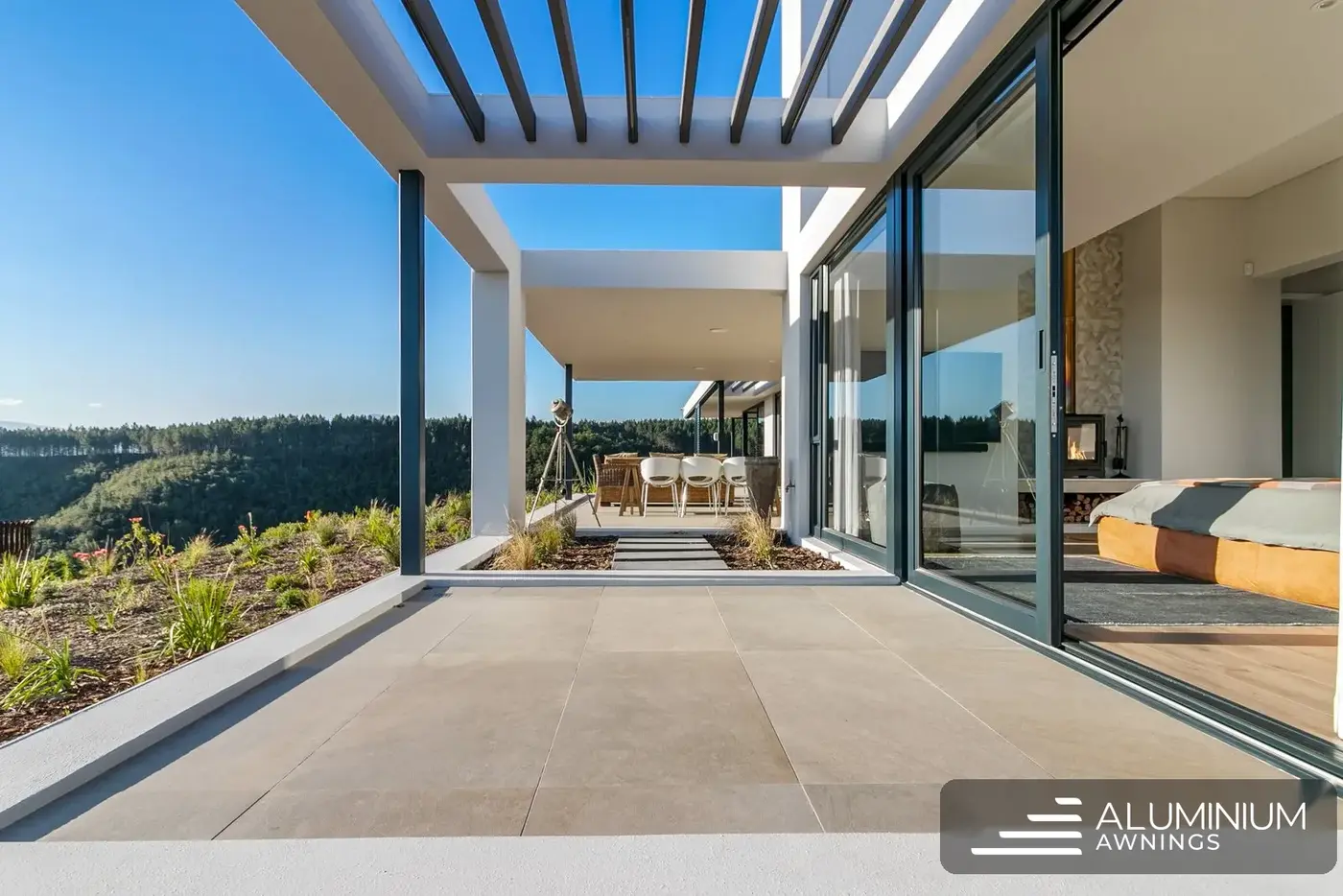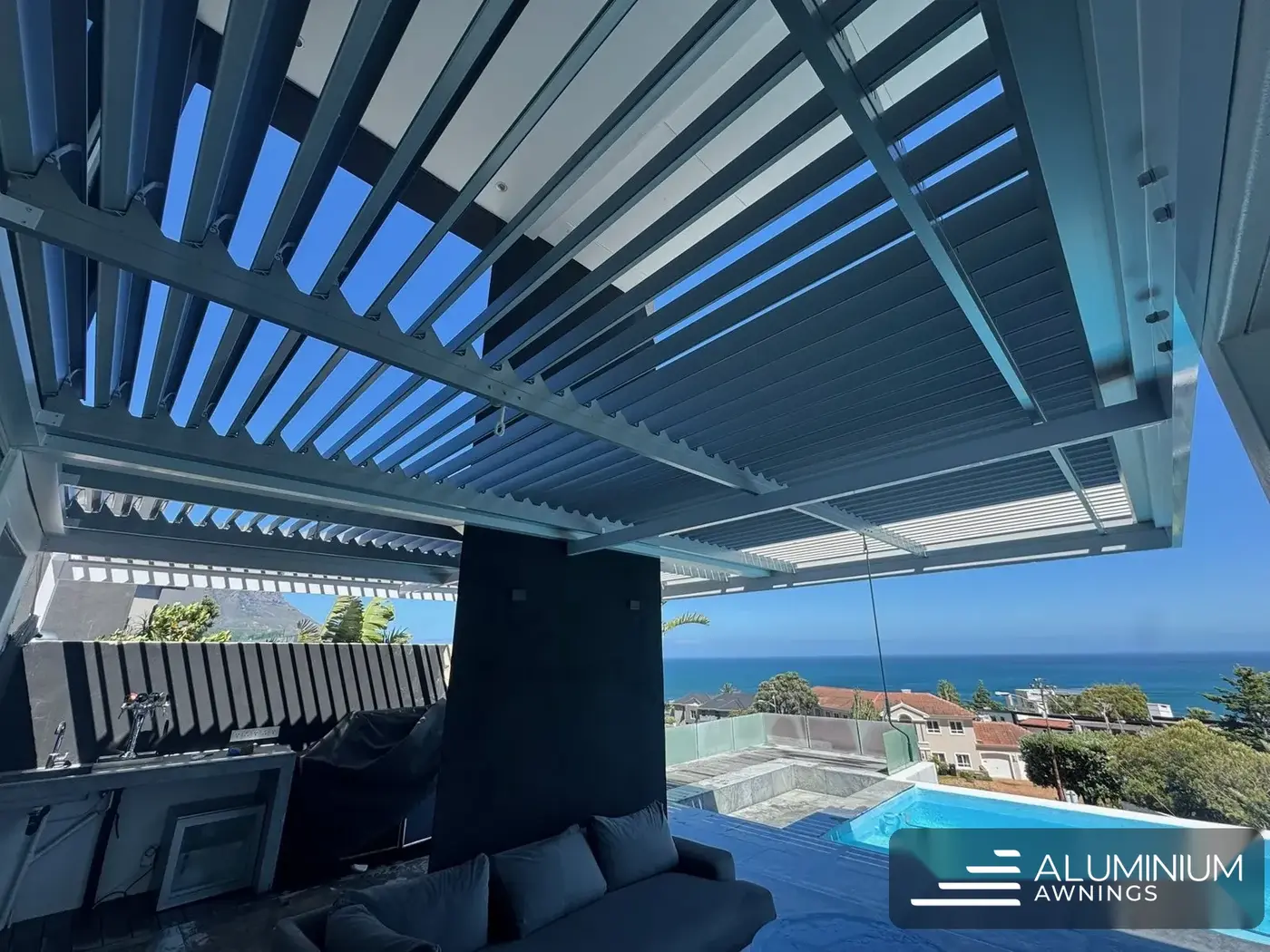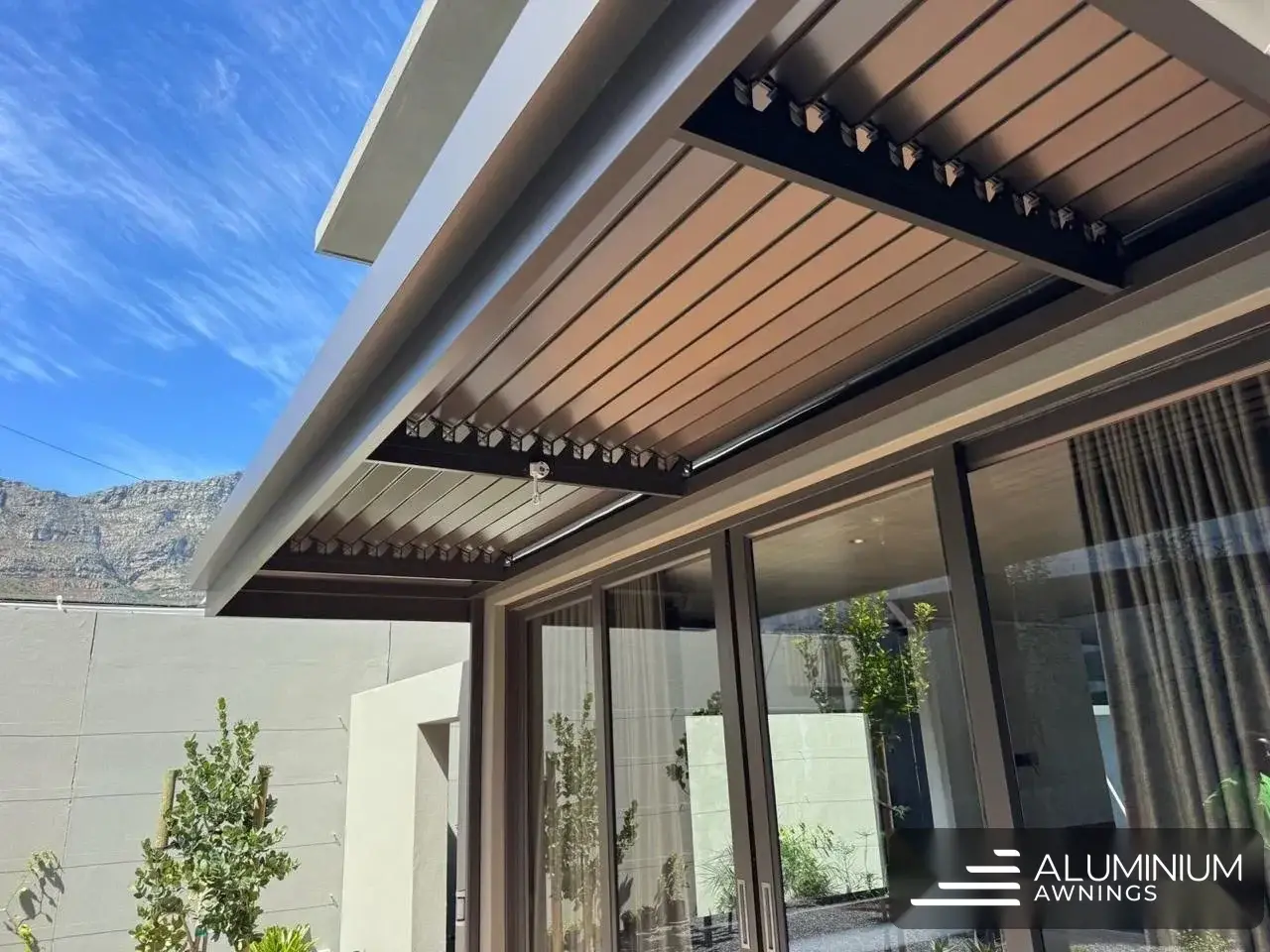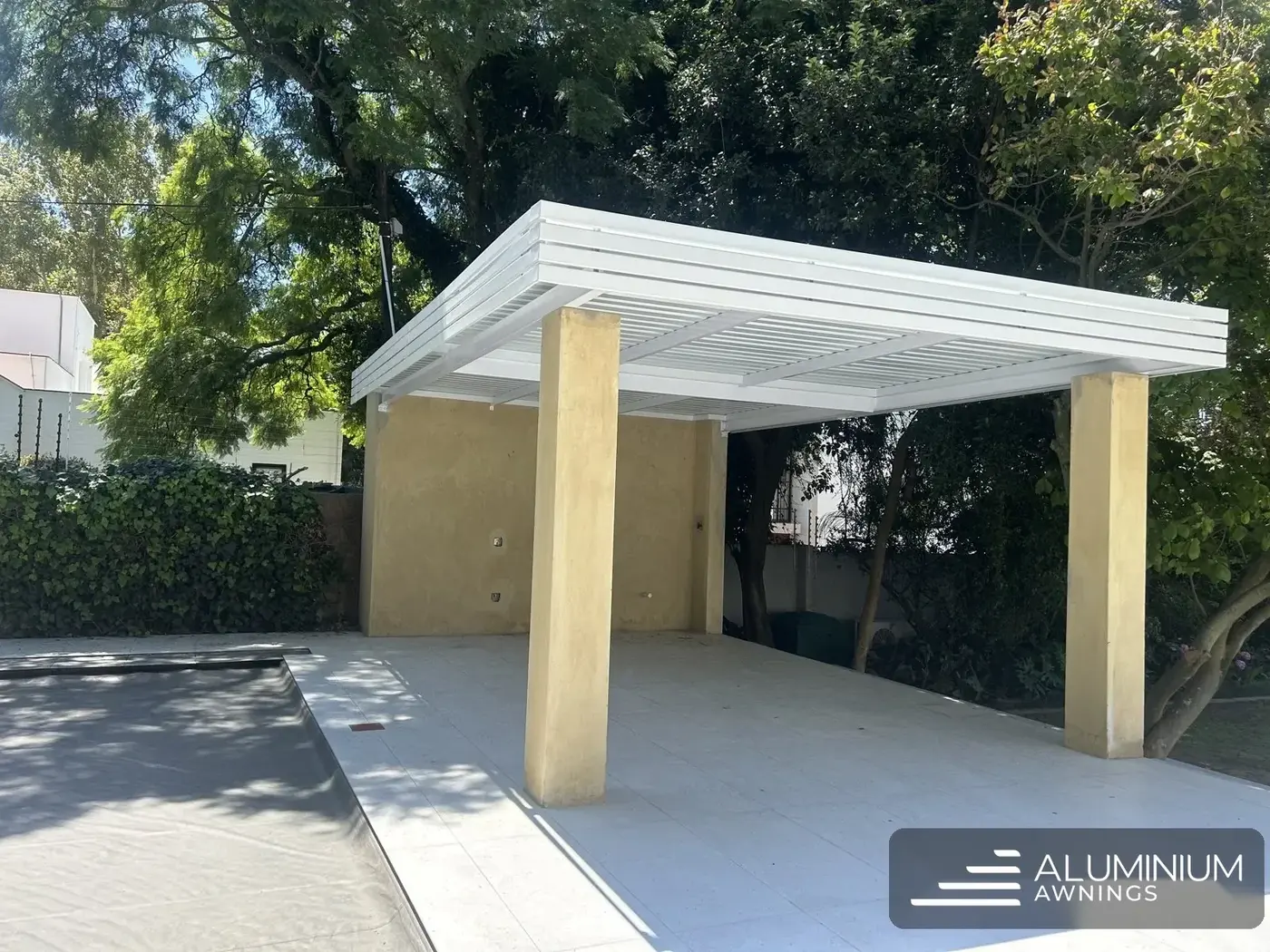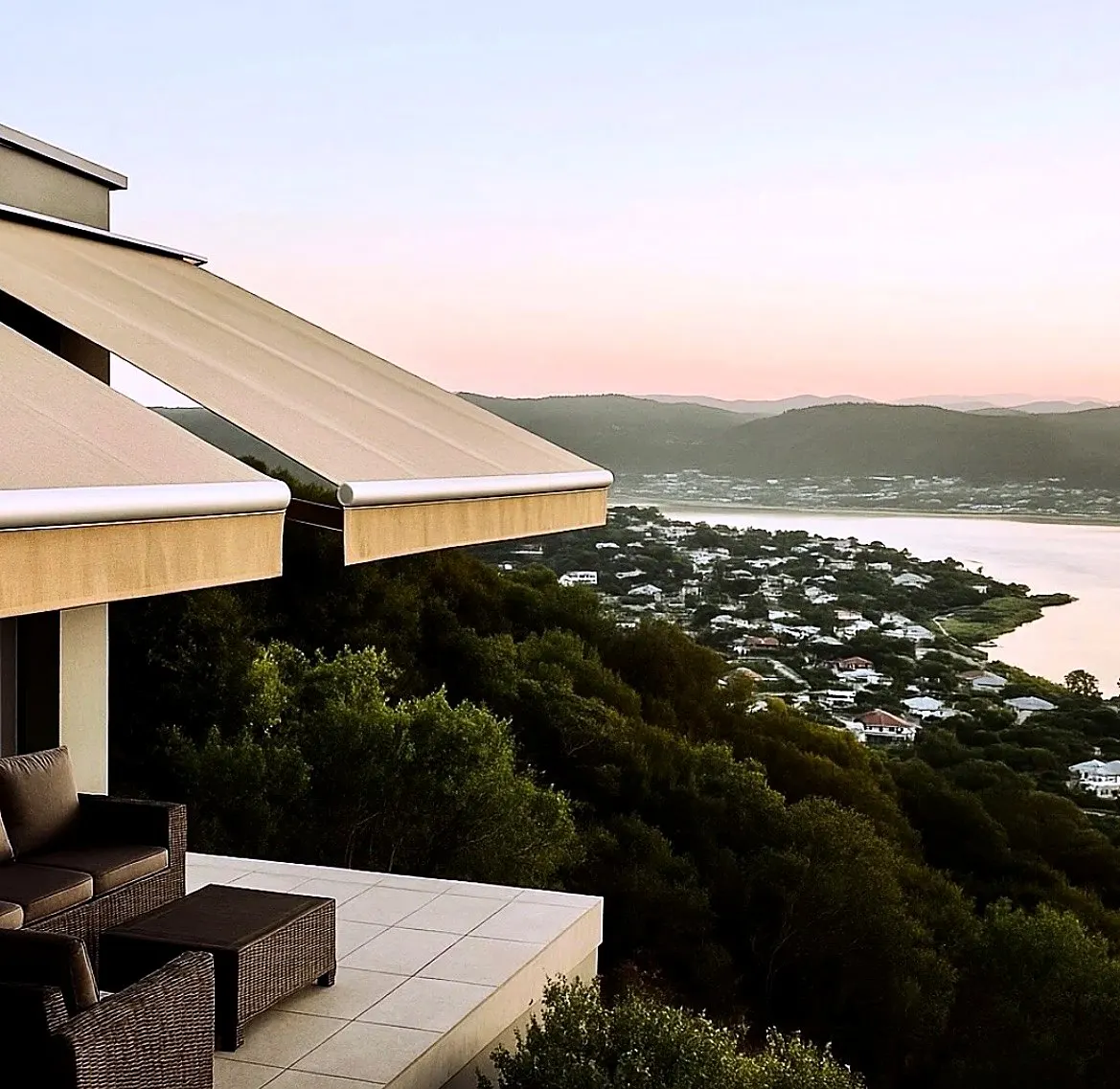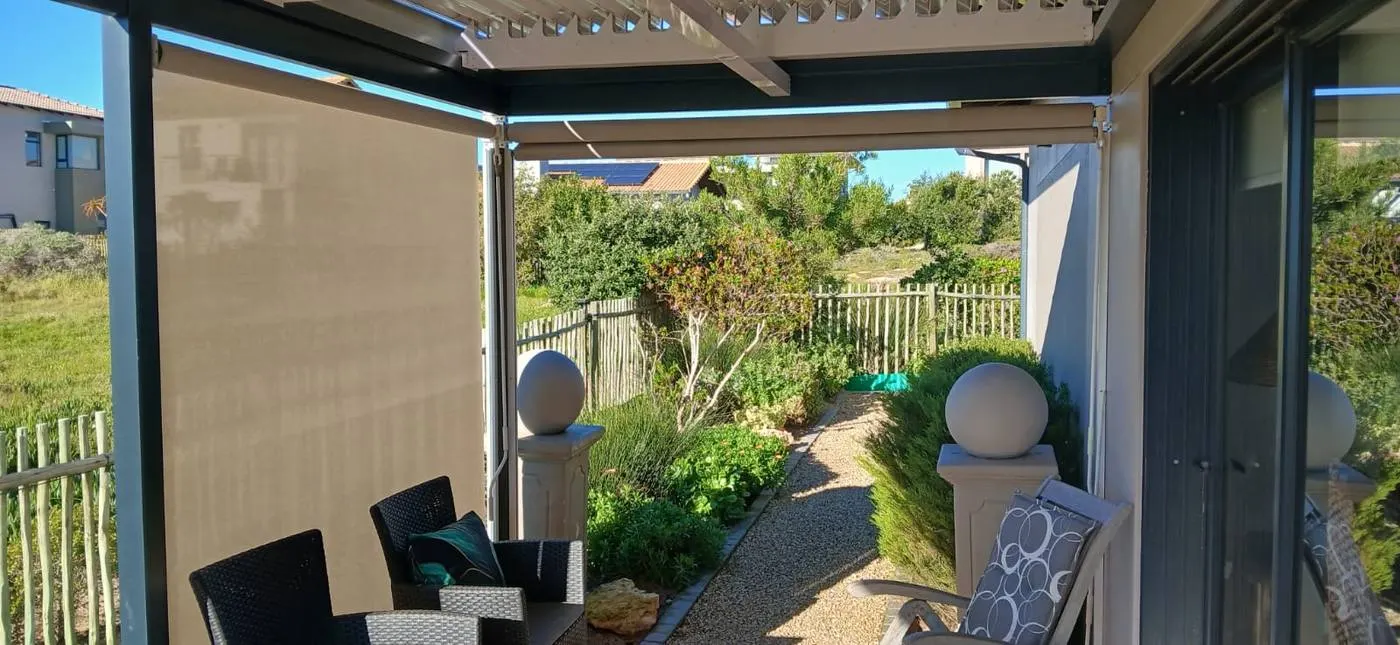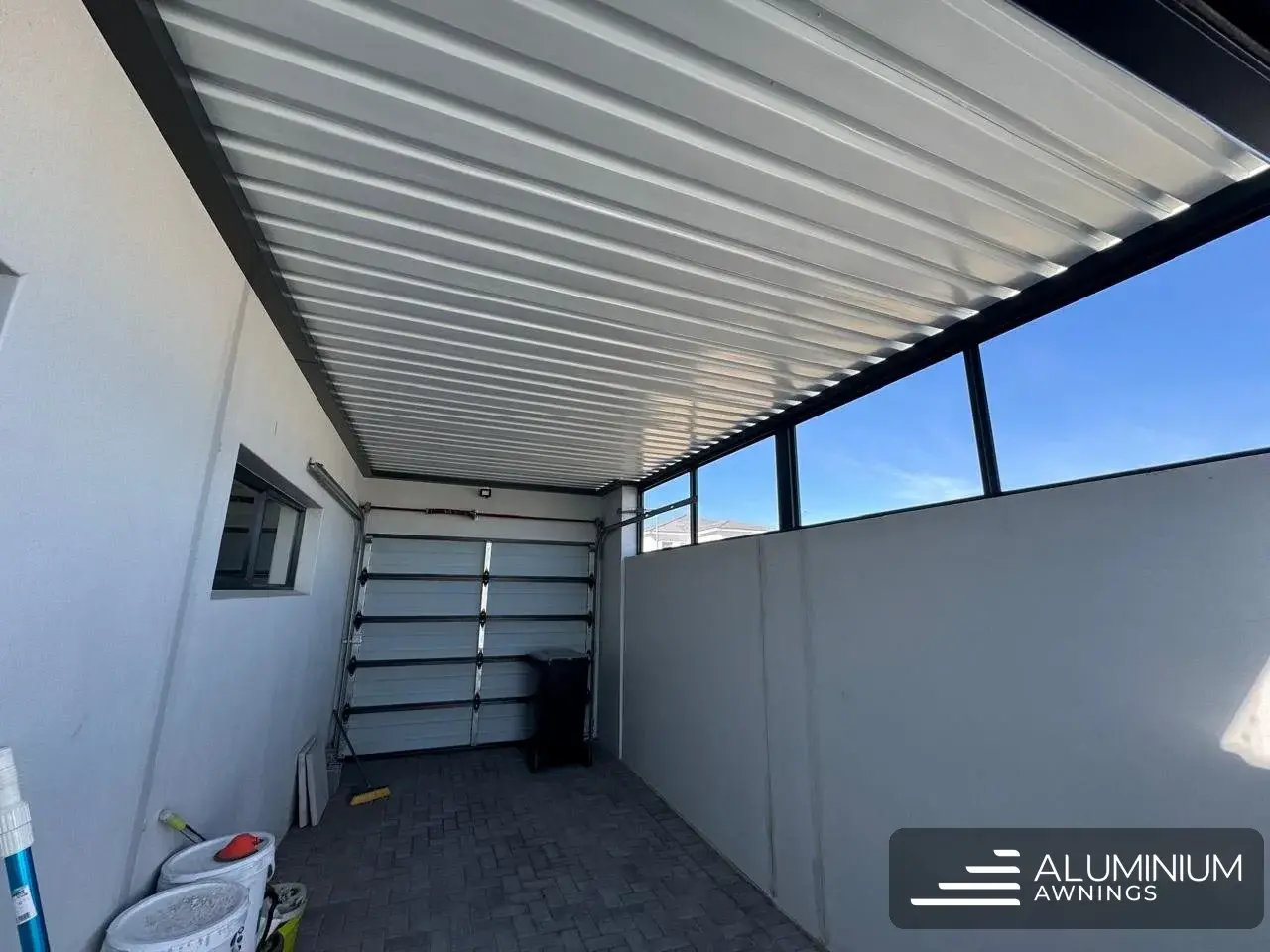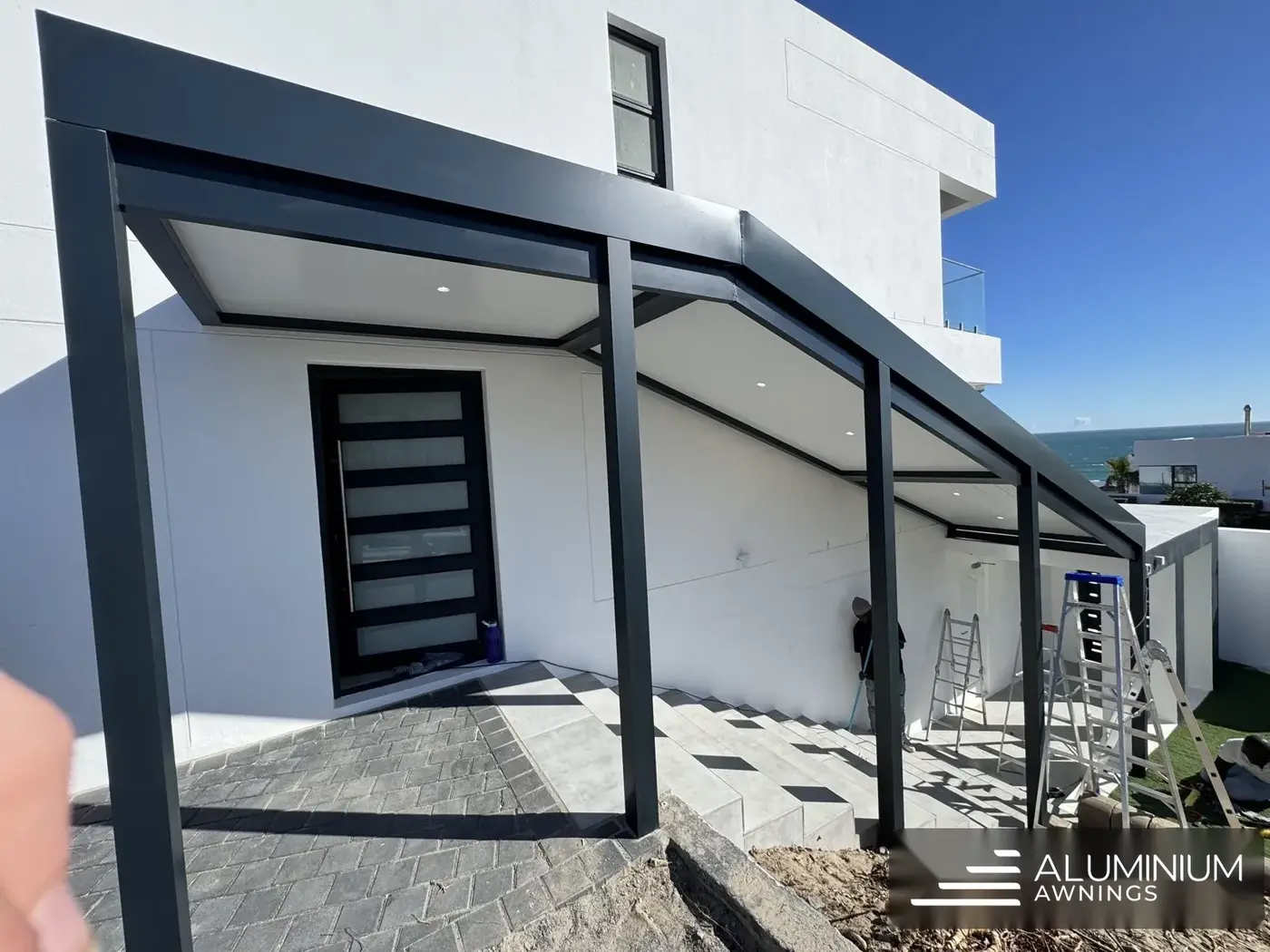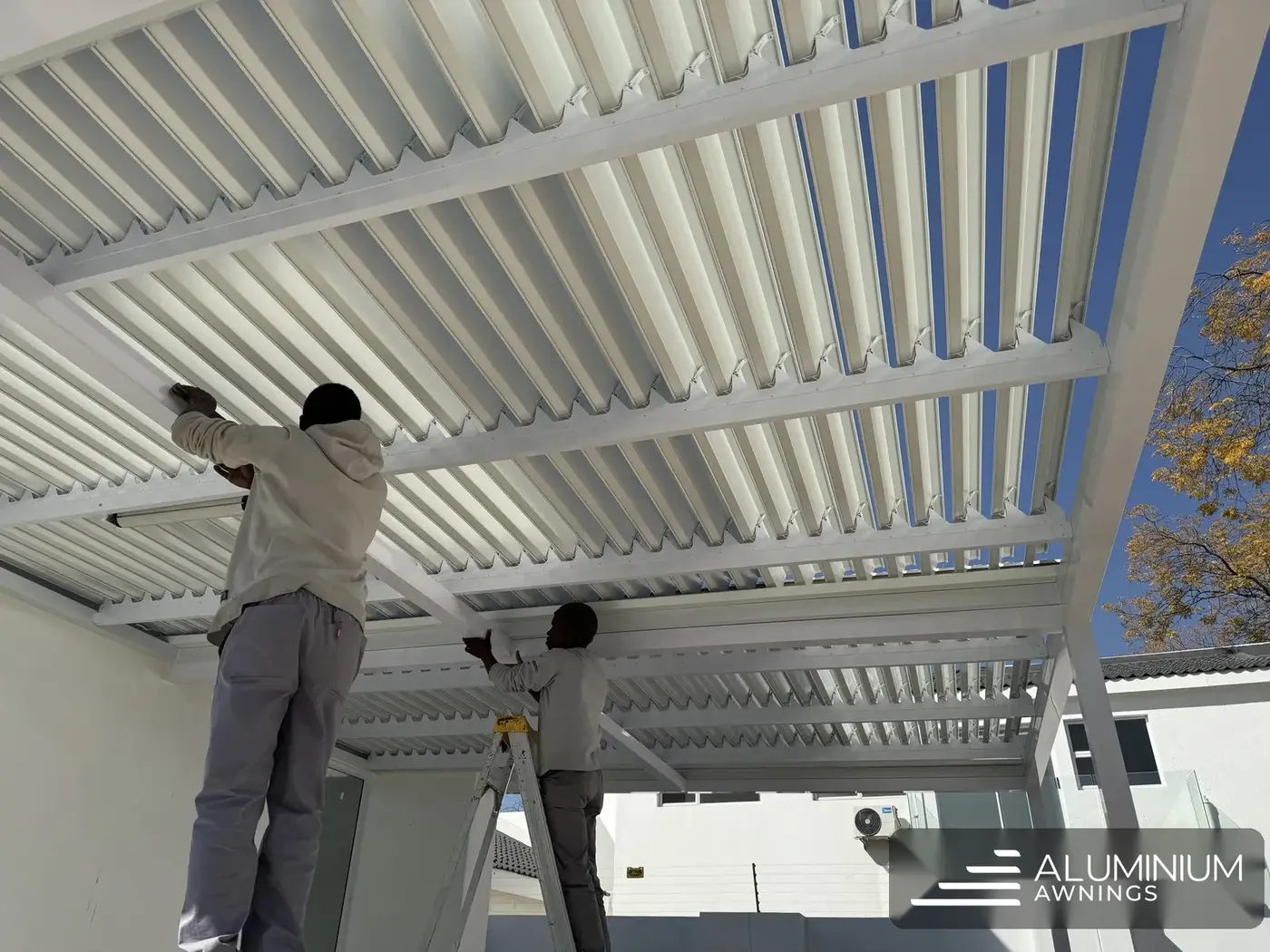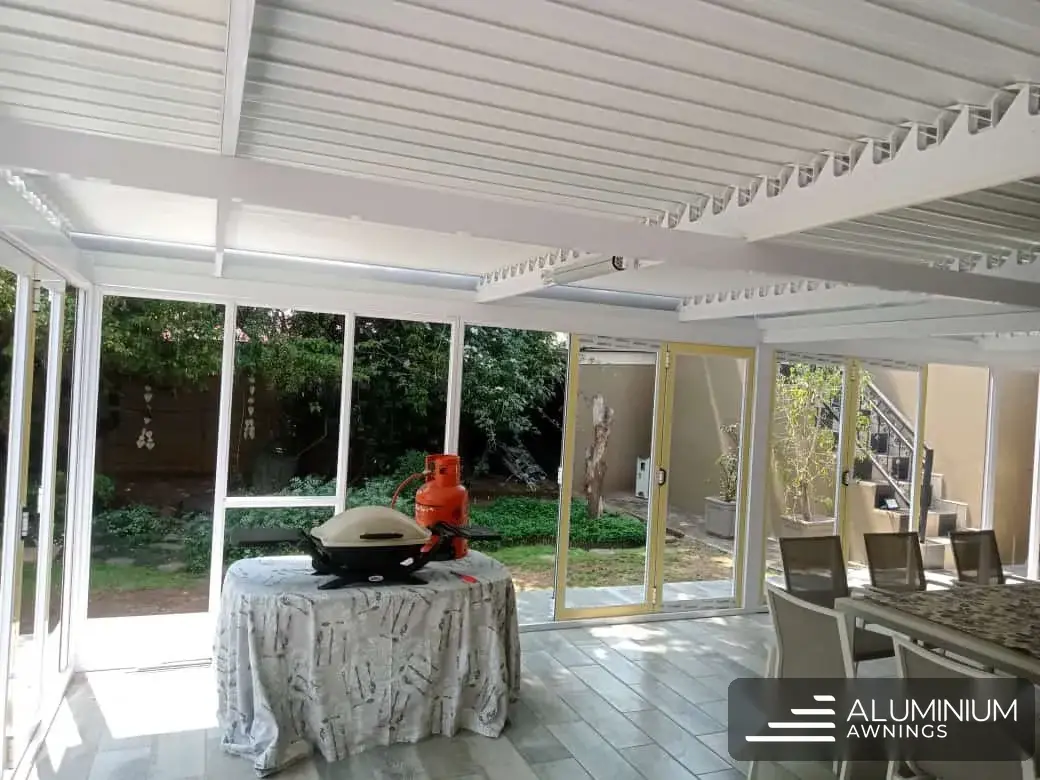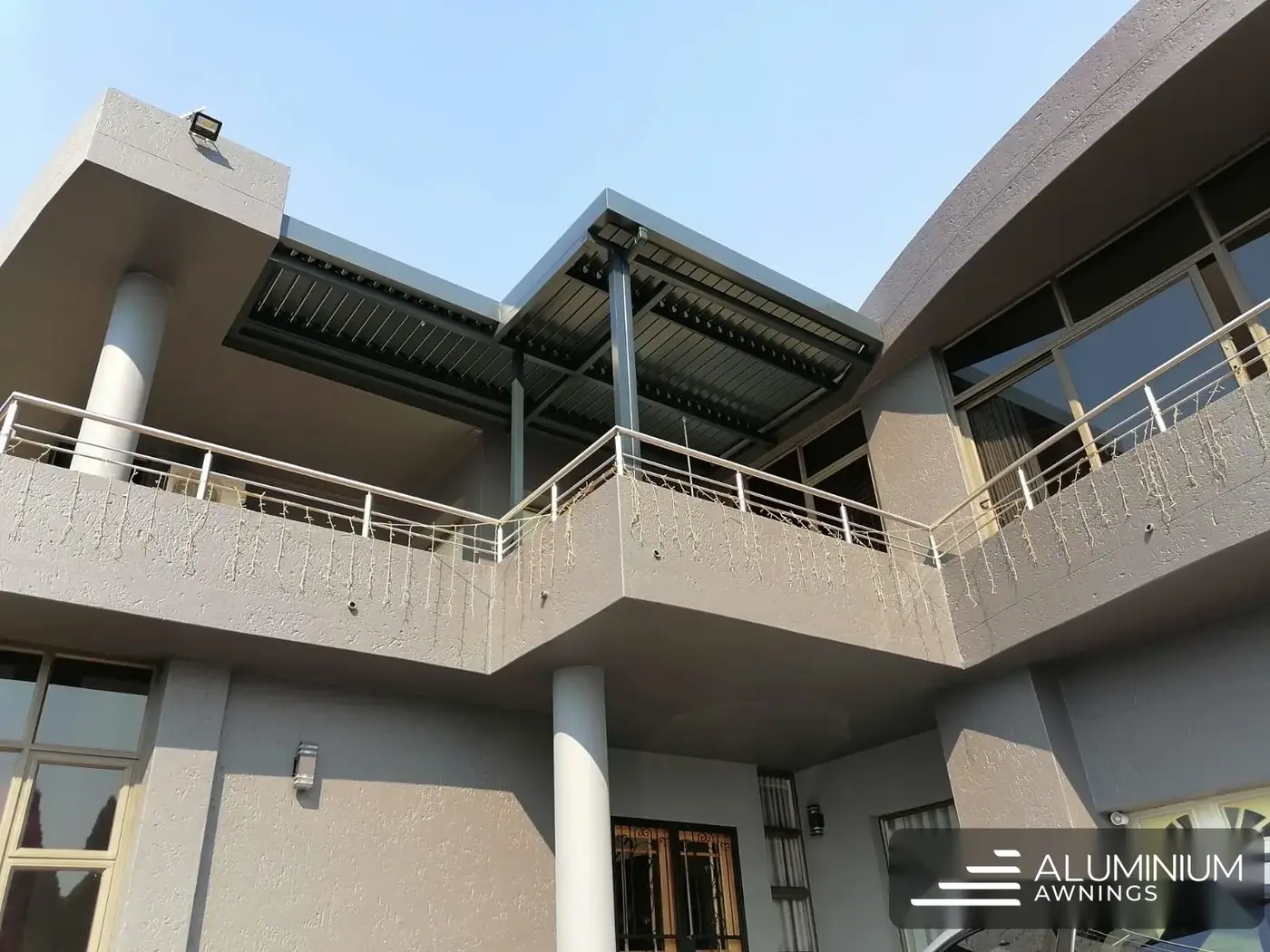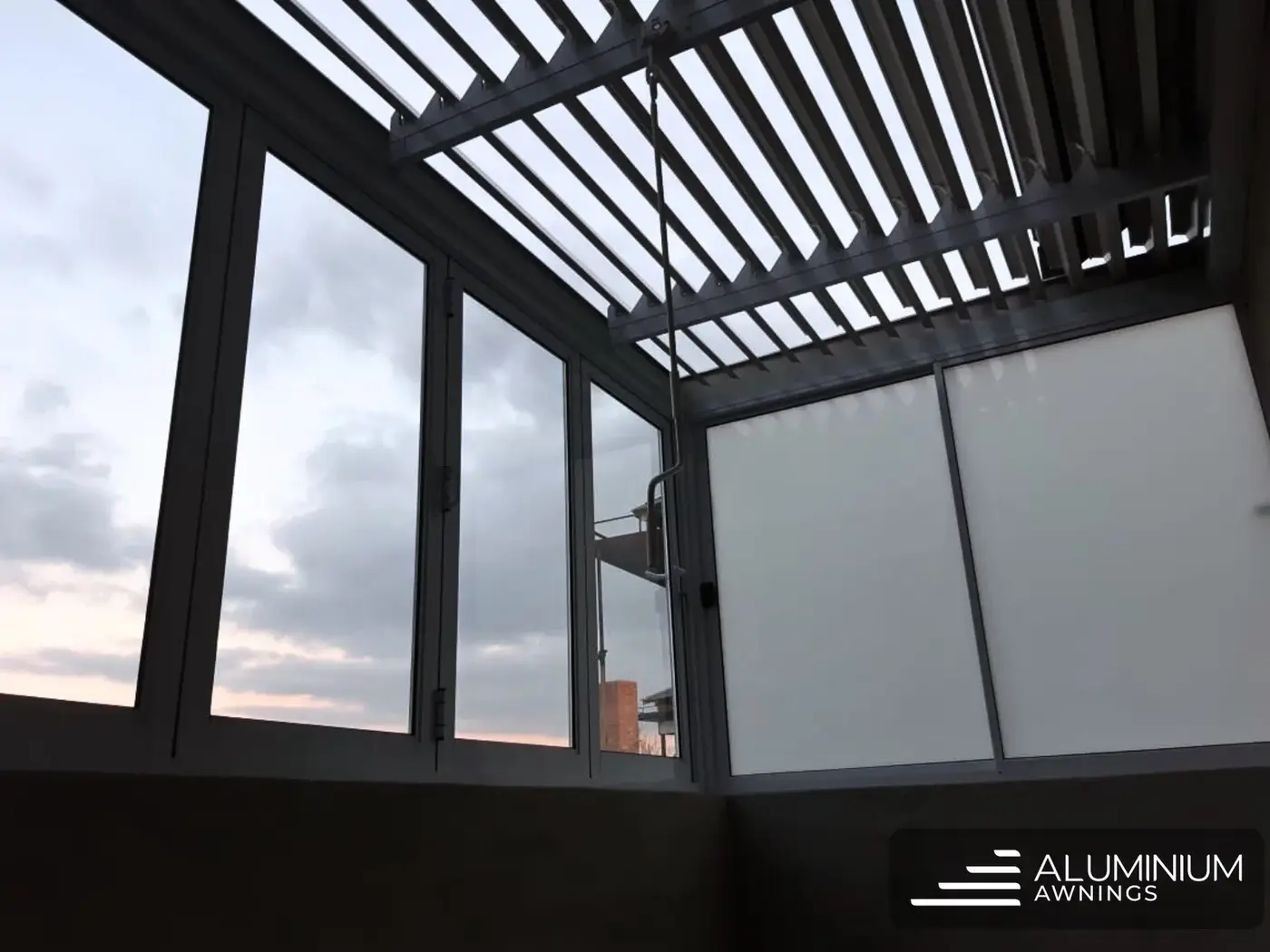
Melkbosstrand sits on the Cape West Coast, north of Cape Town, where summer temperatures regularly exceed 35°C and the sea breeze is the primary source of relief. This motorised louvre awning was designed around that reality: full weather protection when needed, and a built-in ceiling fan for the windless days when the heat builds without relief.
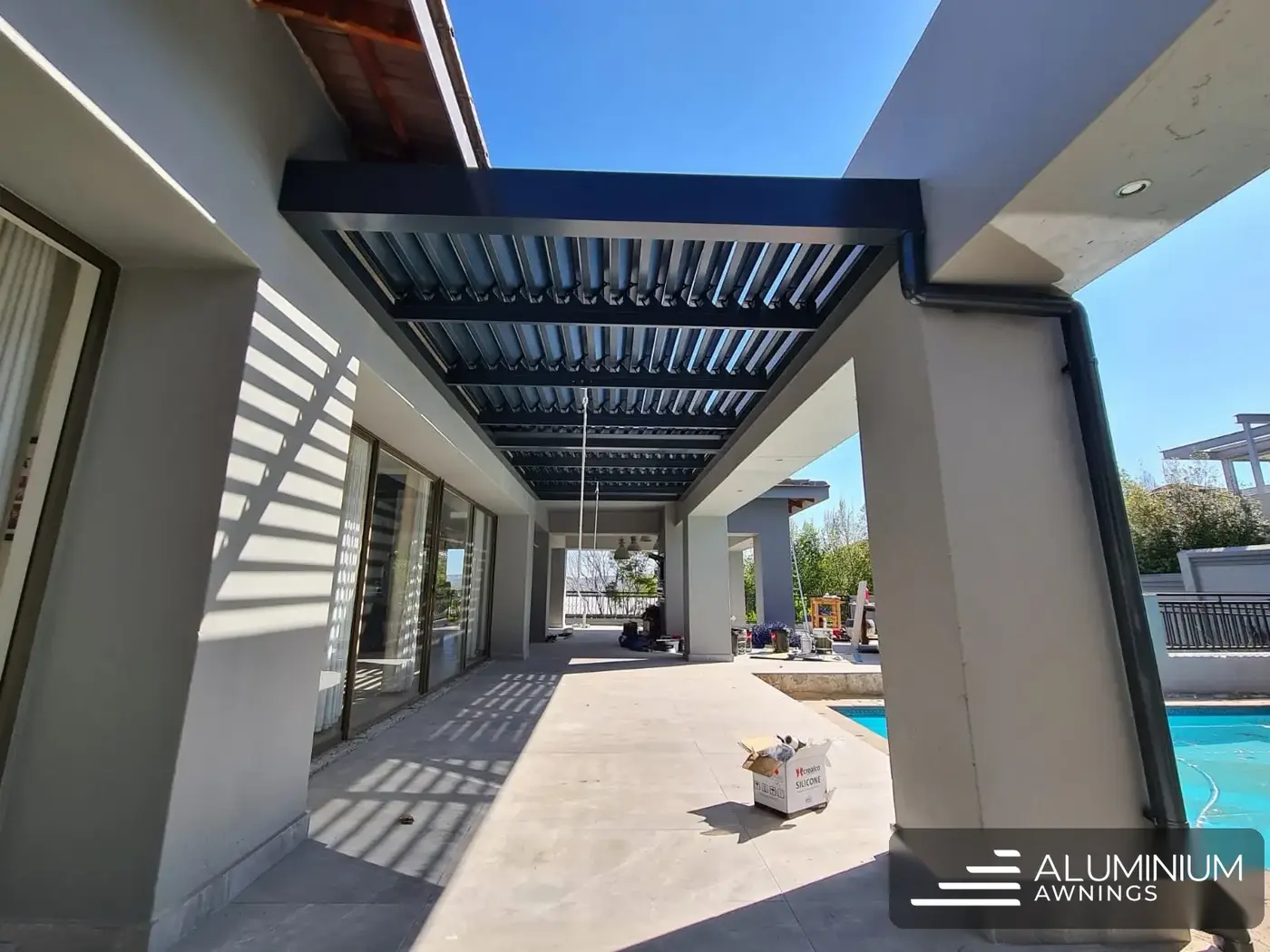
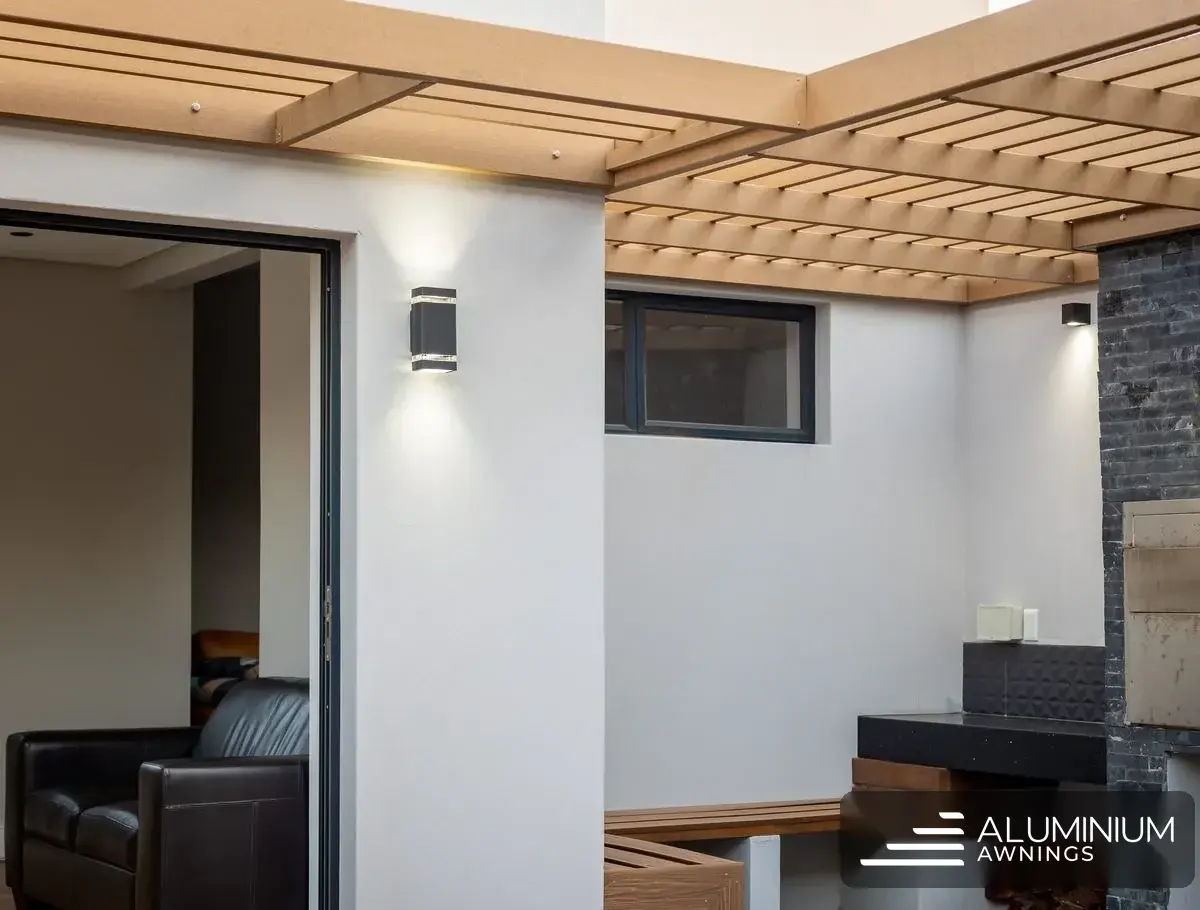
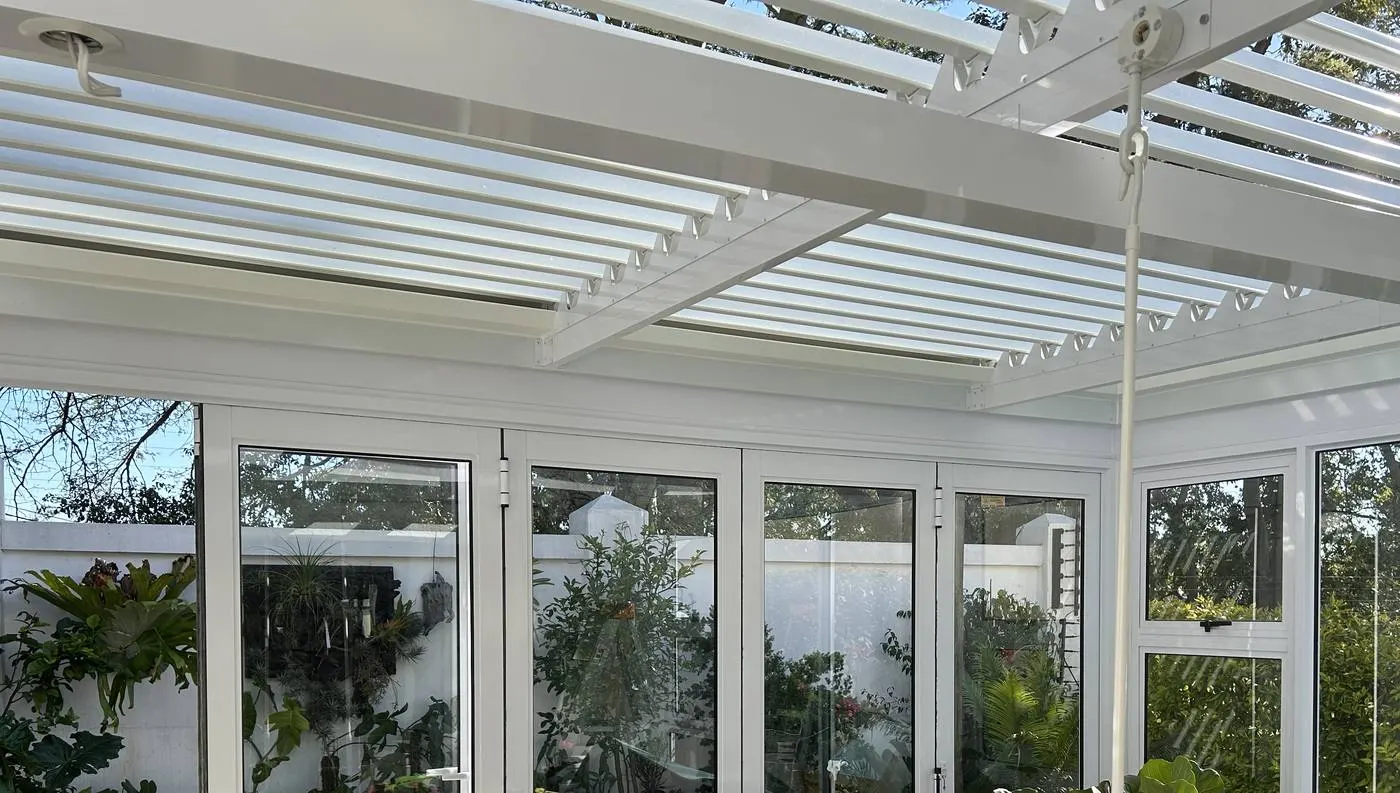
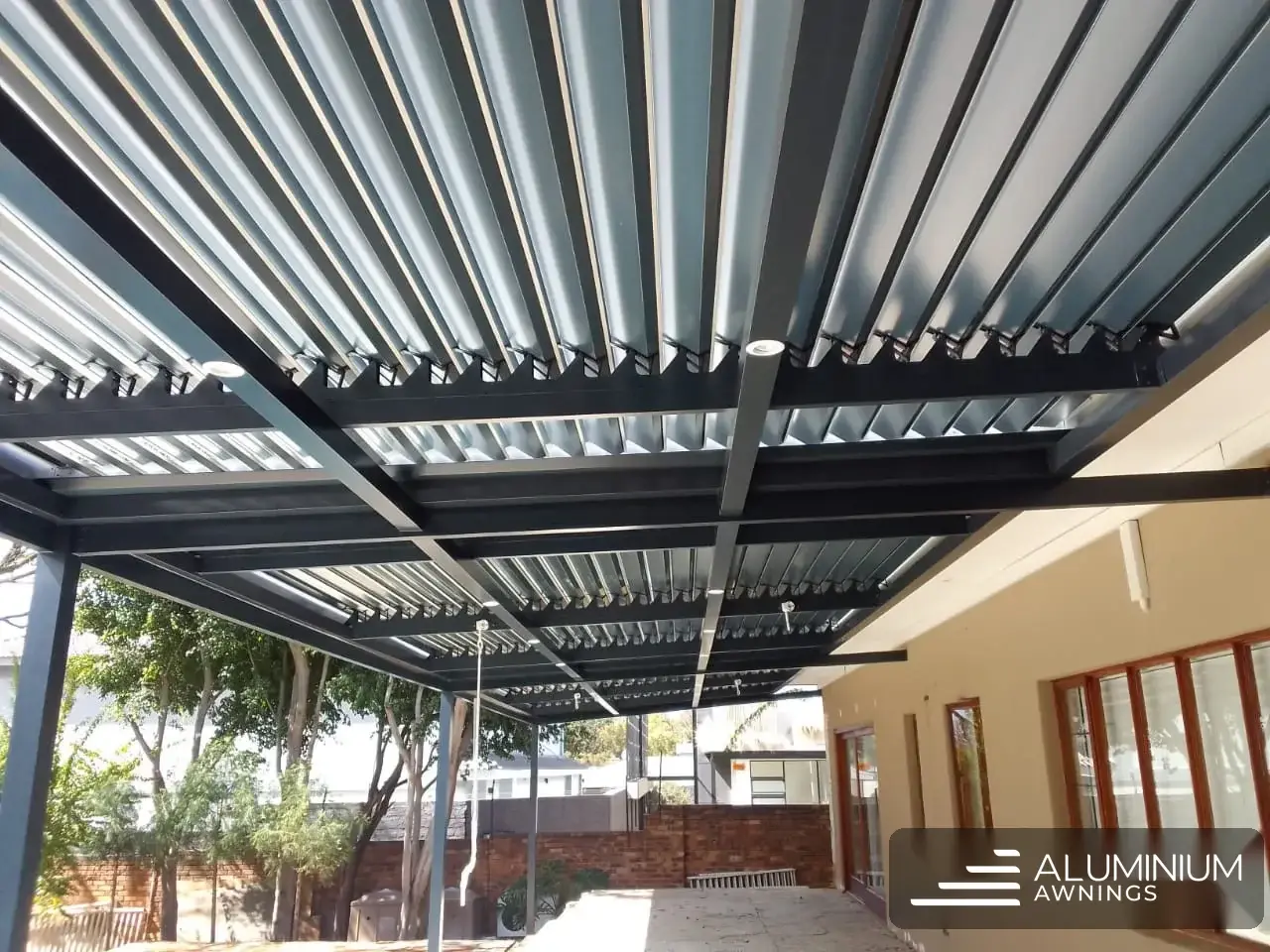
The awning spans the full width of the outdoor patio and is operated by remote control. At the centre of the structure, a pre-wired ceiling fan point is integrated into the aluminium beam. The fan circuit is fully concealed within the structure with no exposed conduit or surface wiring. The fan can be operated independently of the louvre motor, giving the homeowner full control over airflow at any blade position.
Pre-wiring a ceiling fan into a louvre awning beam requires planning at the fabrication stage. The conduit path and junction box location need to be built in before powder coating. When planned correctly, the result is completely invisible.
The combination of motorised louvre cover and ceiling fan has transformed a previously unusable summer patio into the most-used space in the home. On hot, still days the fan runs continuously under closed or partially open blades; on windy days the blades seal the space completely.
The fan is the detail that makes this job. Melkbosstrand cooks on windless summer days, and louvres alone can't move air once the sea breeze dies. So the fan point was built into the aluminium beam at fabrication stage, conduit routed and junction box positioned before the frame ever went for powder coating.
Doing it in that order costs nothing in looks because there's nothing to look at. No surface conduit, no cable clipped along a beam, and the fan runs on its own circuit so it turns at any blade angle, sealed or open. Try adding a fan to a finished louvre roof and you're drilling coated aluminium and living with visible wiring. Sequence was the real specification here.
One more louvre roof we built in Melkbosstrand, with its own brief and finish.
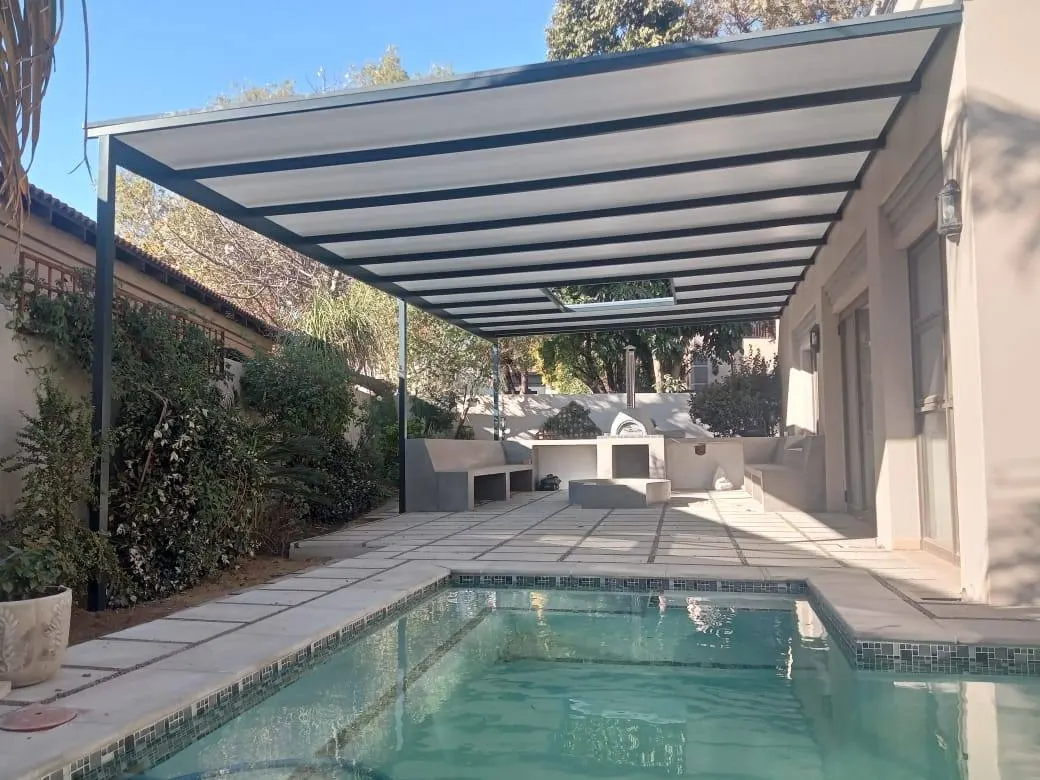
A Melkbosstrand home wanted a clean, low-maintenance cover over the patio. It needed to be adjustable enough to open for sun and close when the weather turns, and finished to sit with the house rather than stand out.
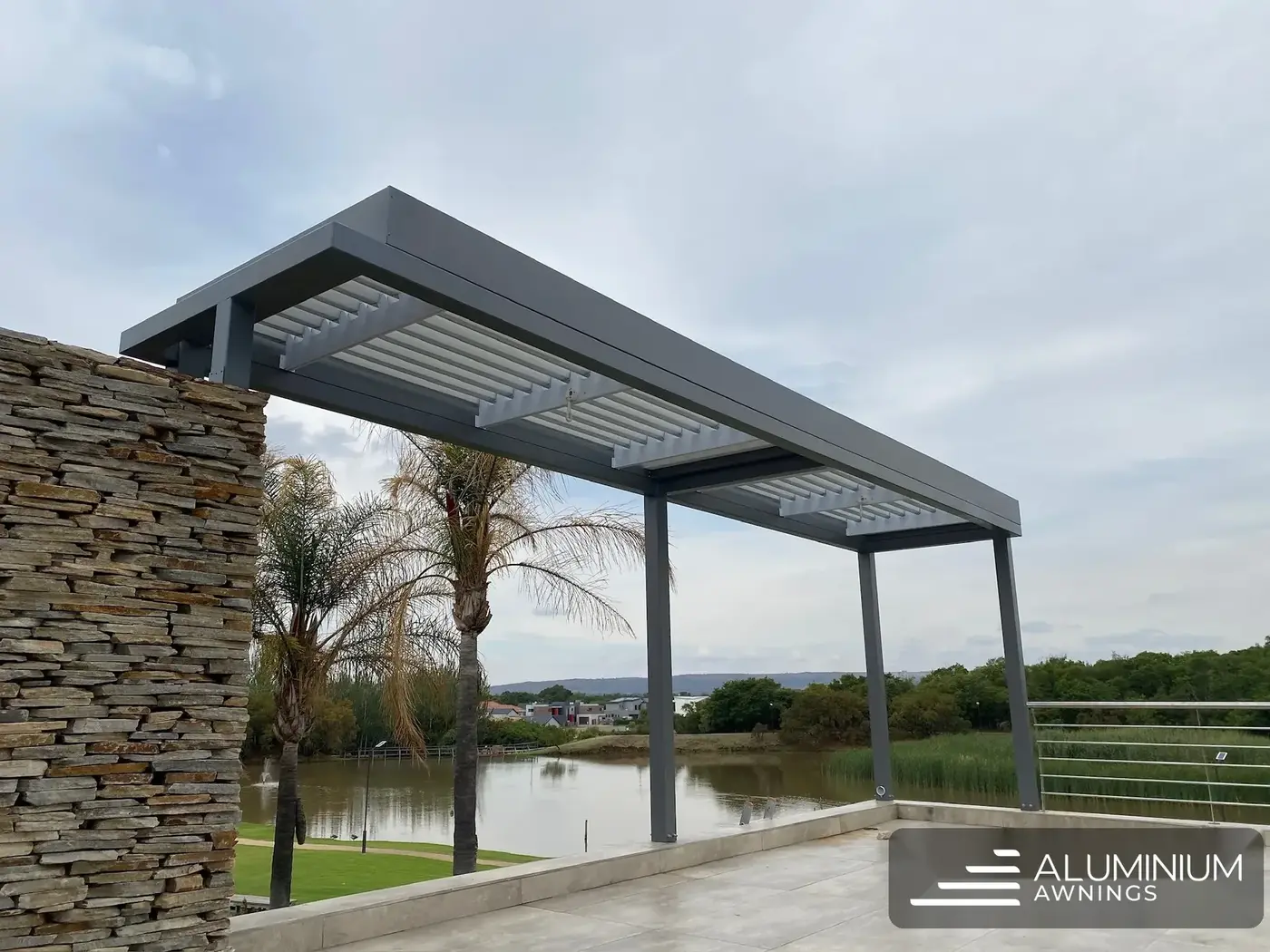
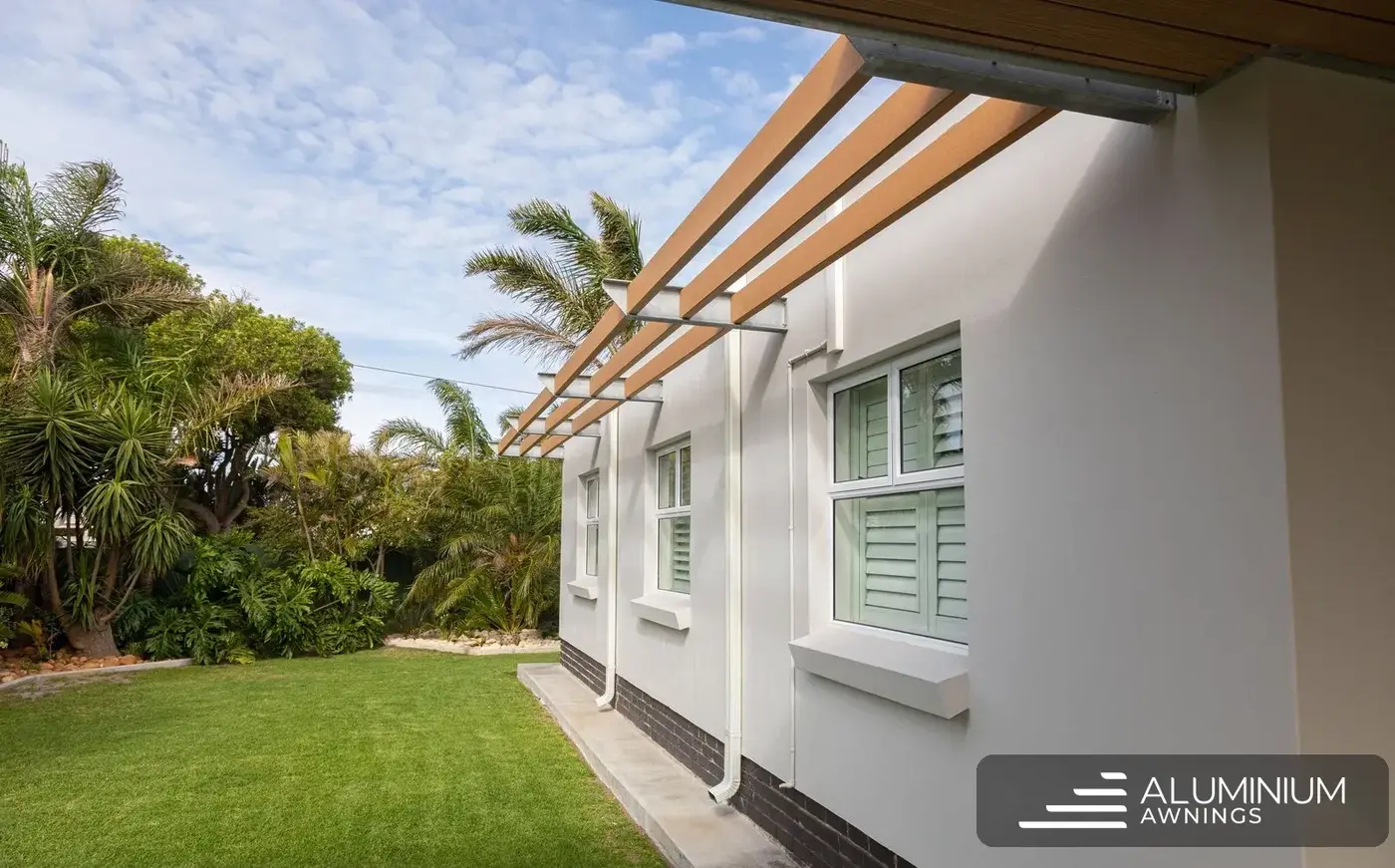
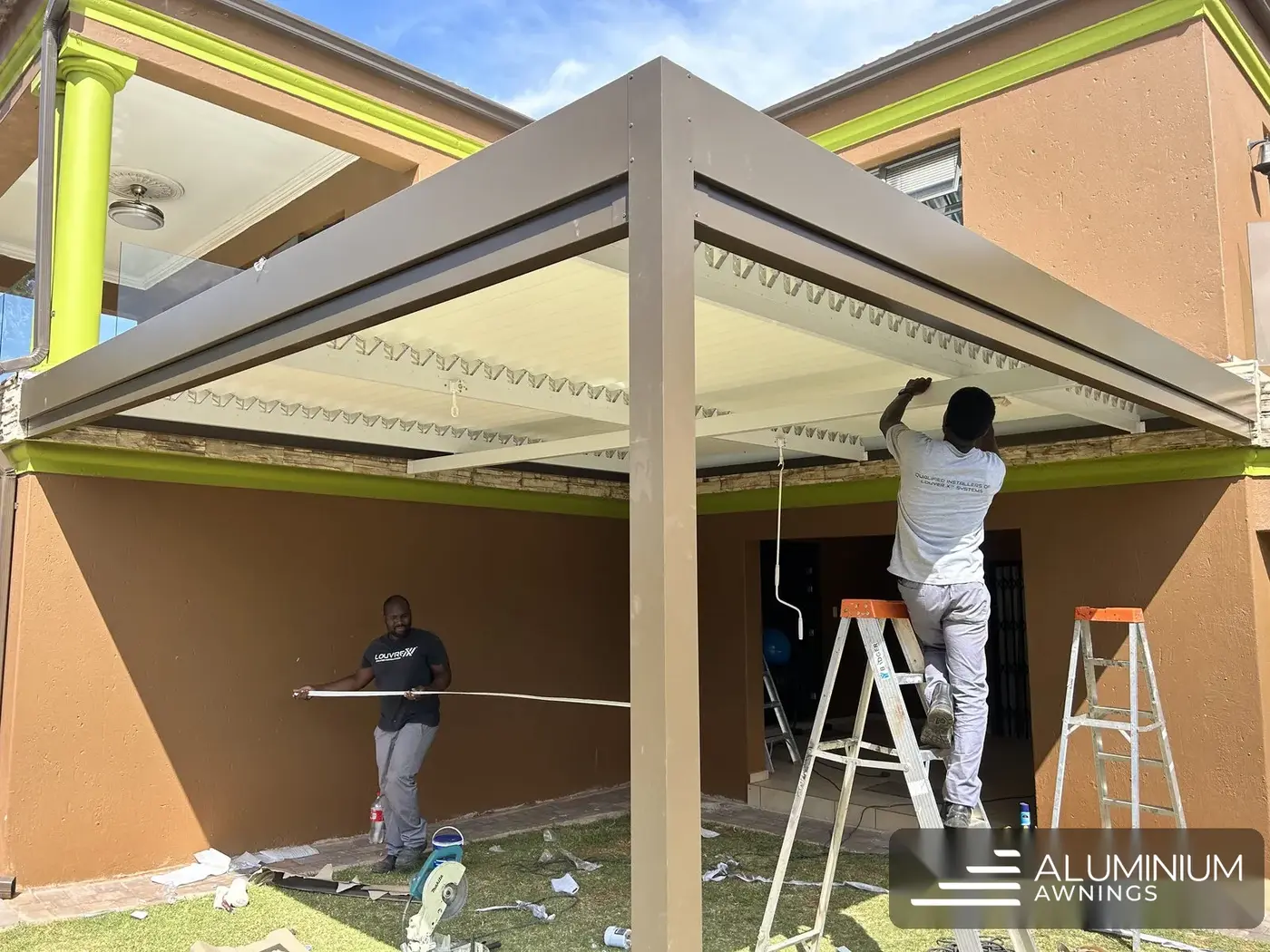
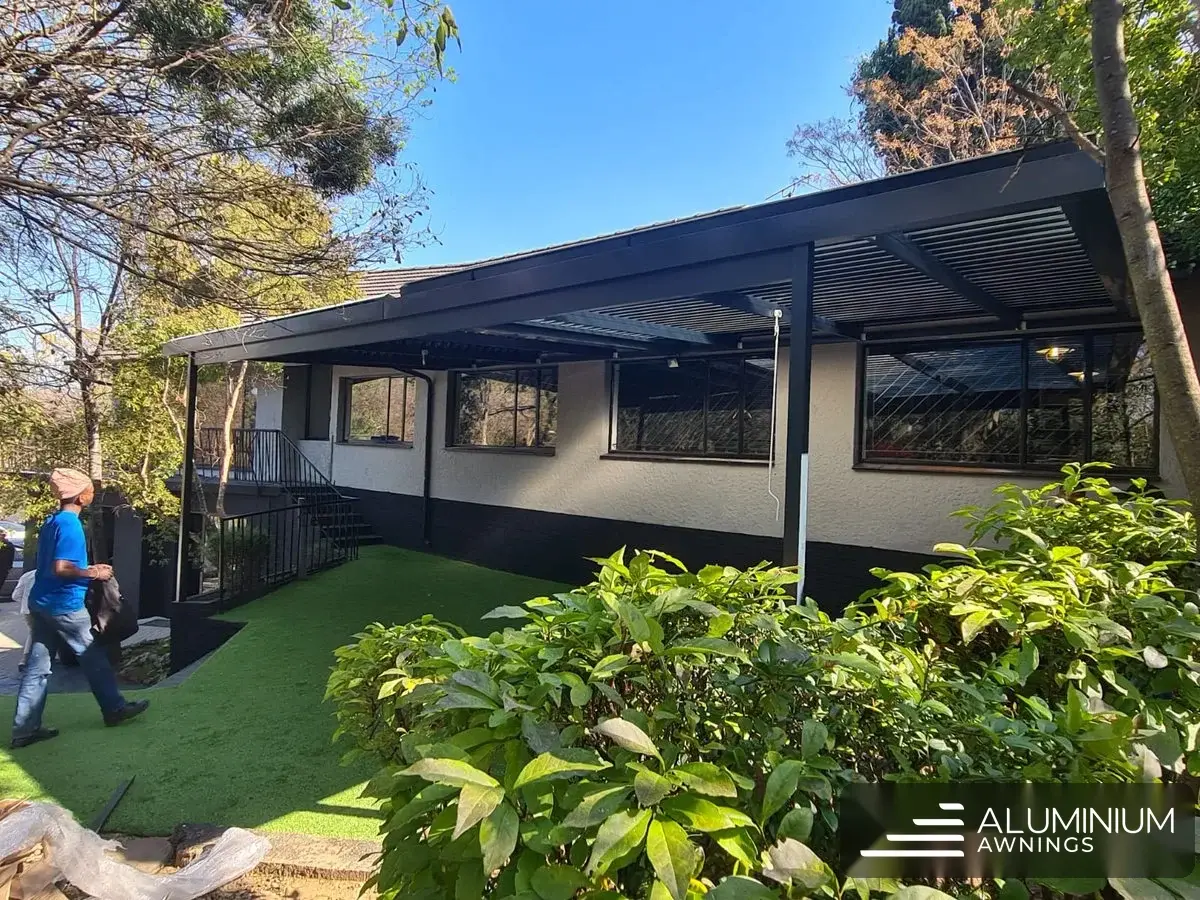
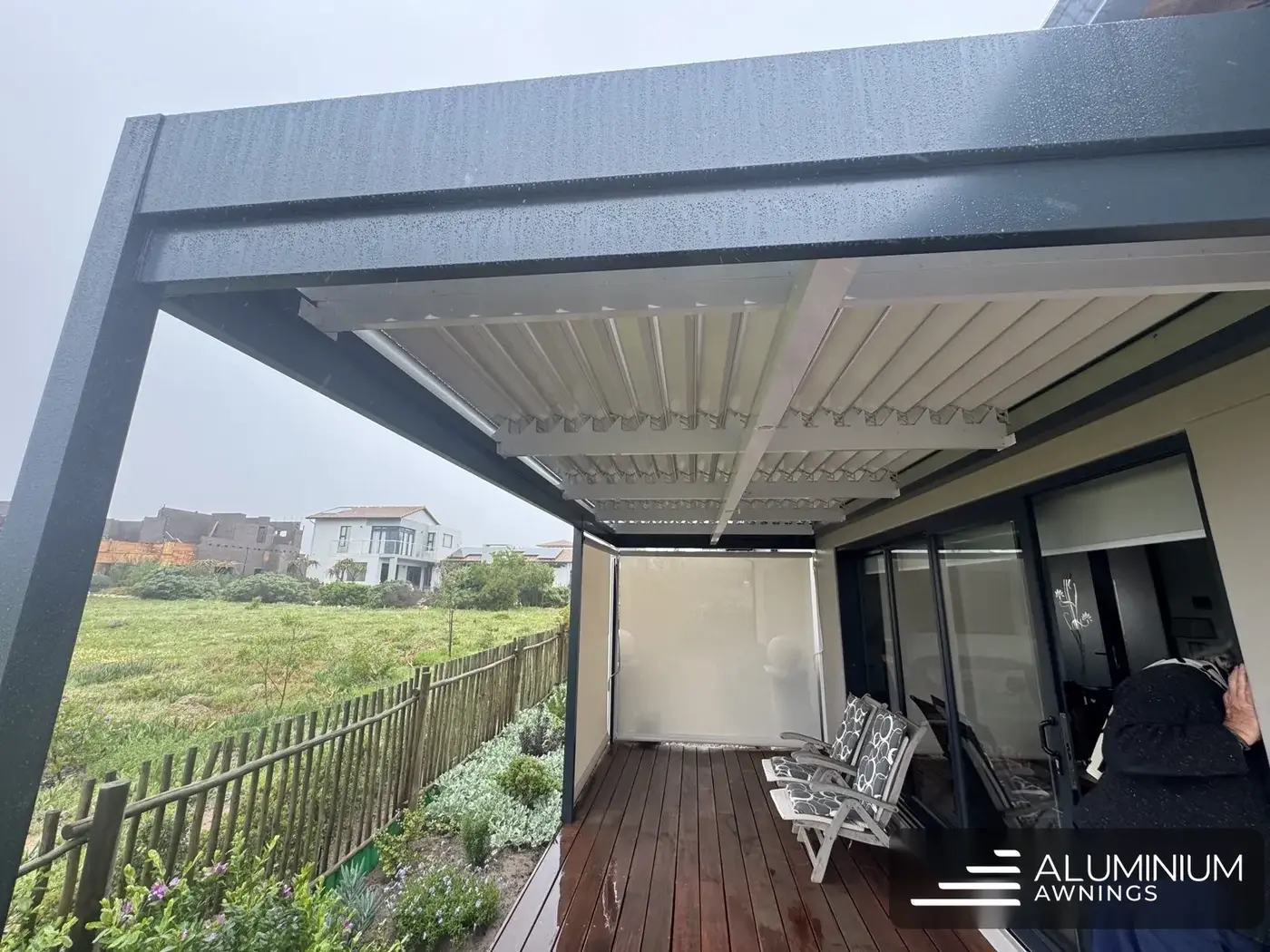
An aluminium louvre roof finished with a bronze frame and white blades, wall-attached and carried on slim aluminium posts over the patio. Manual rotating blades open for light and air, or angle and close to shed rain. Everything is built in marine-grade aluminium with coastal-grade fixings for the sea air.
A bright, sheltered space that looks built-in. Open, the blades let the sun through; closed, they keep the patio dry. With no steel and no timber there's nothing to maintain, just a cover that works right through the Cape's seasons.
There's a case for keeping a louvre roof manual, and Melkbosstrand makes it well. The blades rotate by hand, nothing electrical sits out in the West Coast sea air, and that is one less thing for salt to attack. Adjusting the roof takes about as long as carrying the coffee out to the patio.
The materials follow the same thinking. Marine-grade aluminium and coastal fixings are the difference between a cover that lasts here and one that streaks with rust in two winters. Bronze on the frame keeps the structure quiet against the house, while the white blades keep the light up underneath through the long Melkbos summer.
Finish: Bronze frame, white blades


Free site visit, fixed quote within 48 hours. Lifetime corrosion guarantee on all aluminium products.