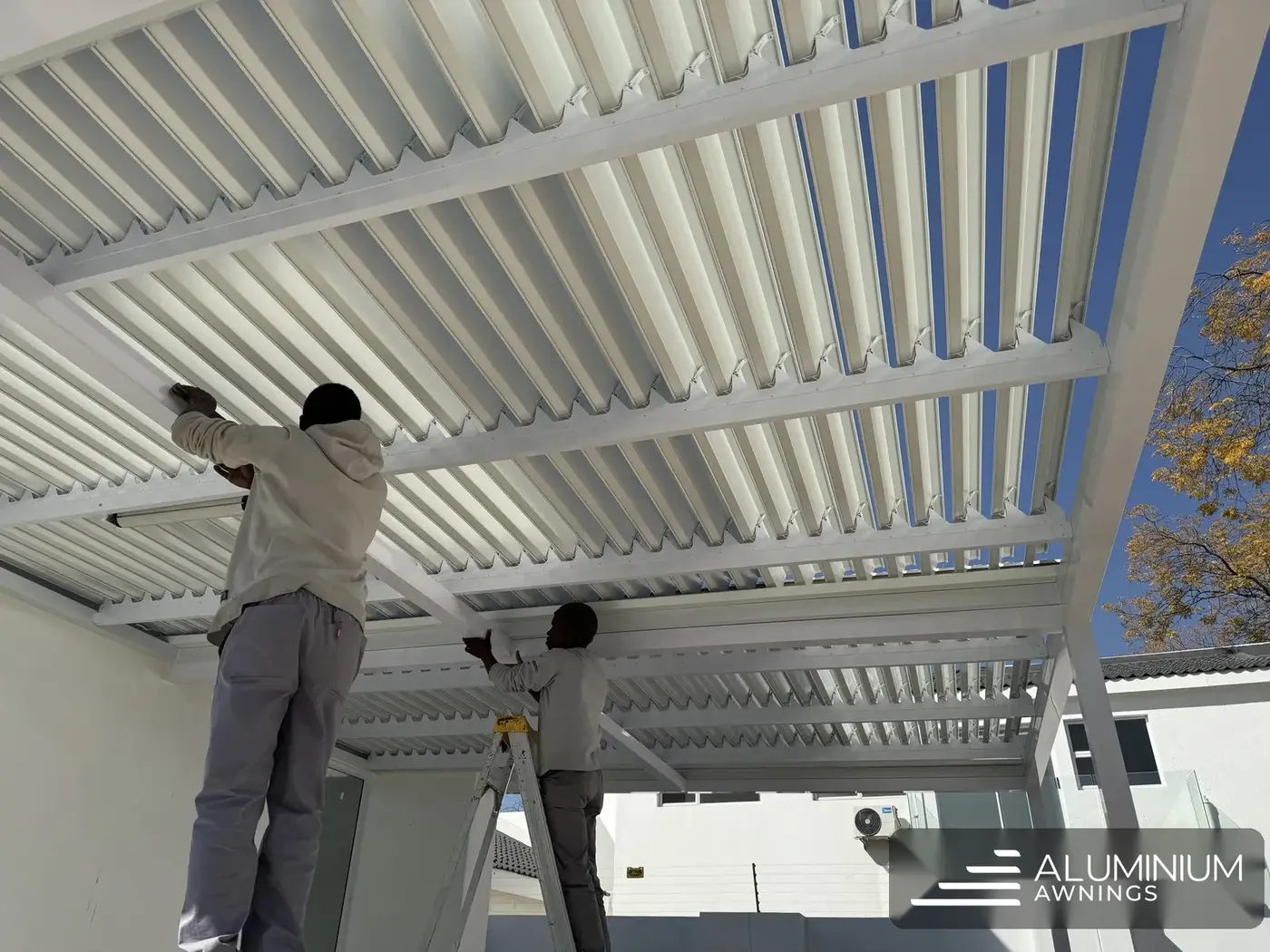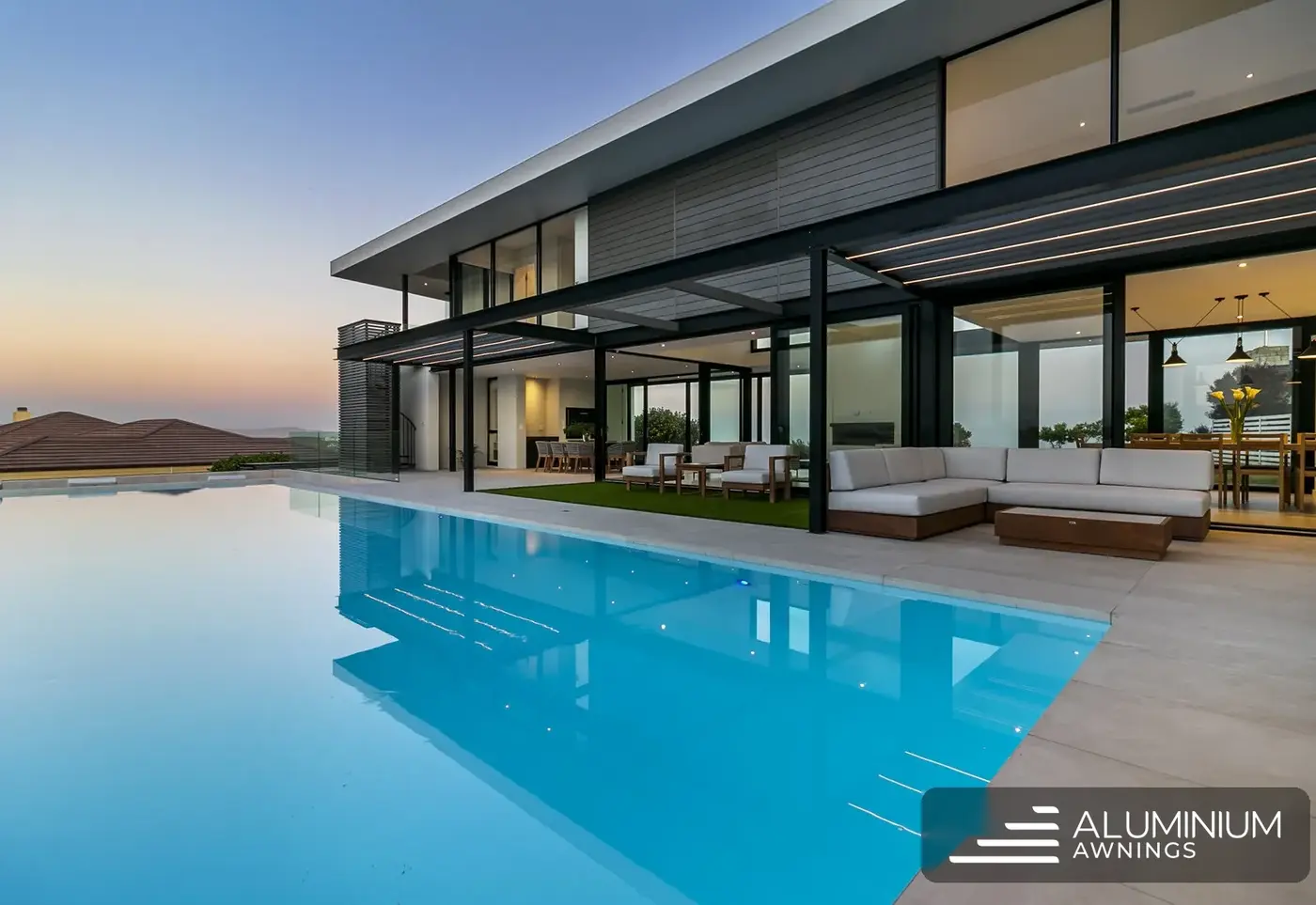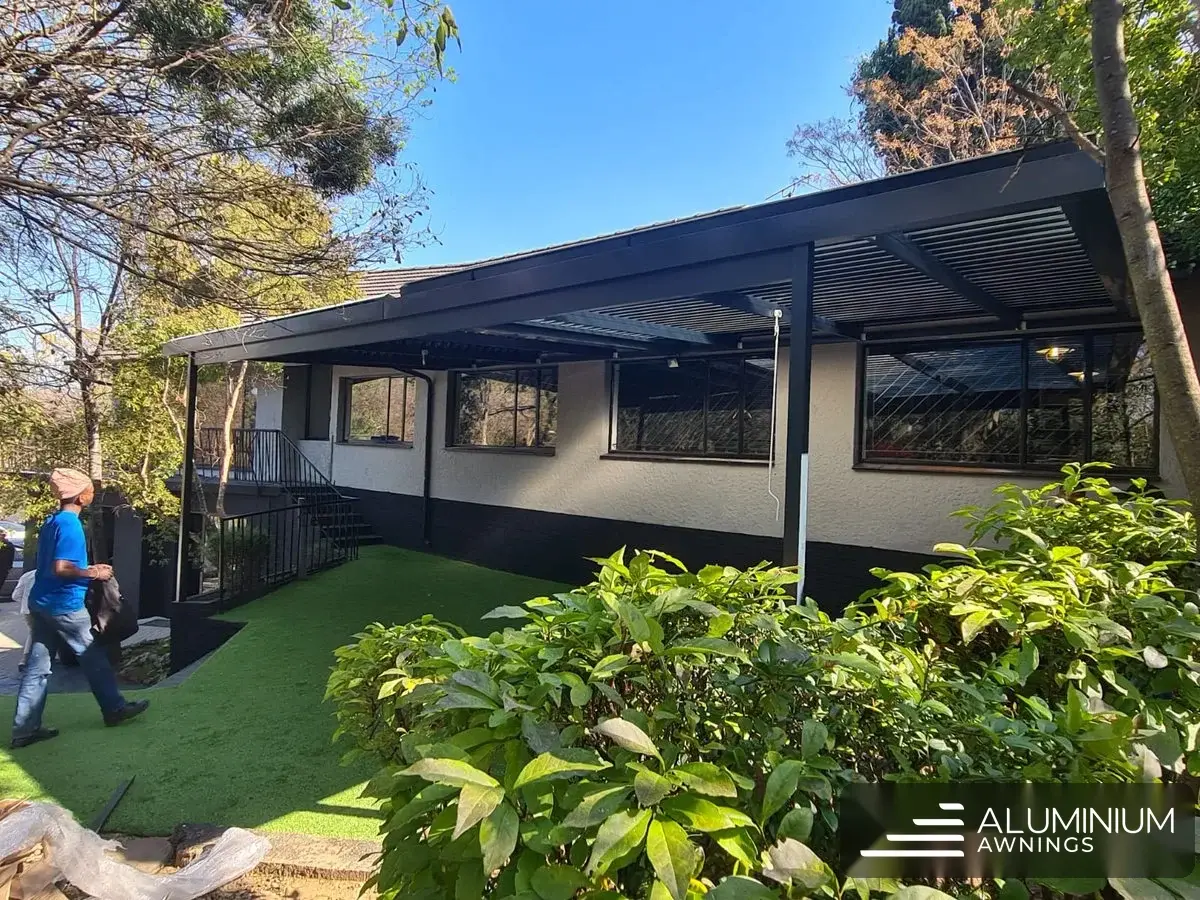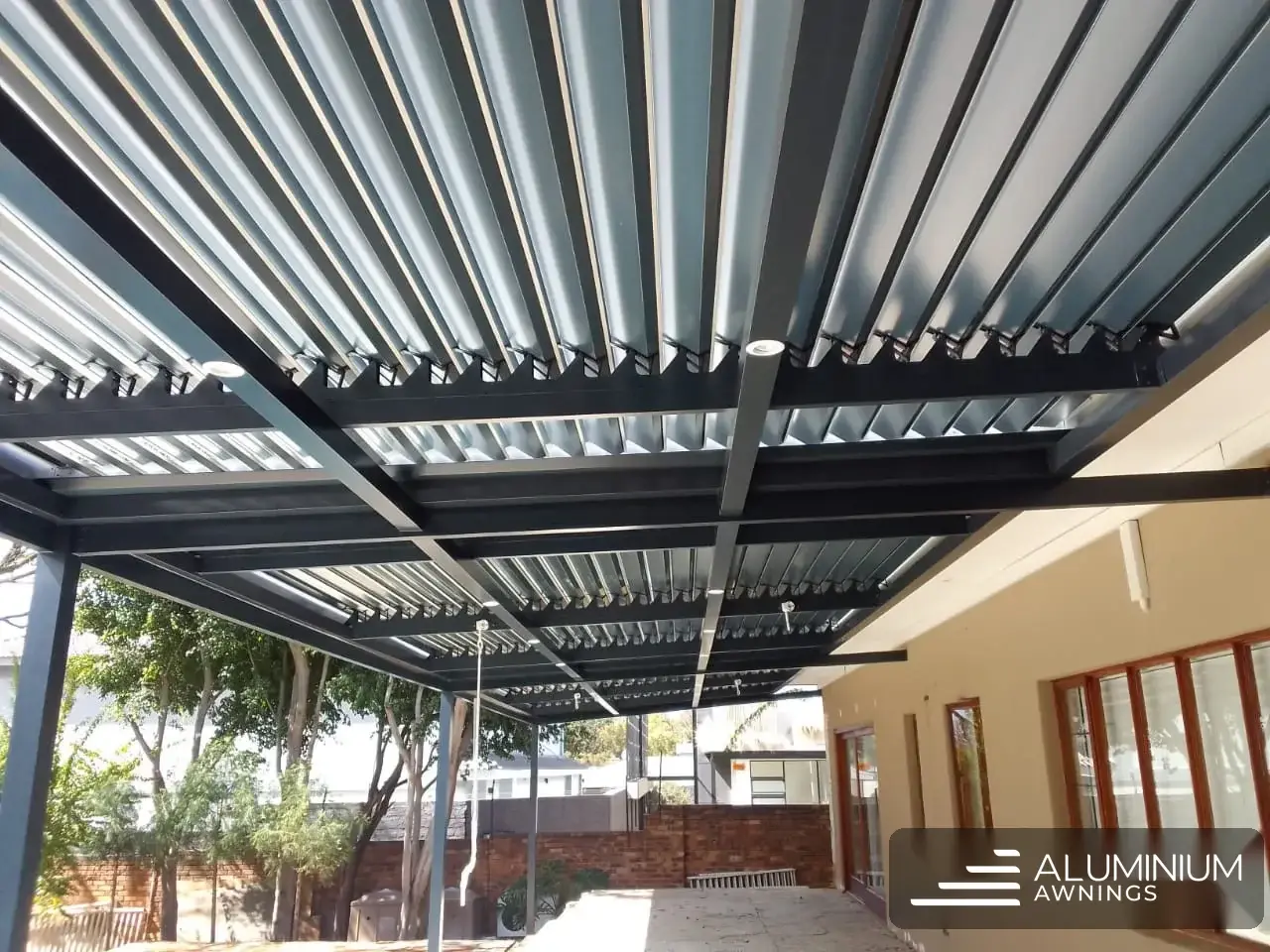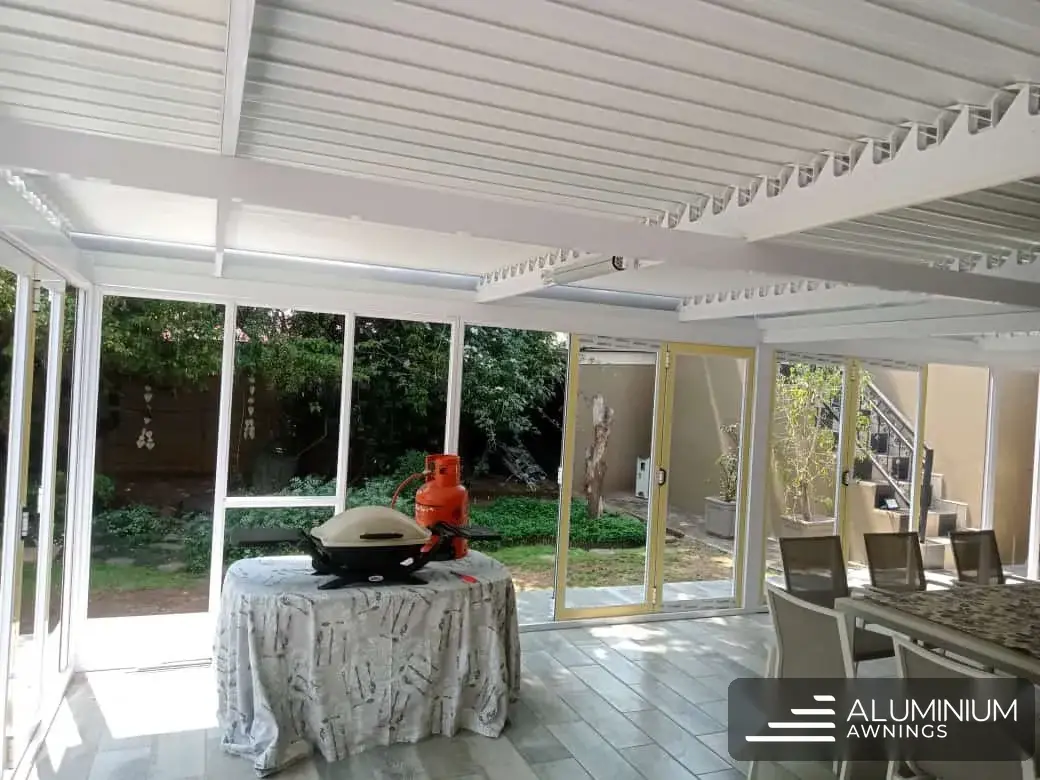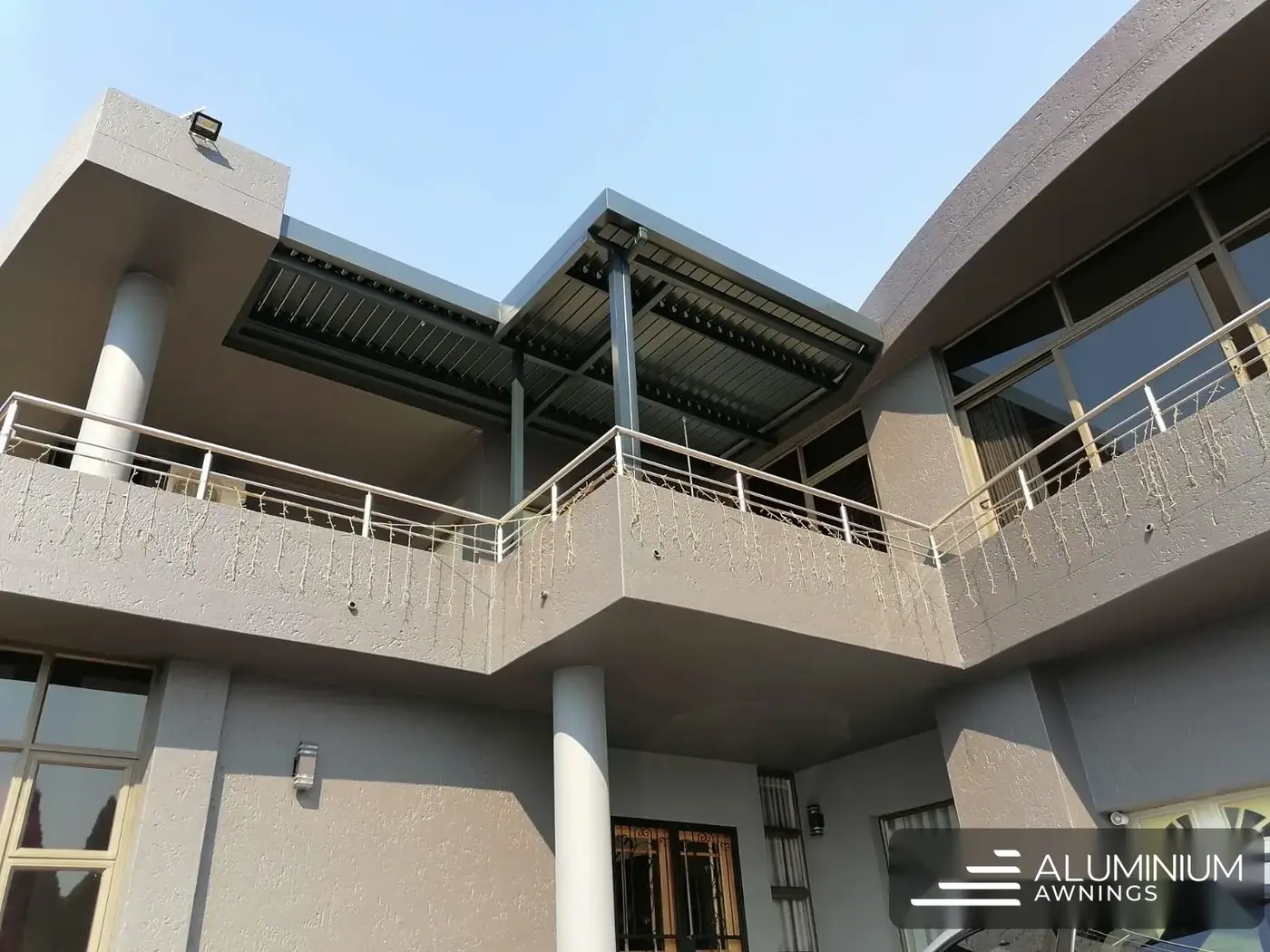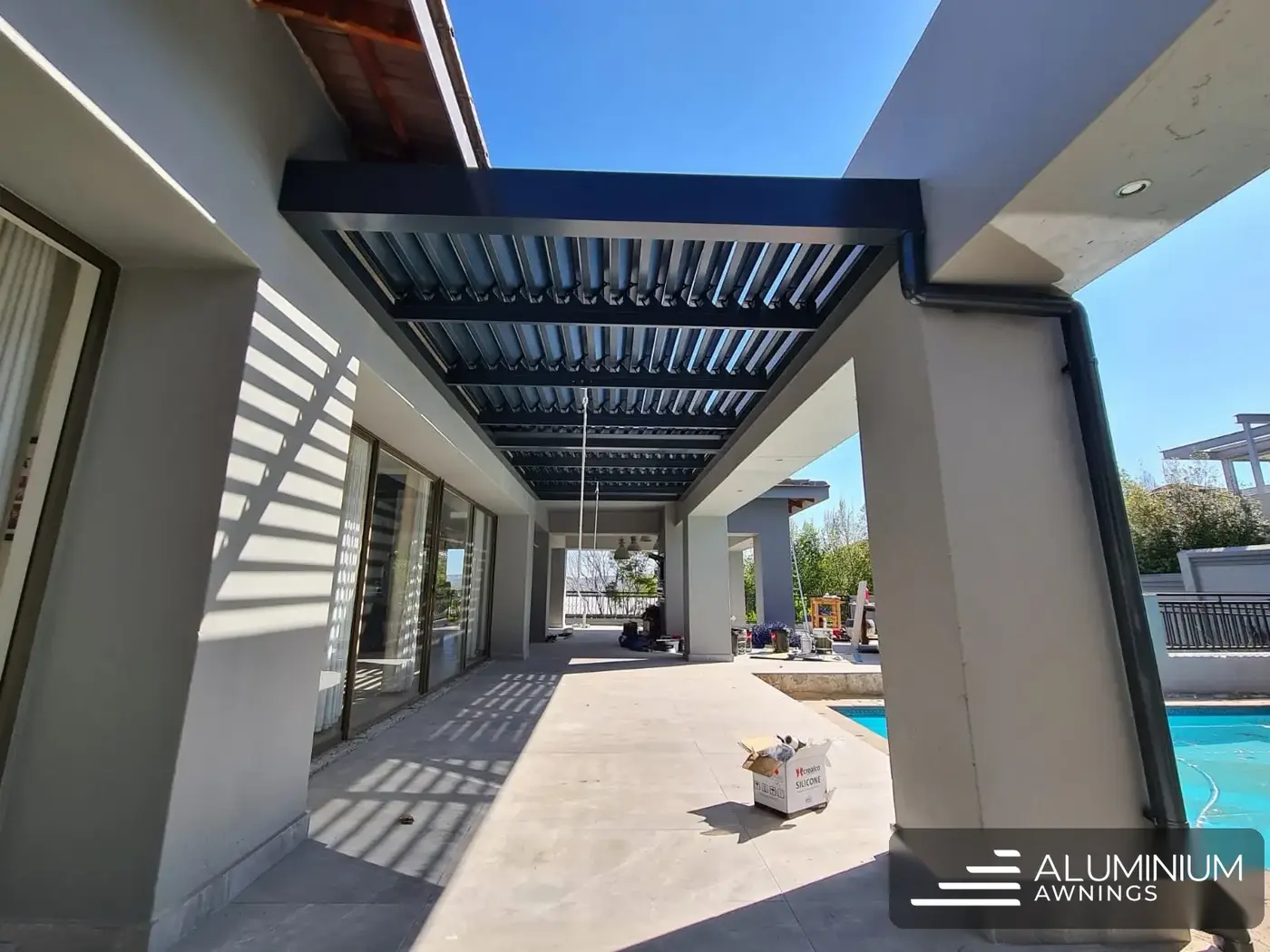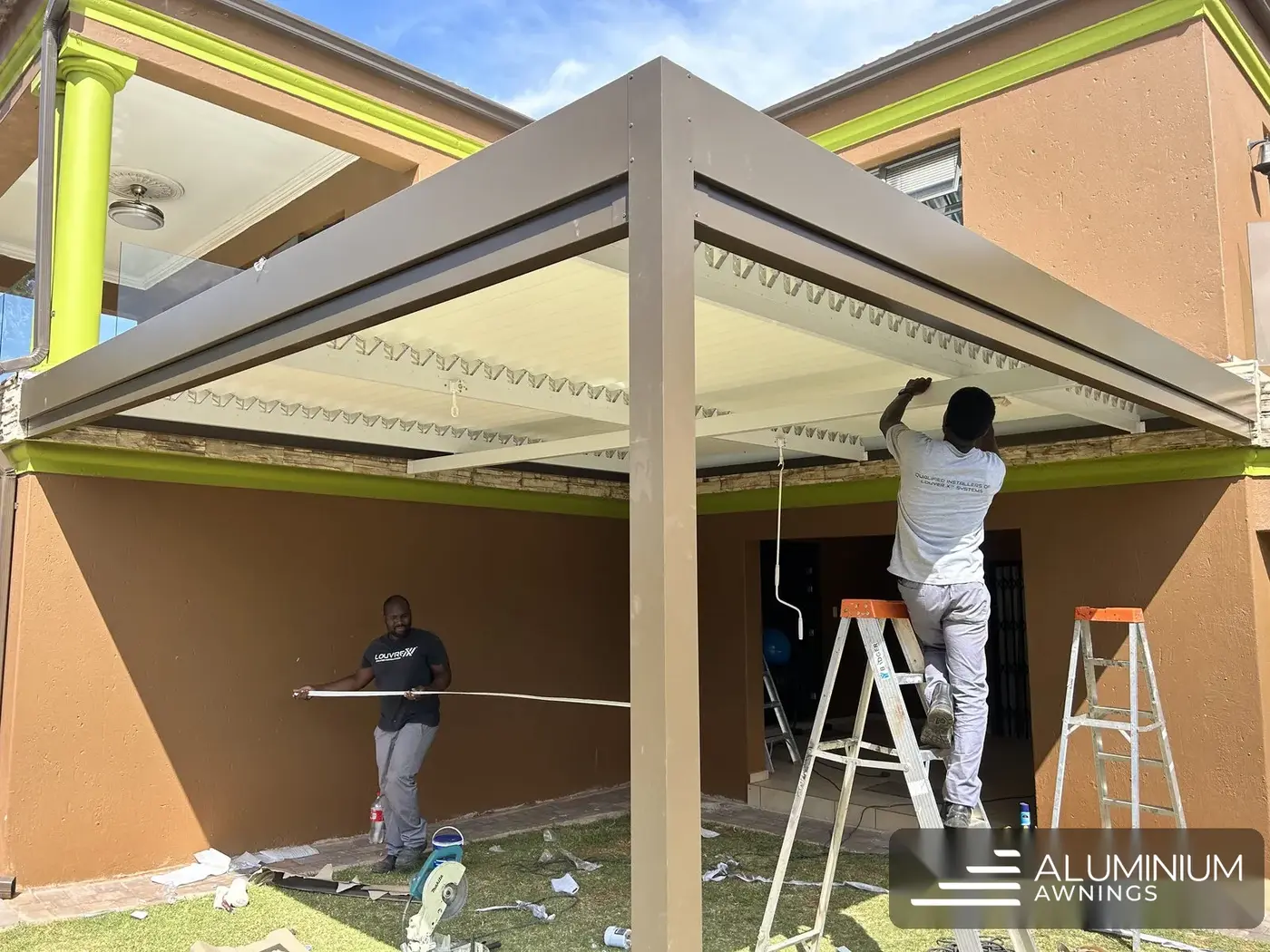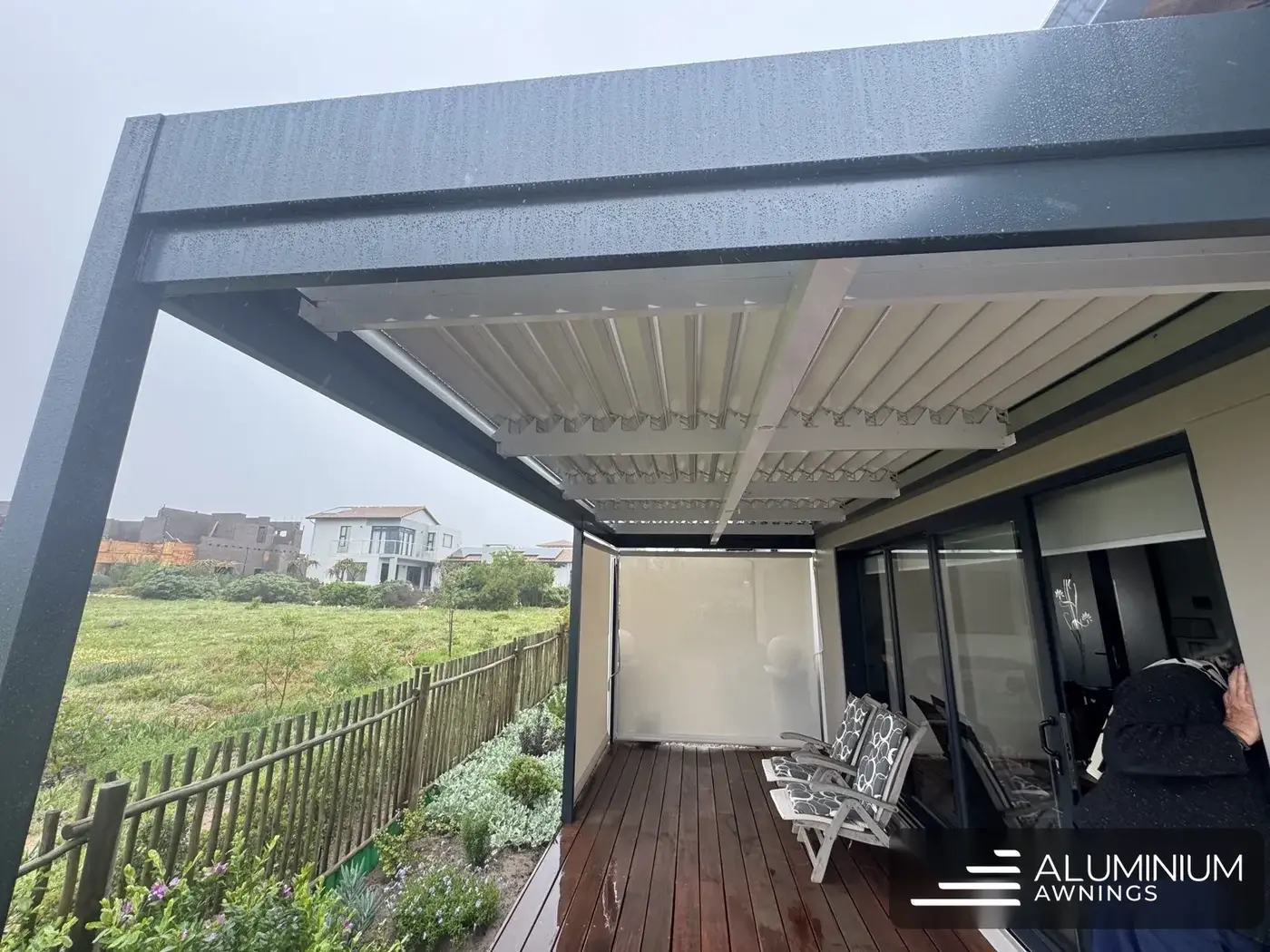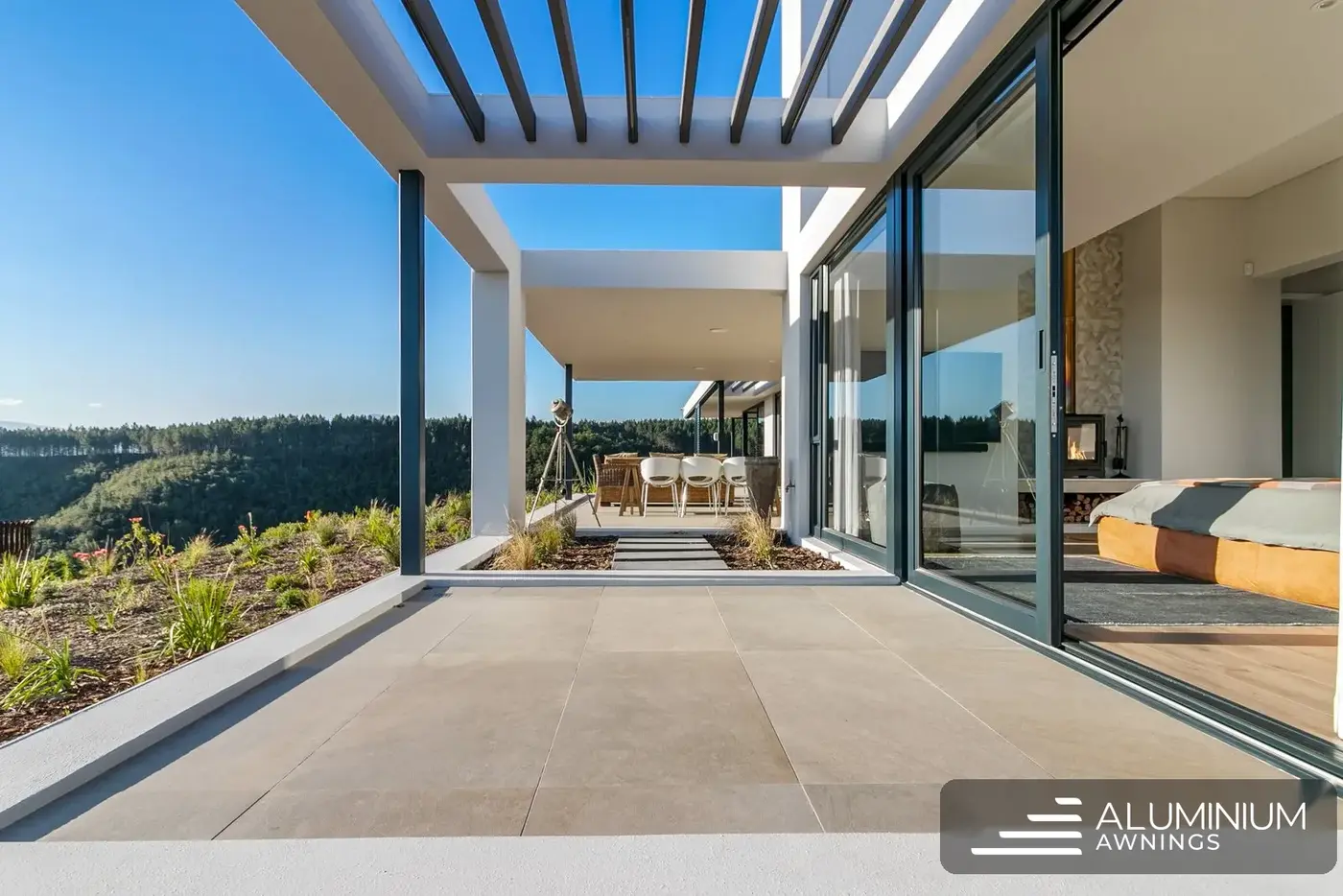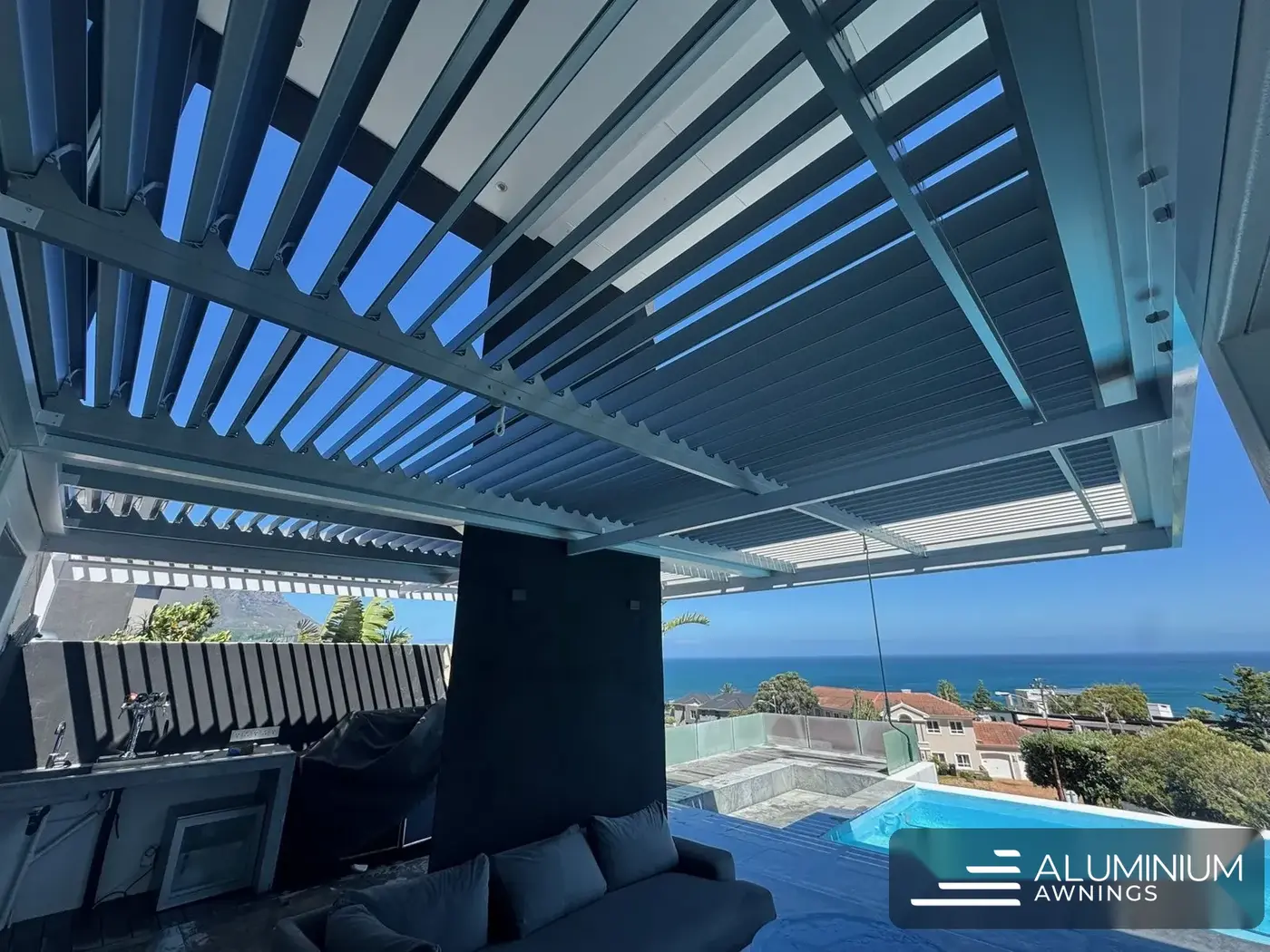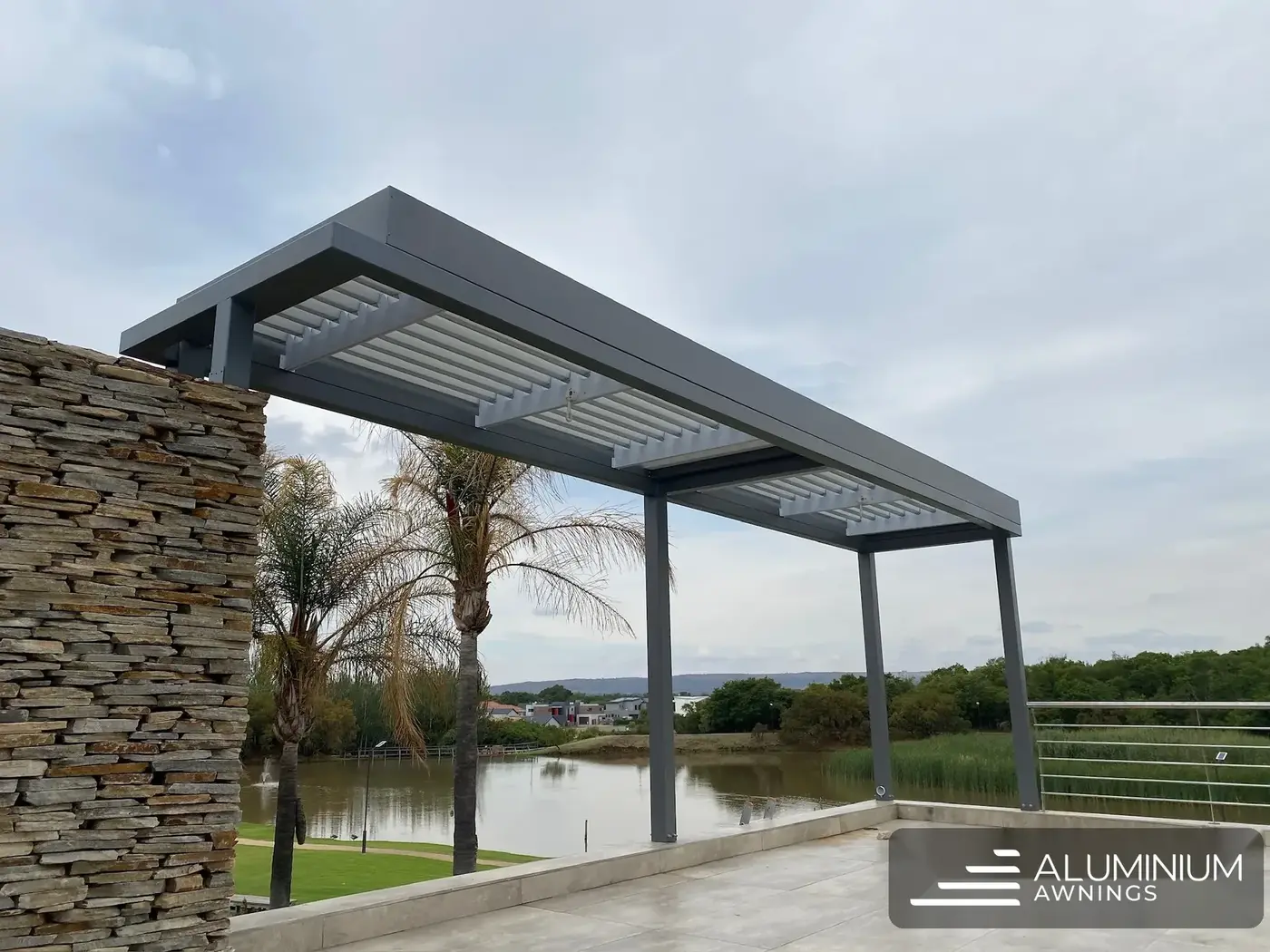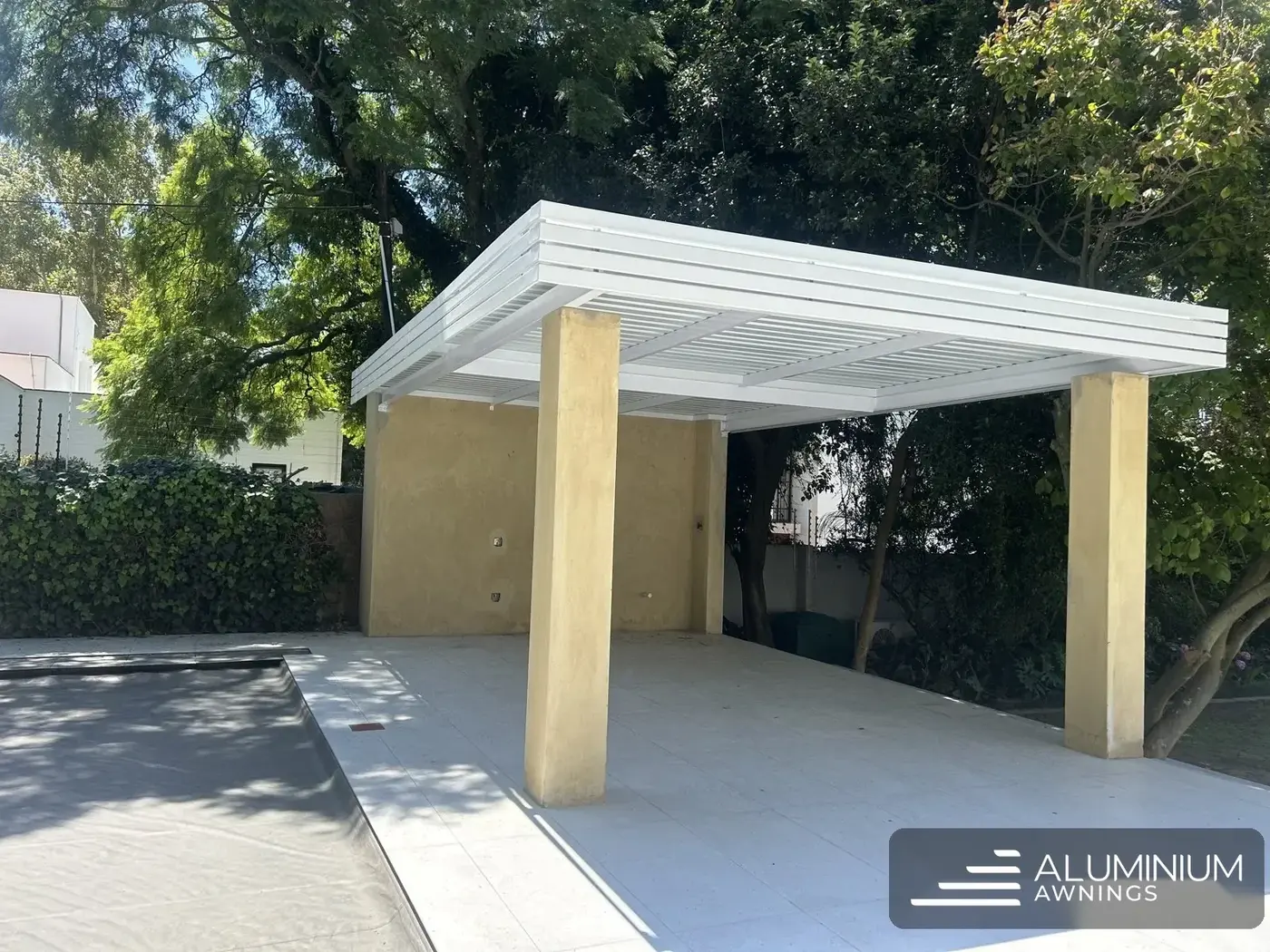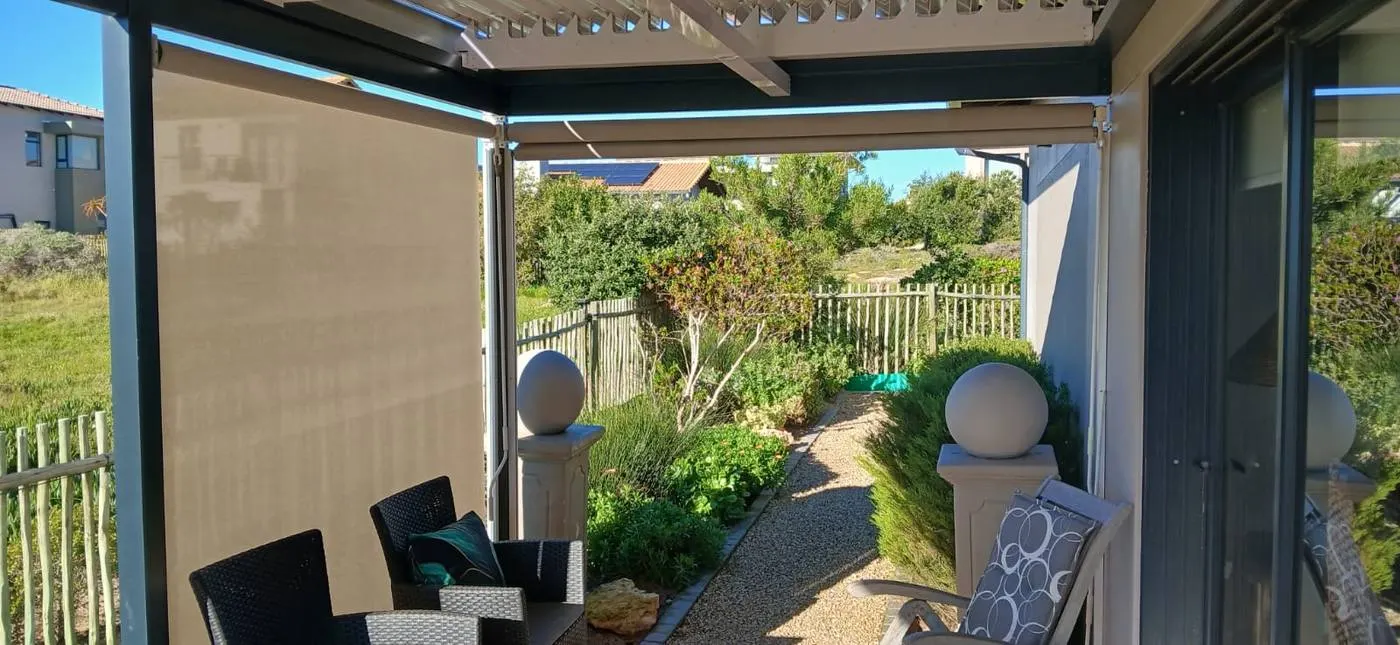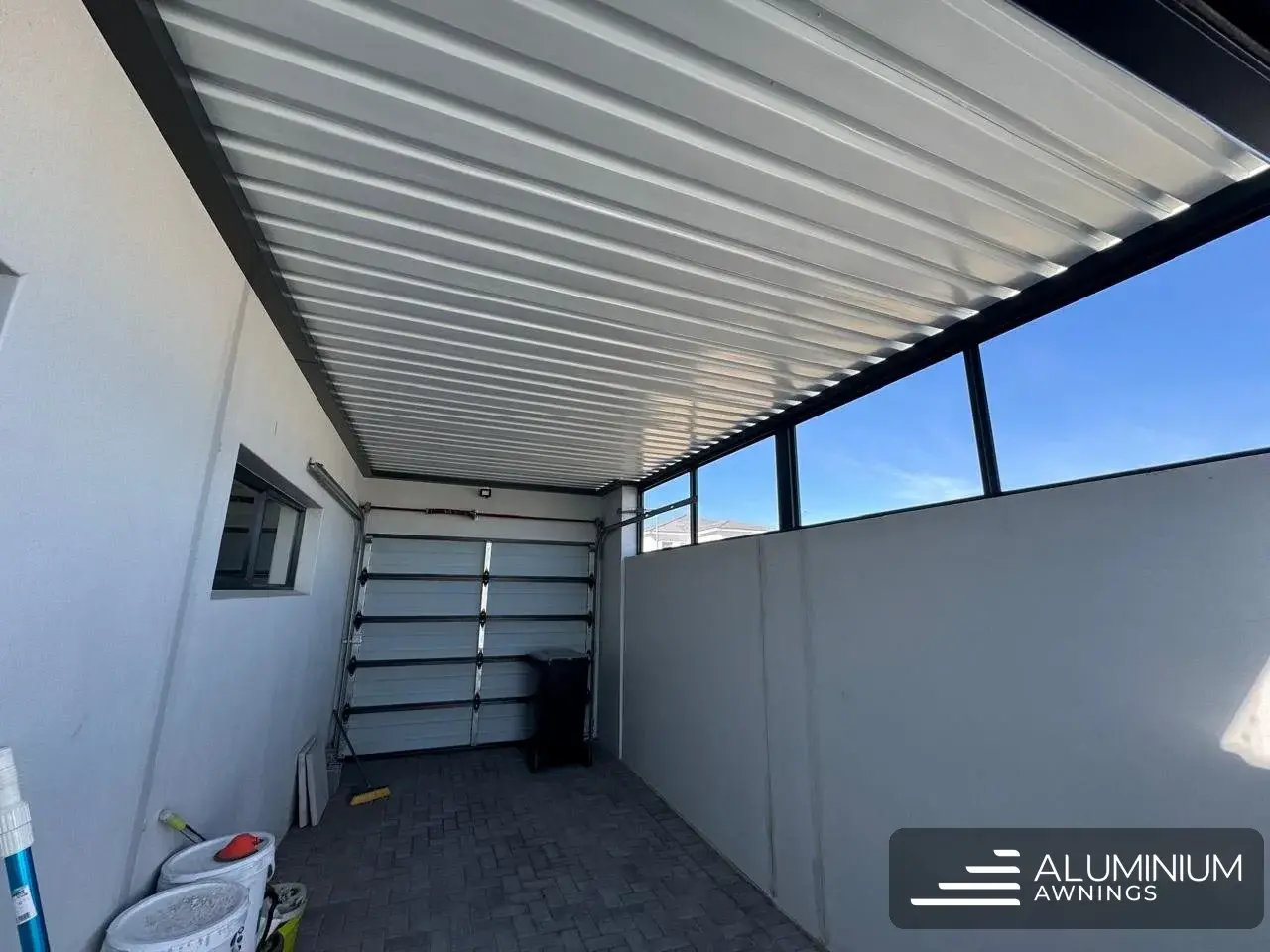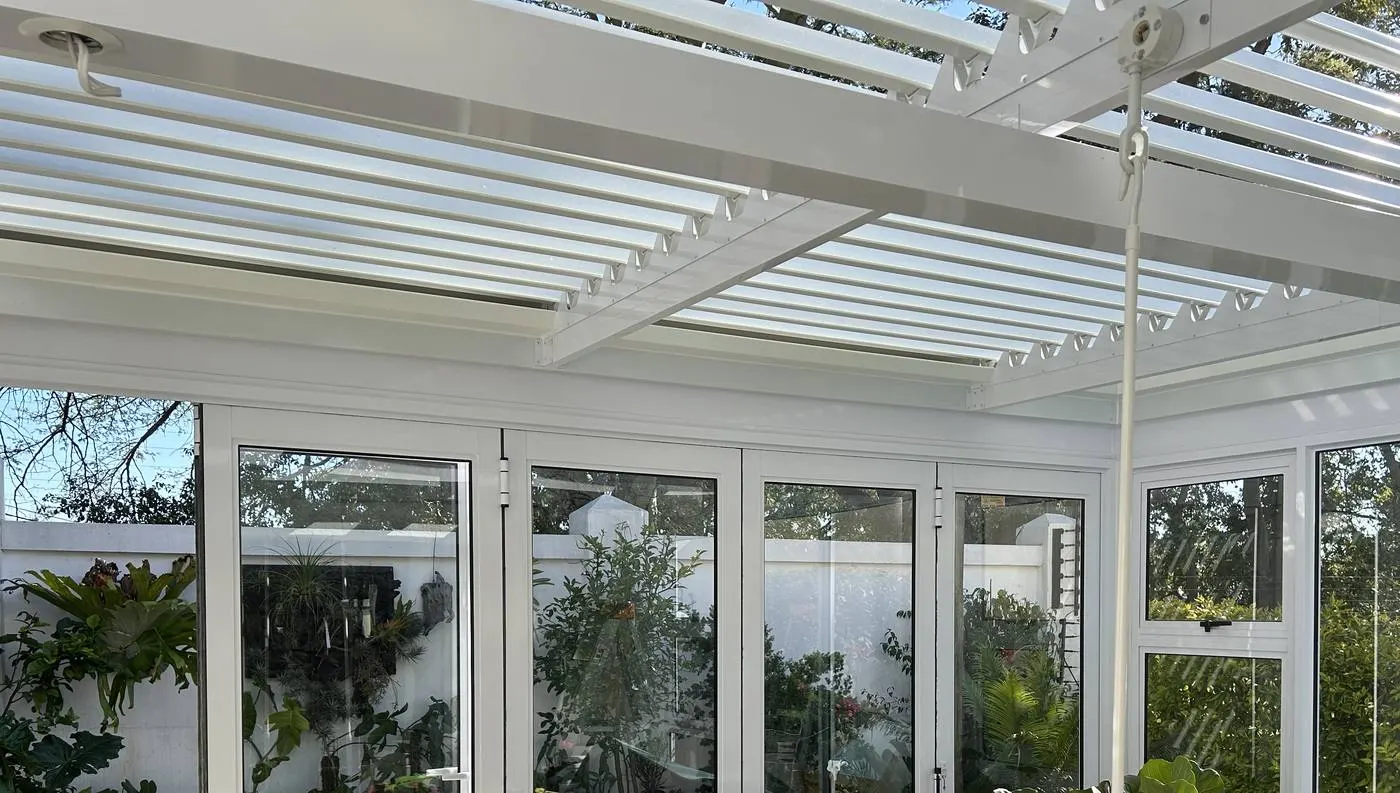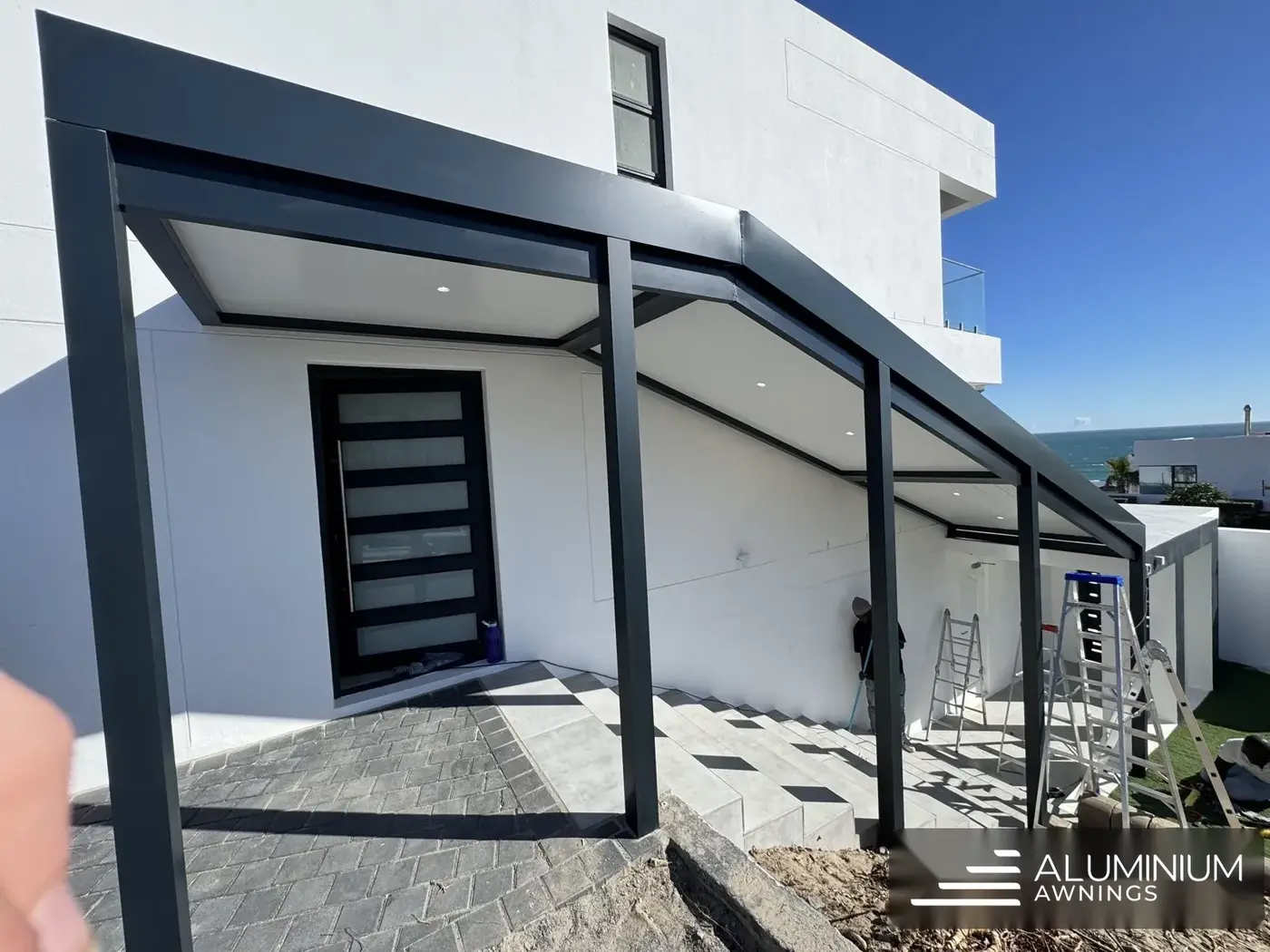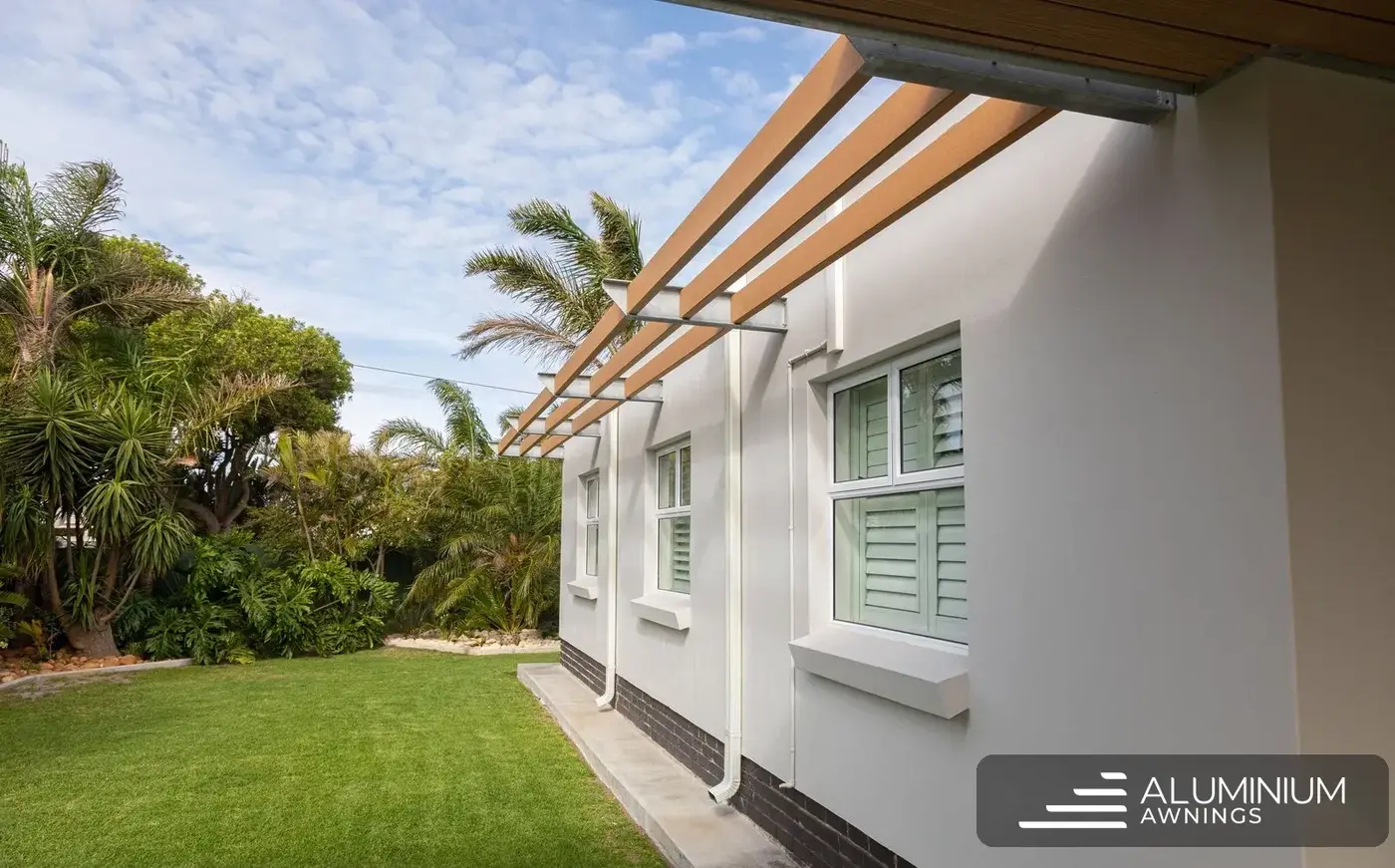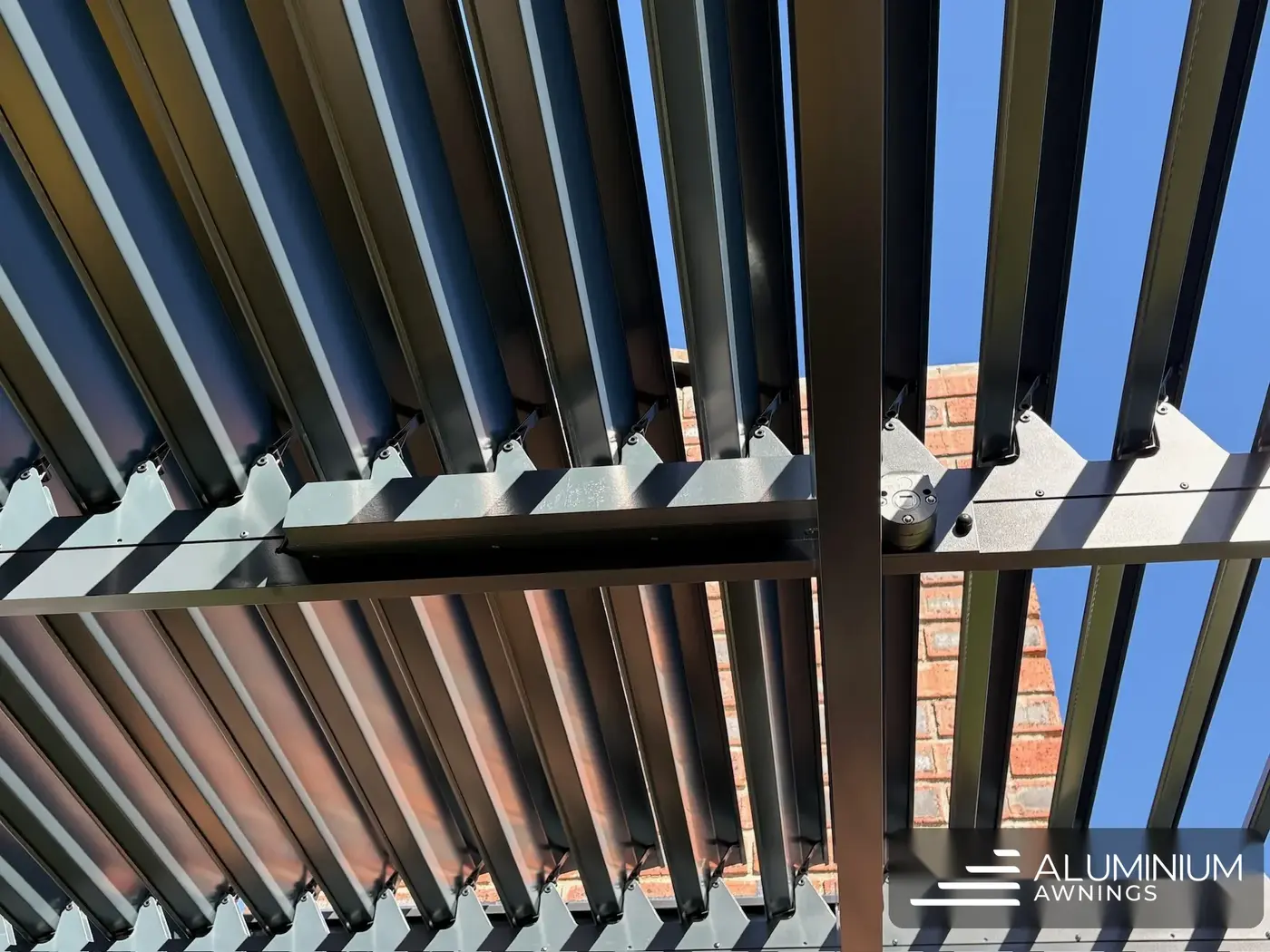
An aluminium awning is close to the lowest-maintenance thing attached to your house, and that is the reason we build in aluminium in the first place. Still, a small amount of routine care keeps the finish looking new and catches little problems while they are still little. Here is the whole job, honestly described. Most of it comes down to a hose and a soft brush.
We build fixed awnings and louvre roofs in marine-grade aluminium precisely because it asks so little of you afterwards. Timber wants sanding and sealing on repeat, and it rots wherever water sits. Steel rusts, and in coastal air it rusts quickly. Aluminium does neither, and the baked-enamel and powder-coat finishes we use were specified for this coastline in particular. Salt air is the whole design brief, which is why there is no ferrous metal in the build and the fasteners are stainless.
So the real maintenance list is short: keep it clean, keep the water moving through the gutters, and pay a bit of attention to the motor if you have one. Everything below fits inside that.
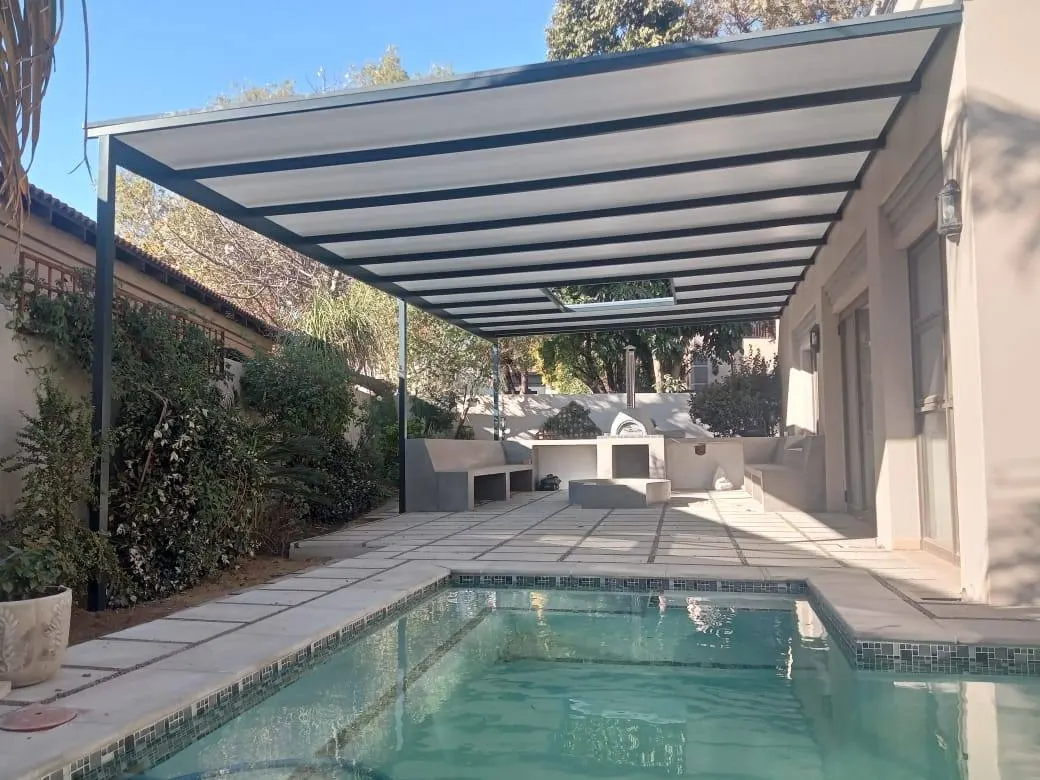
Three steps, in order. First rinse the whole structure with fresh water to lift off salt and dust. Then wash it down with mild soapy water and a soft brush or cloth, working into the corners and channels where grime settles. Rinse again so no soap dries on the finish. That is the entire procedure, and a garden hose handles both rinses. No wax, no special aluminium products, nothing off a specialist shelf. A fixed IBR-sheet awning gets exactly the same treatment as a louvre roof; there is no separate procedure to learn.
How often depends on where you live. On the coast, where salt spray lands on everything you own, somewhere around quarterly keeps the finish in good shape. Inland you can stretch the interval well past that. Treat this as guidance rather than a rule: if the frame looks dull or feels gritty under your hand, it is ready for a wash, whatever the calendar says.
A louvre roof carries rain through a gutter built into the frame and away through the downpipes, and a gutter full of leaves cannot do that job. Autumn is the season to watch, especially under oaks and planes, and again after any big blow. Scoop the gutter clear and check that the downpipe outlets are open before the first winter fronts arrive.
This is the one item on the list we would call non-negotiable. Blocked drainage sits behind most of the winter problems we see, and it takes minutes to prevent. The downpipes matter as much as the gutter itself, because water that cannot get out at the bottom backs up just the same.
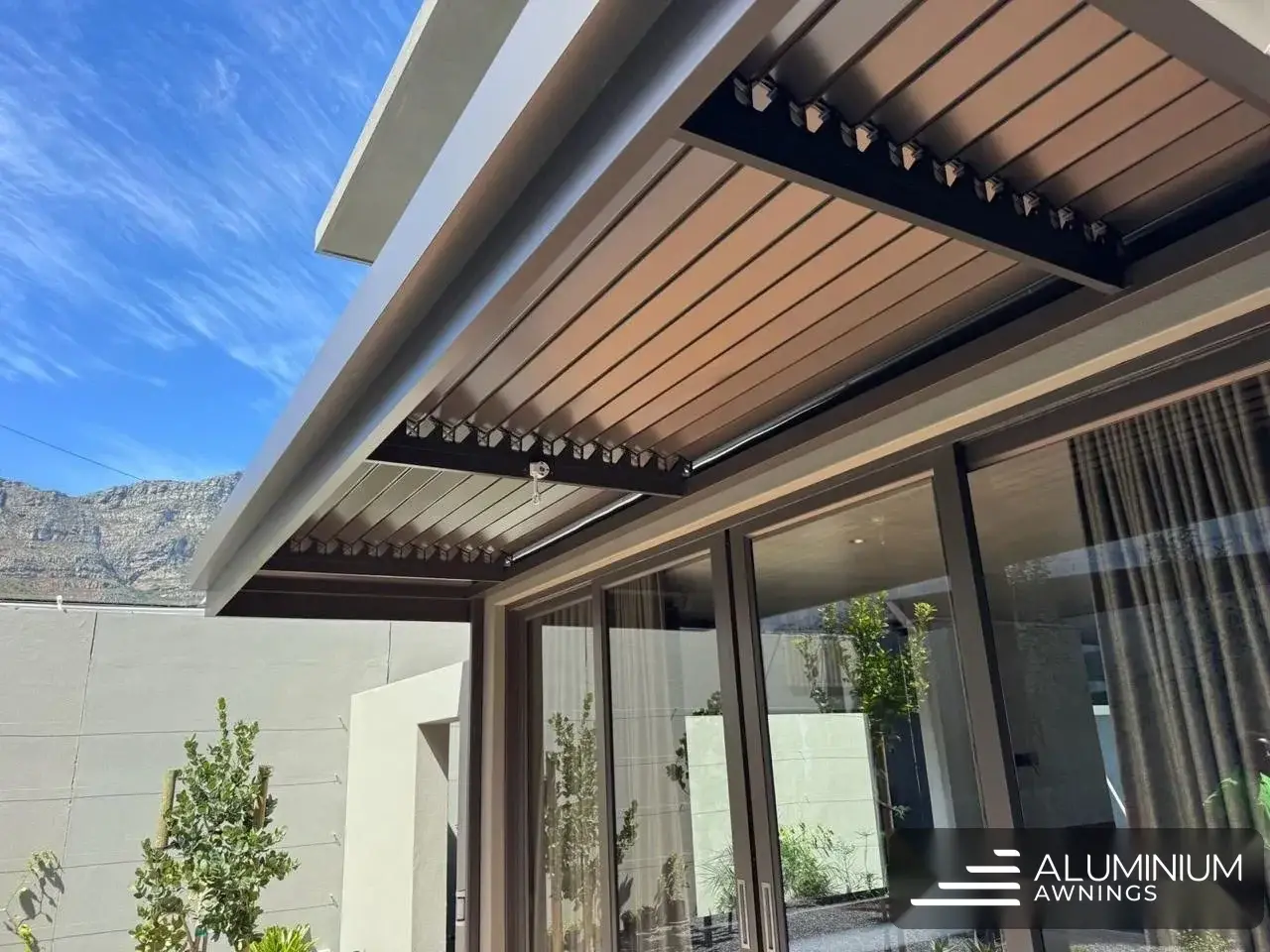
The motors on our louvre roofs sit in sealed IP65 housings. There is nothing inside for you to service and nothing you should open, which is exactly how we want it. What you can usefully do is keep the blade pivots clear of leaves, twigs and builder's dust, so the mechanism never has to fight through debris.
Also, listen. A healthy system sounds even from one end of its travel to the other. If the motor starts straining, or the blades hesitate at the same point every time, stop running it and let us look rather than pushing through. Small mechanical complaints are cheap to sort early. Rain and wind sensors need nothing from you either; if the roof ever stops responding to them, that is a phone call, not a home repair.
A short list, but every item on it earns its place:
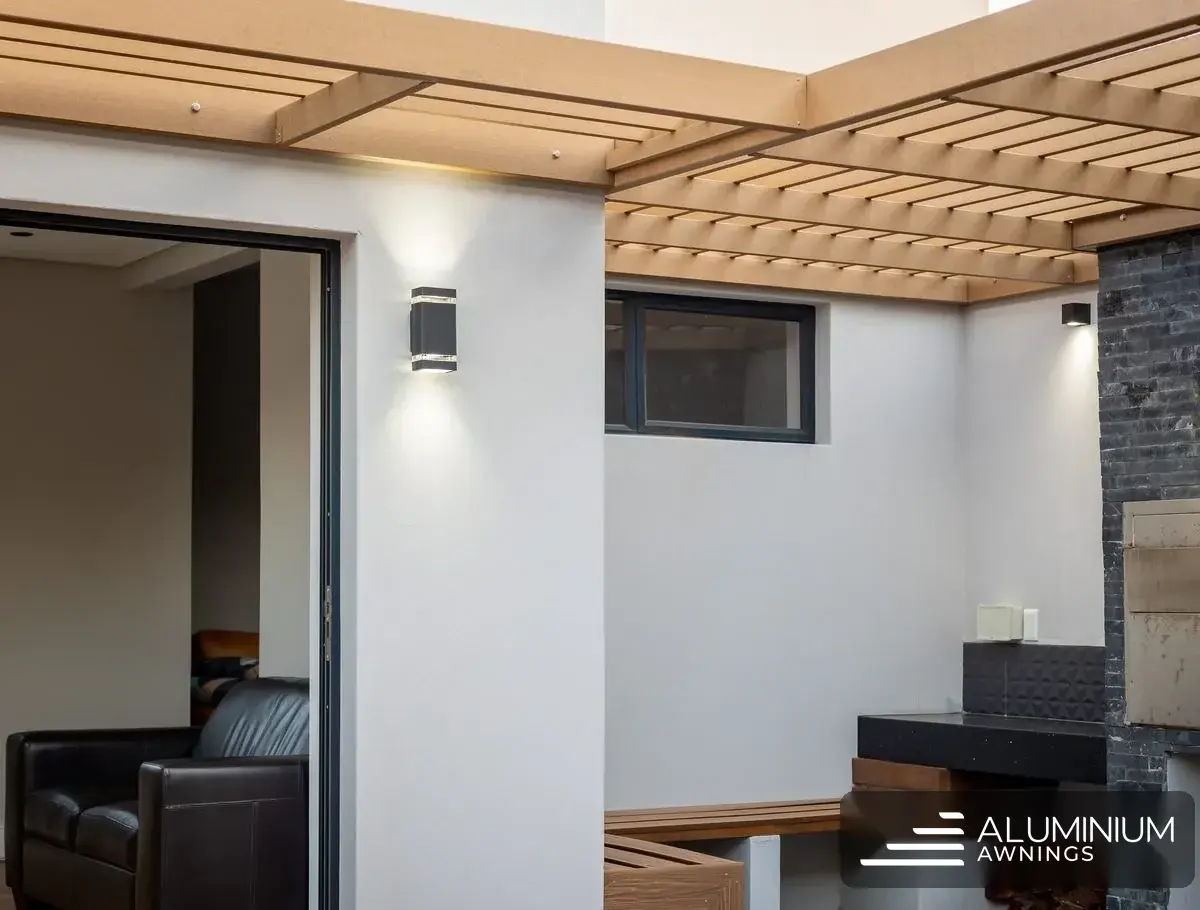
If your structure includes composite slats or cladding, that material has its own short routine, covered in our composite care guide.
The aluminium itself carries a lifetime corrosion guarantee, so the care above is about keeping the finish smart, not keeping the structure alive. Some jobs, though, are ours and not yours. A blade knocked out of line, a motor that still strains after you have cleared the pivots, damage after a serious storm, or anything touching the fasteners or the frame itself: rather phone us than improvise with a spanner. The common questions are answered on our FAQ page, and if it needs eyes on site, get in touch and we will come out at no charge.
On the coast, somewhere around every three months is a sensible rhythm, since salt spray settles on the finish. Inland homes can go a good deal longer between washes. If the frame looks dull or feels gritty, it is due.
We advise against it at close range. The risk is forcing water past the seals and blade pivots, where it does not belong. A garden hose and a soft brush do the same job without that risk.
No. We build in marine-grade aluminium with stainless fasteners and no ferrous metal, and the aluminium carries a lifetime corrosion guarantee. Avoiding rust is the main reason we use it instead of steel.
No. The motors are sealed in IP65 housings and there is no user servicing to do. Keep the blade pivots free of debris and call us if the motor ever sounds strained.
We design, fabricate and install across the Western Cape, from the Atlantic Seaboard and Southern Suburbs to the Winelands, Helderberg, West Coast, Overberg and the Garden Route. Explore your area below.