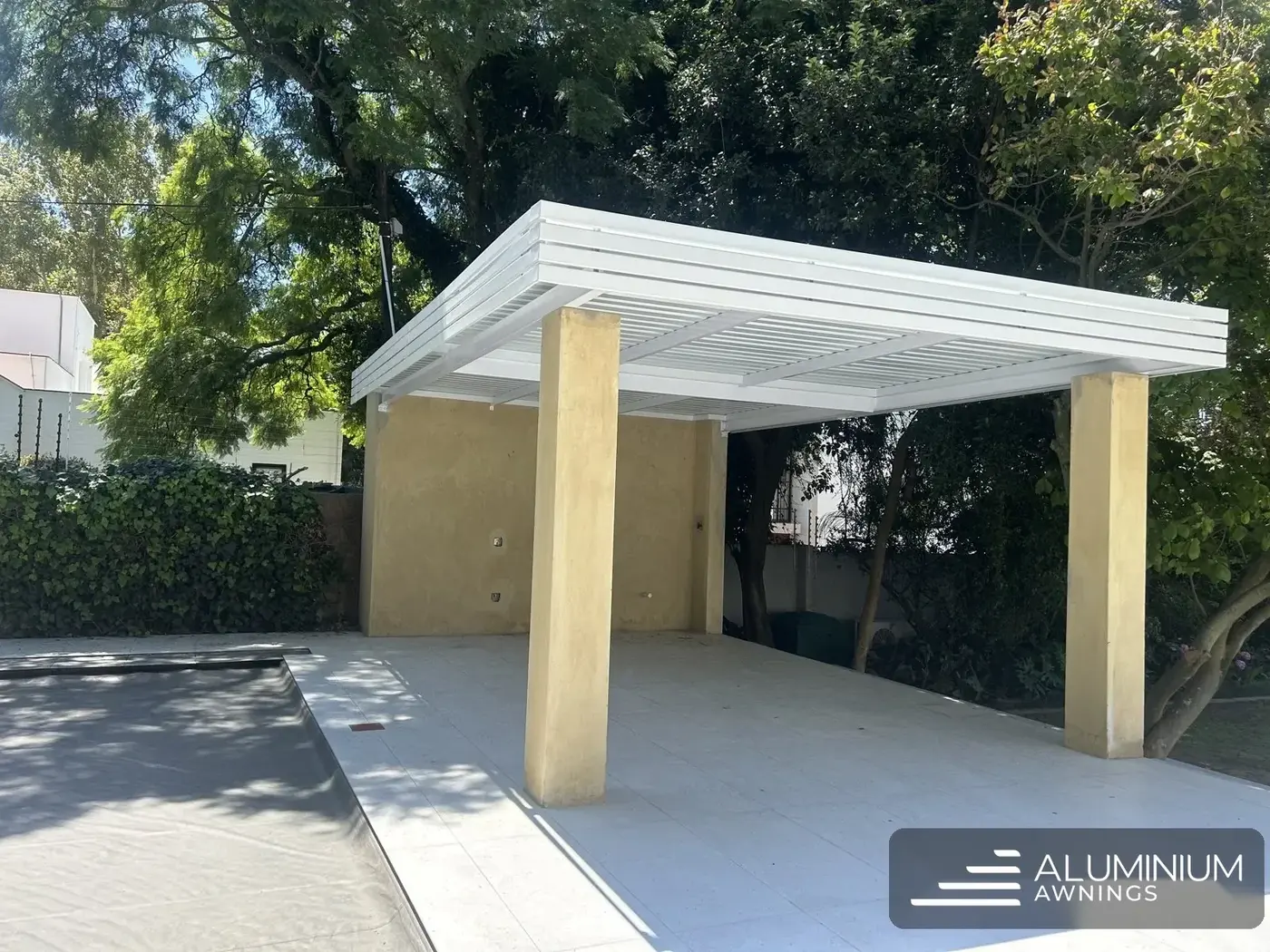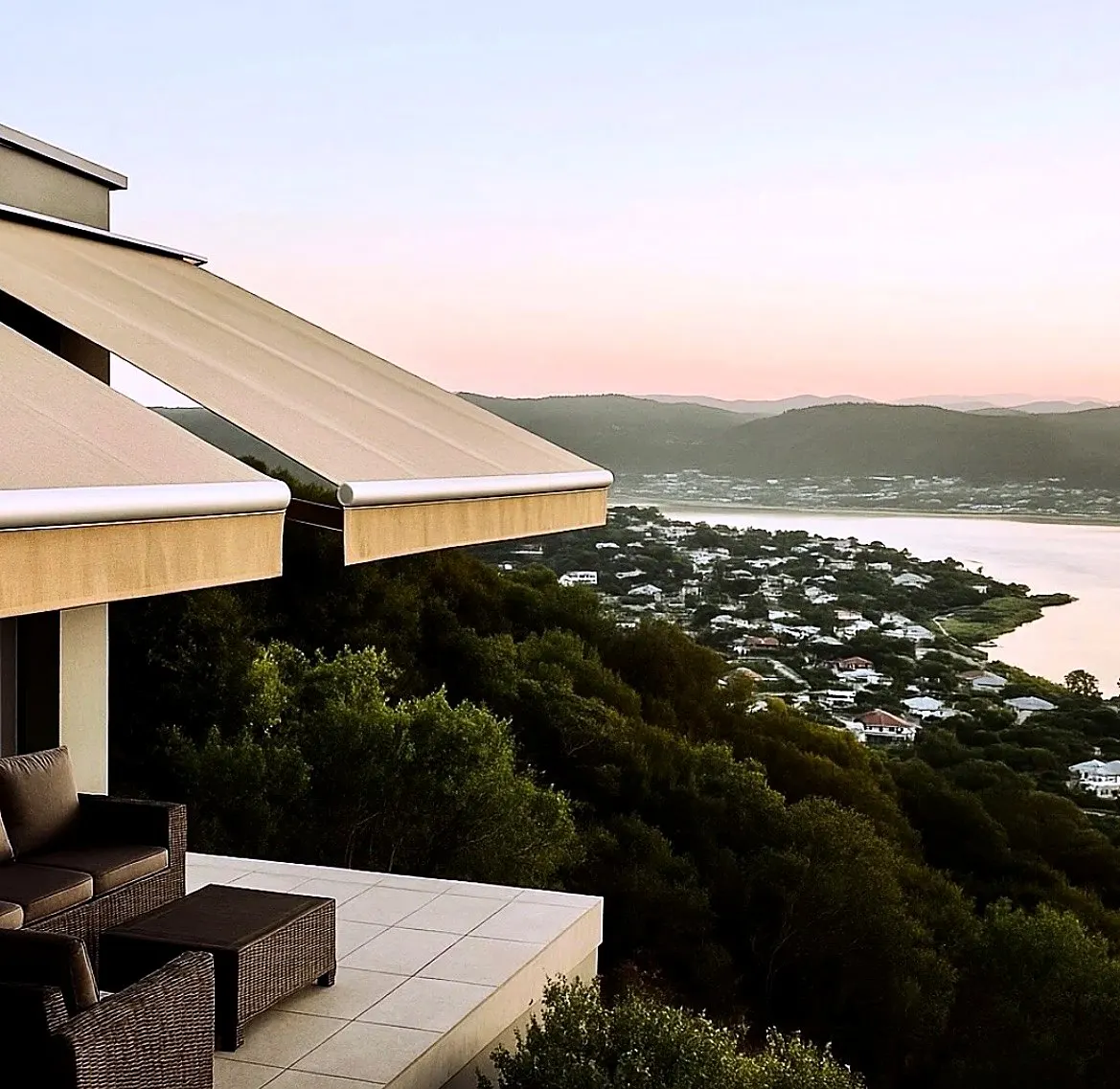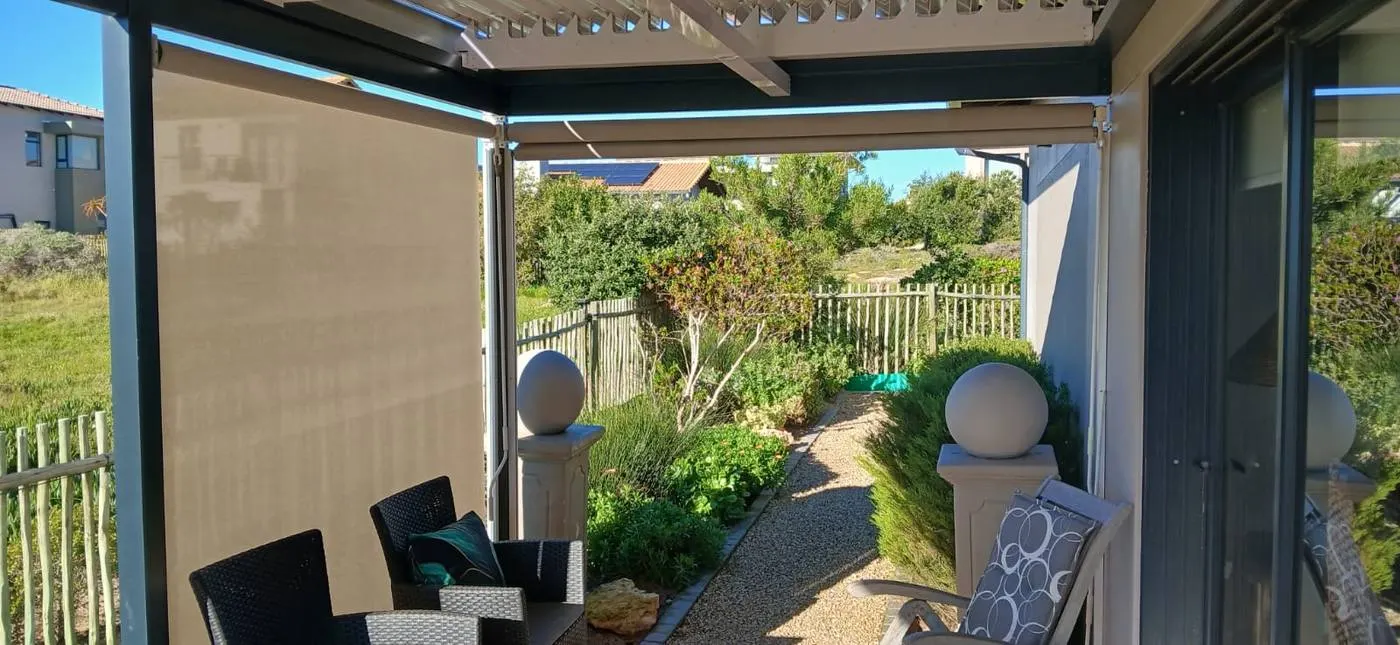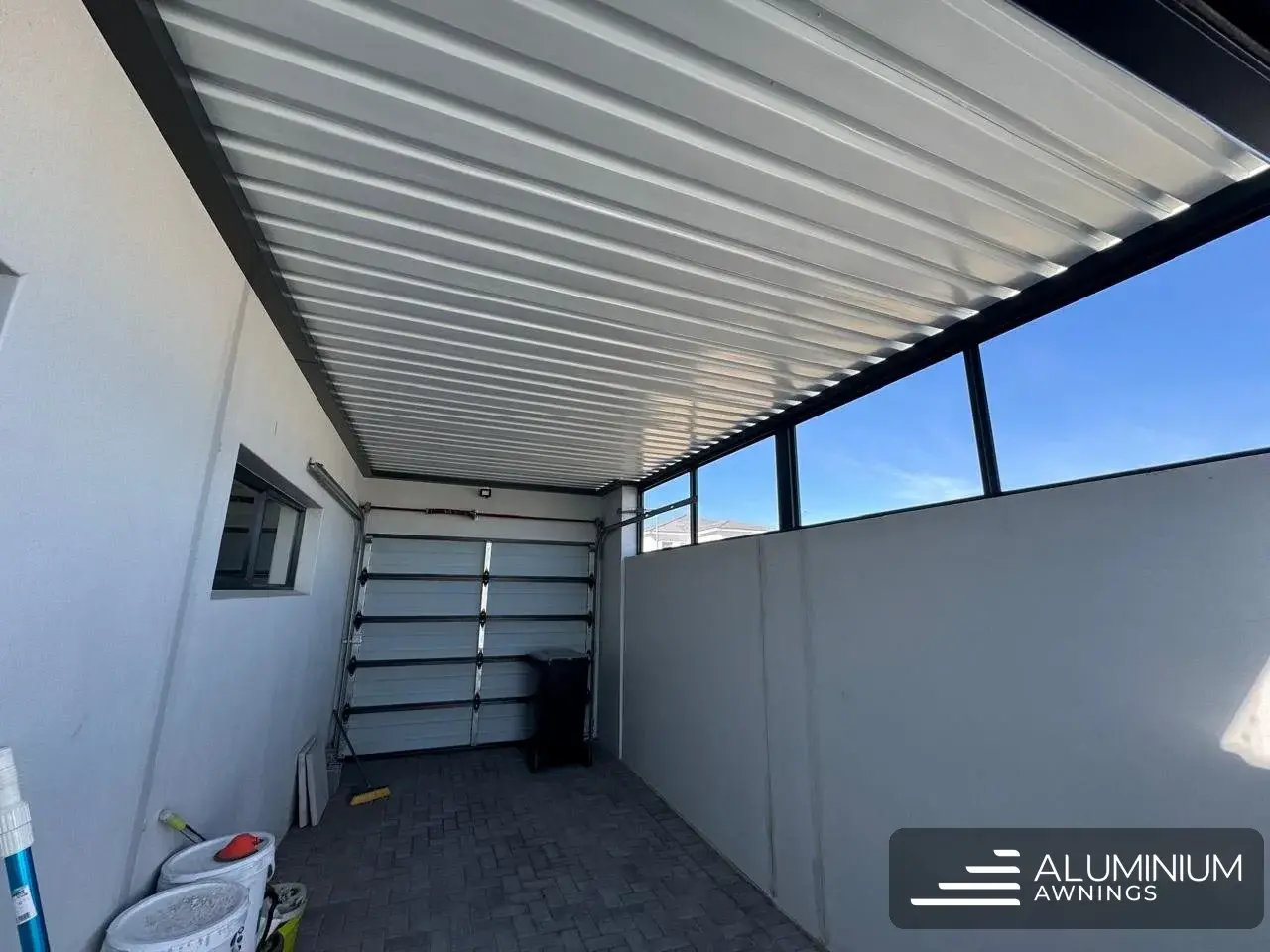
Ask us this on a site visit and you will get the same answer we give everyone: closed, a louvre roof is about 95% weatherproof, and we will not tell you 100. That last five per cent matters if you are planning a braai in July. Here is what the number means in real Cape weather, how the drainage works, and when a fixed roof is the smarter buy.
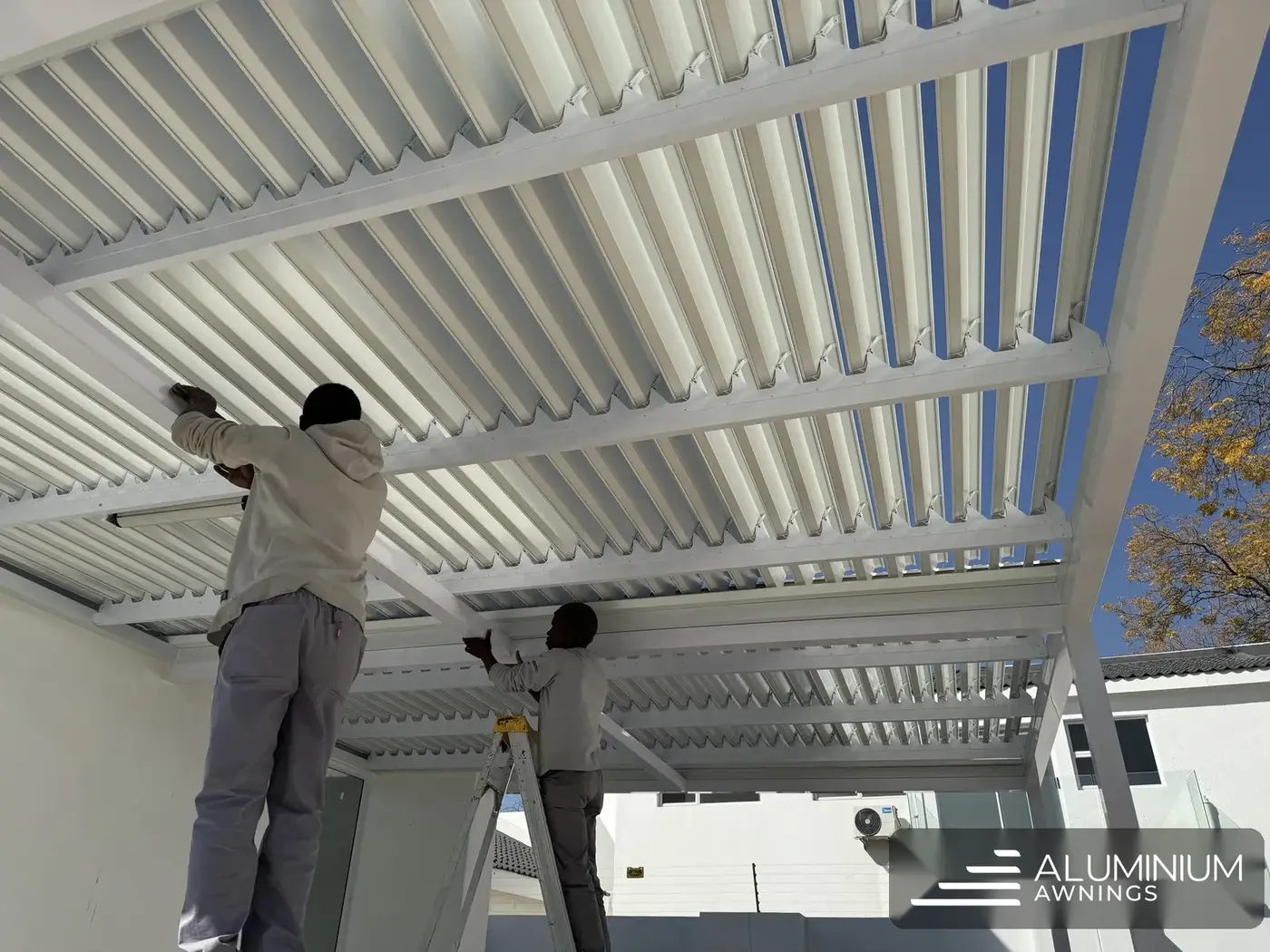
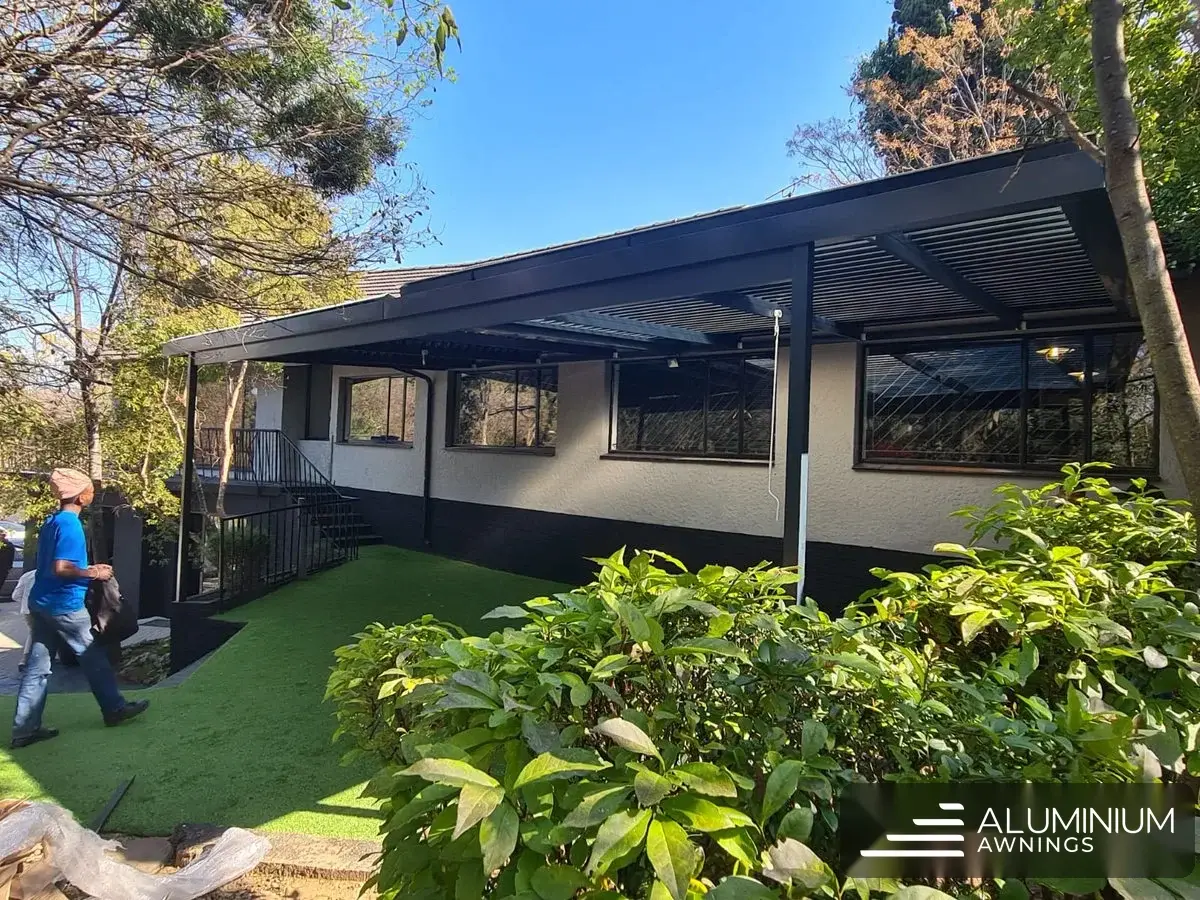
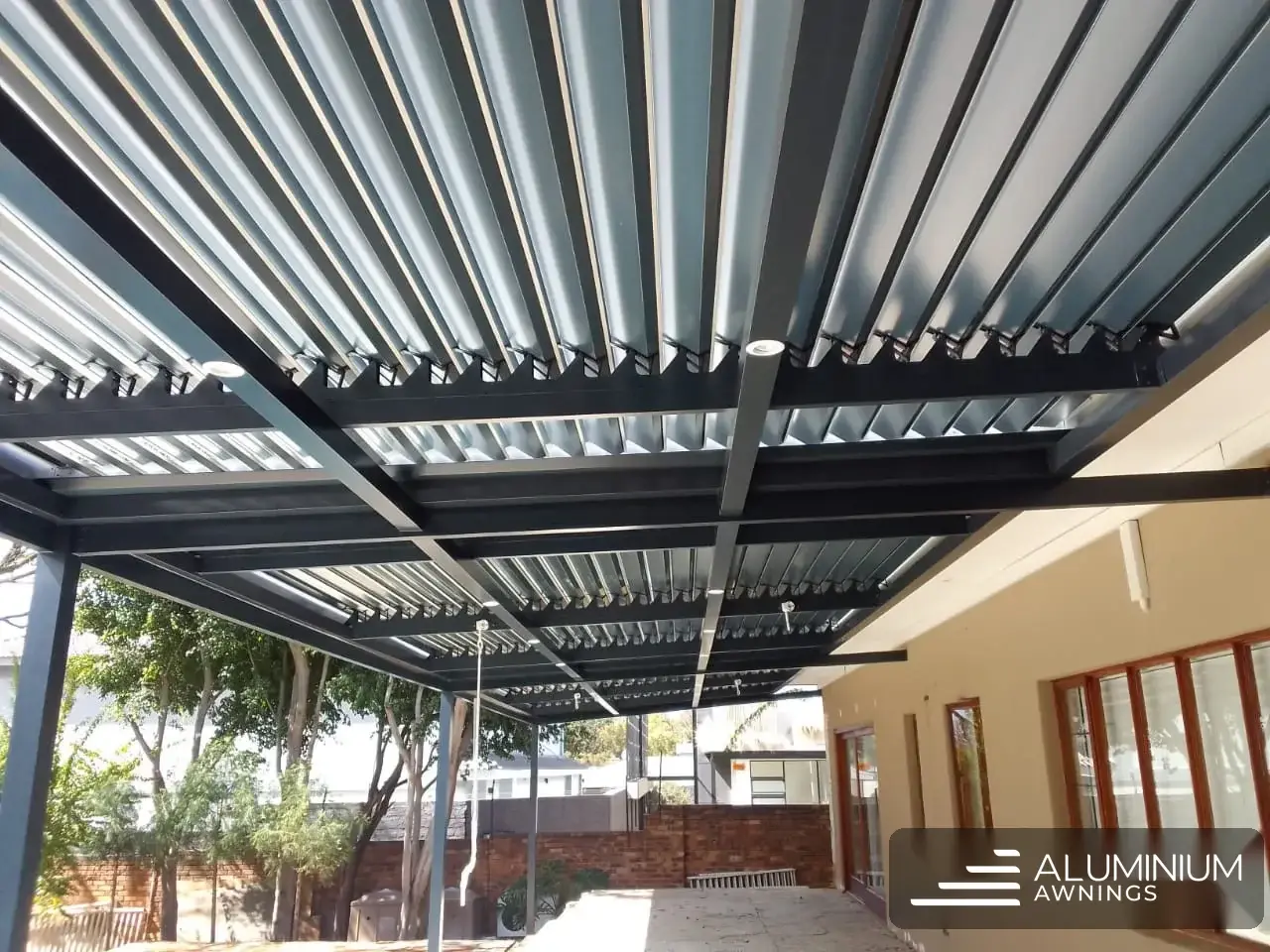
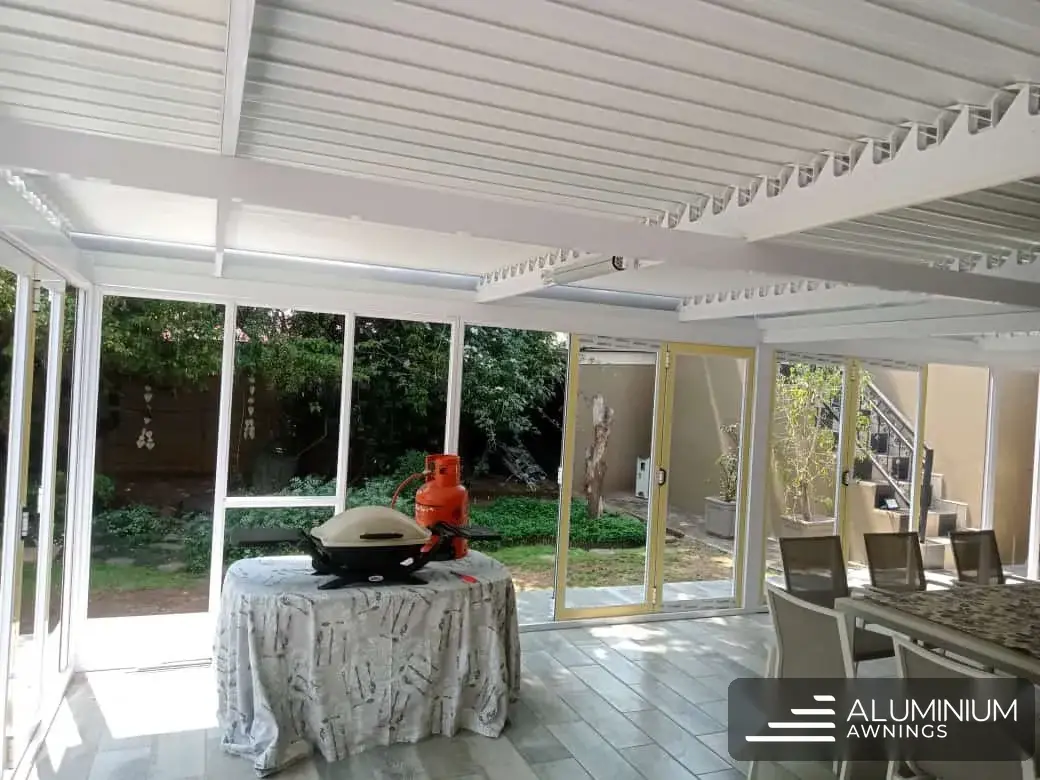
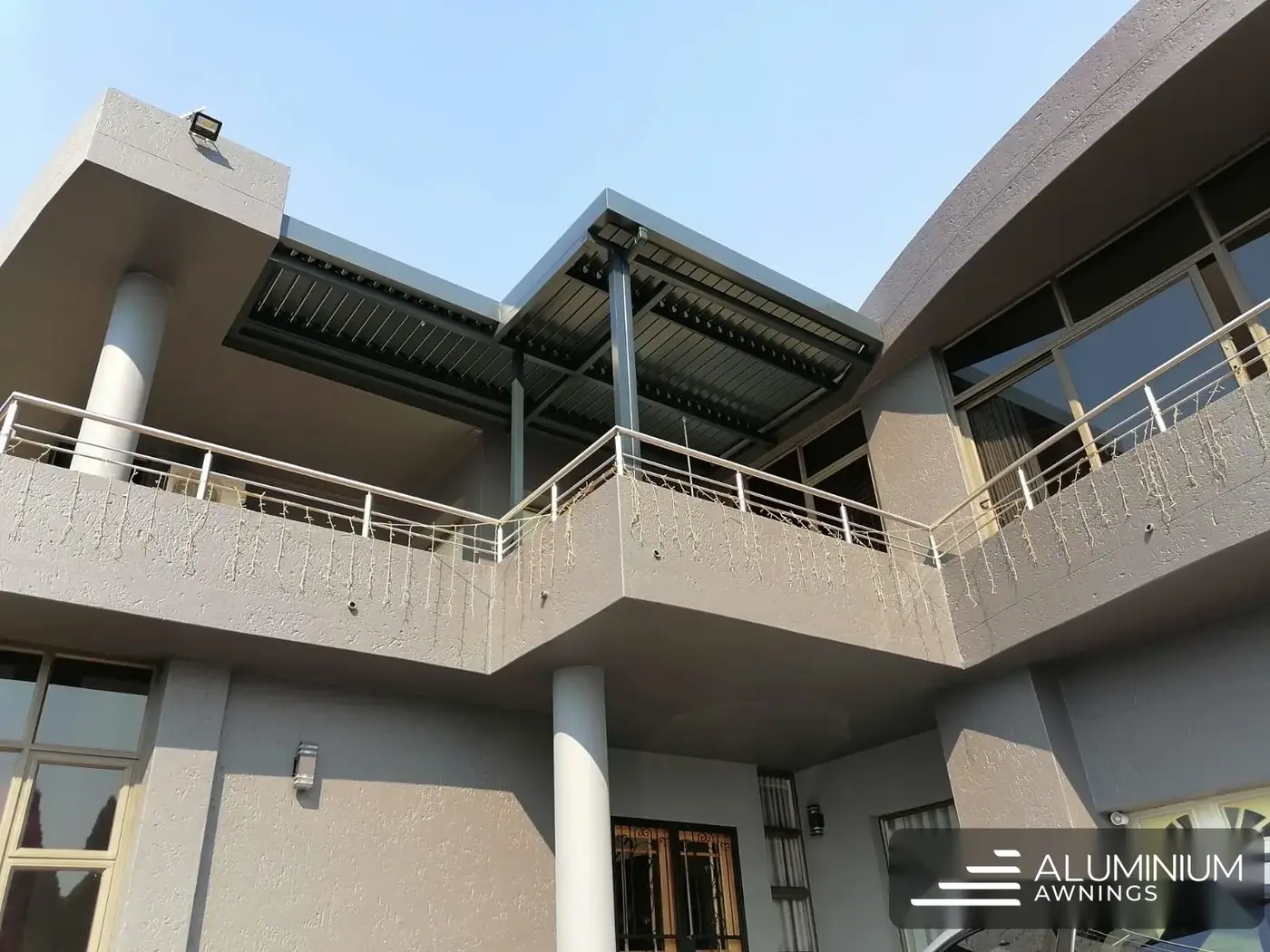
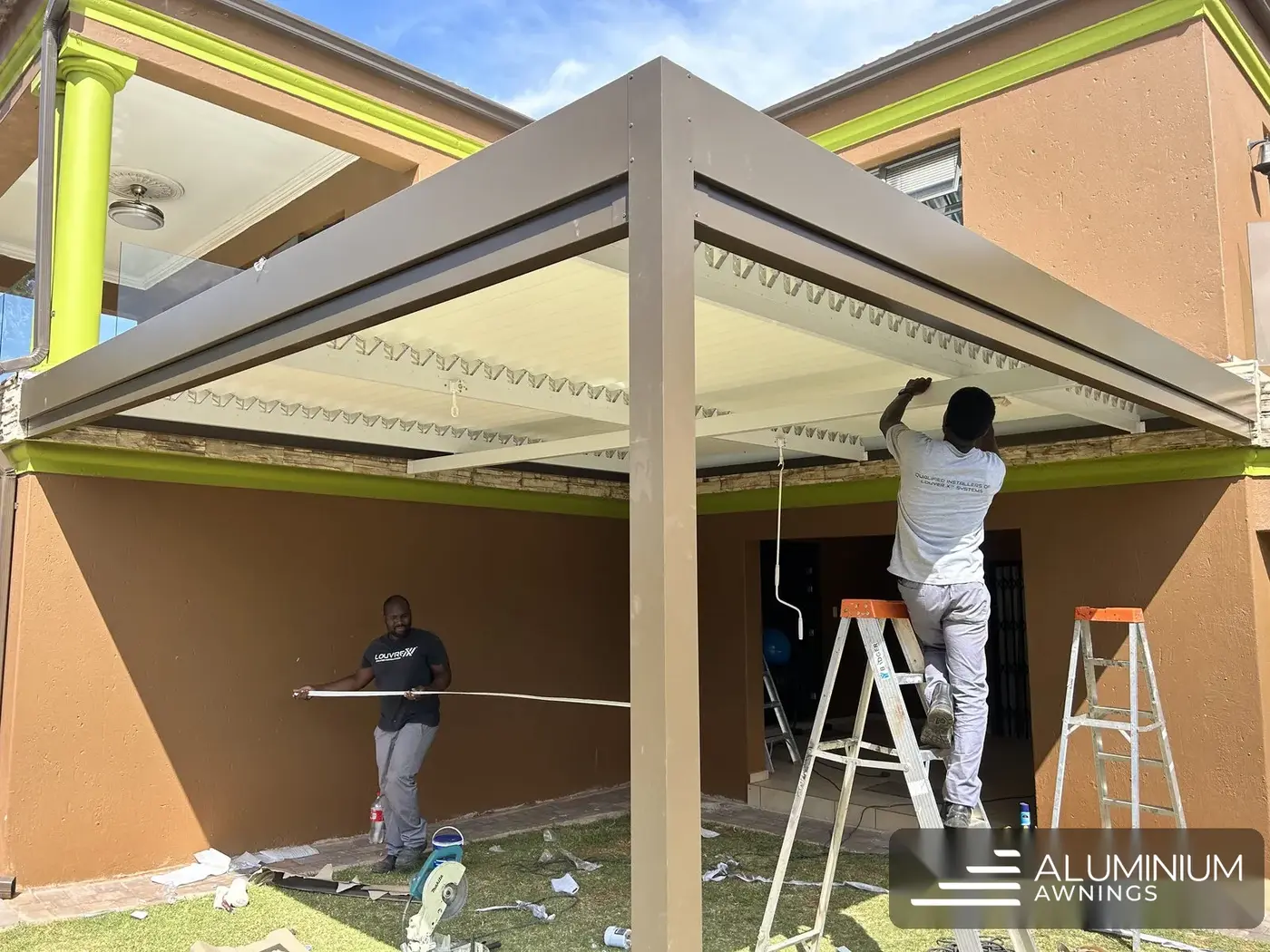
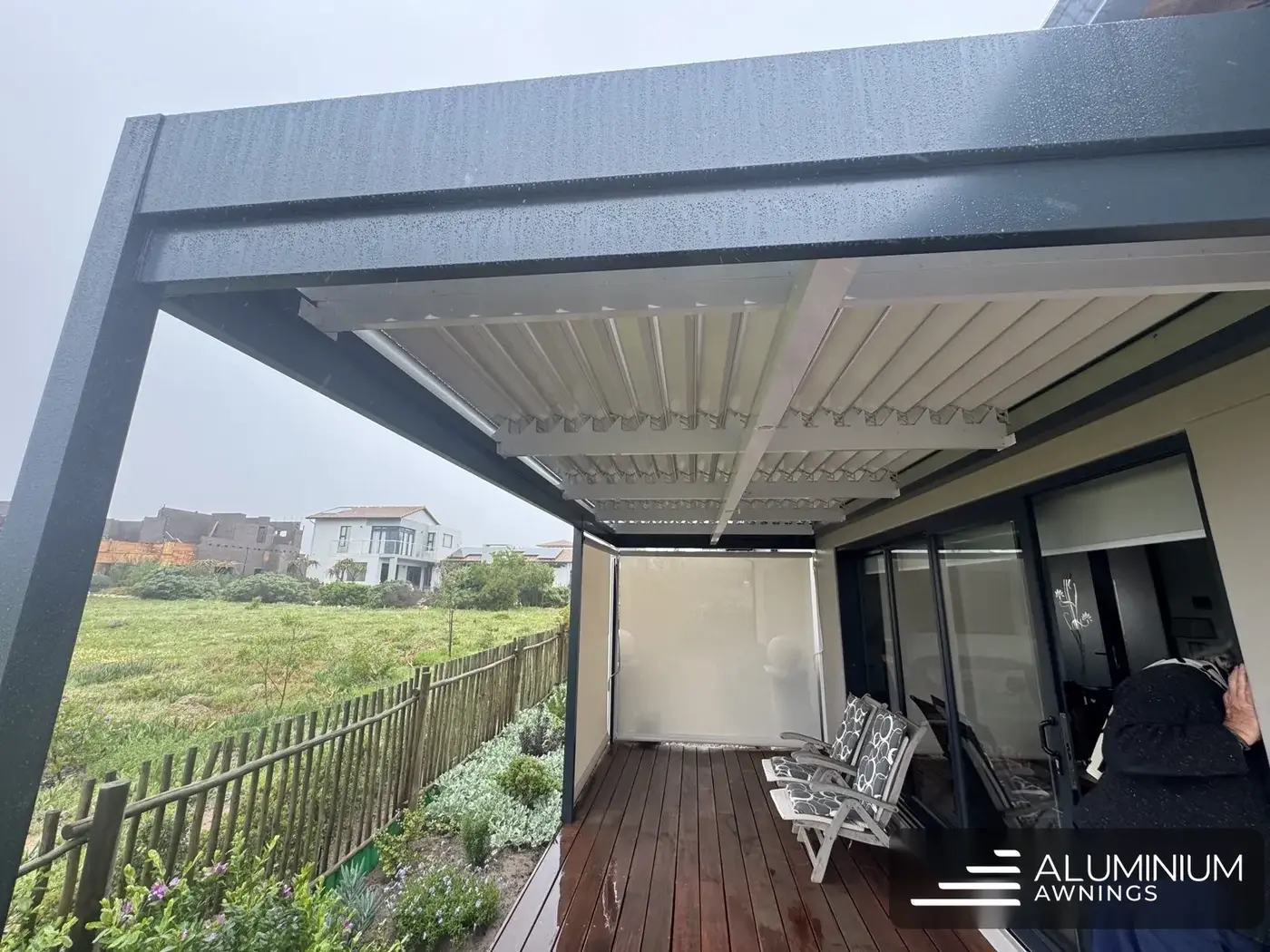
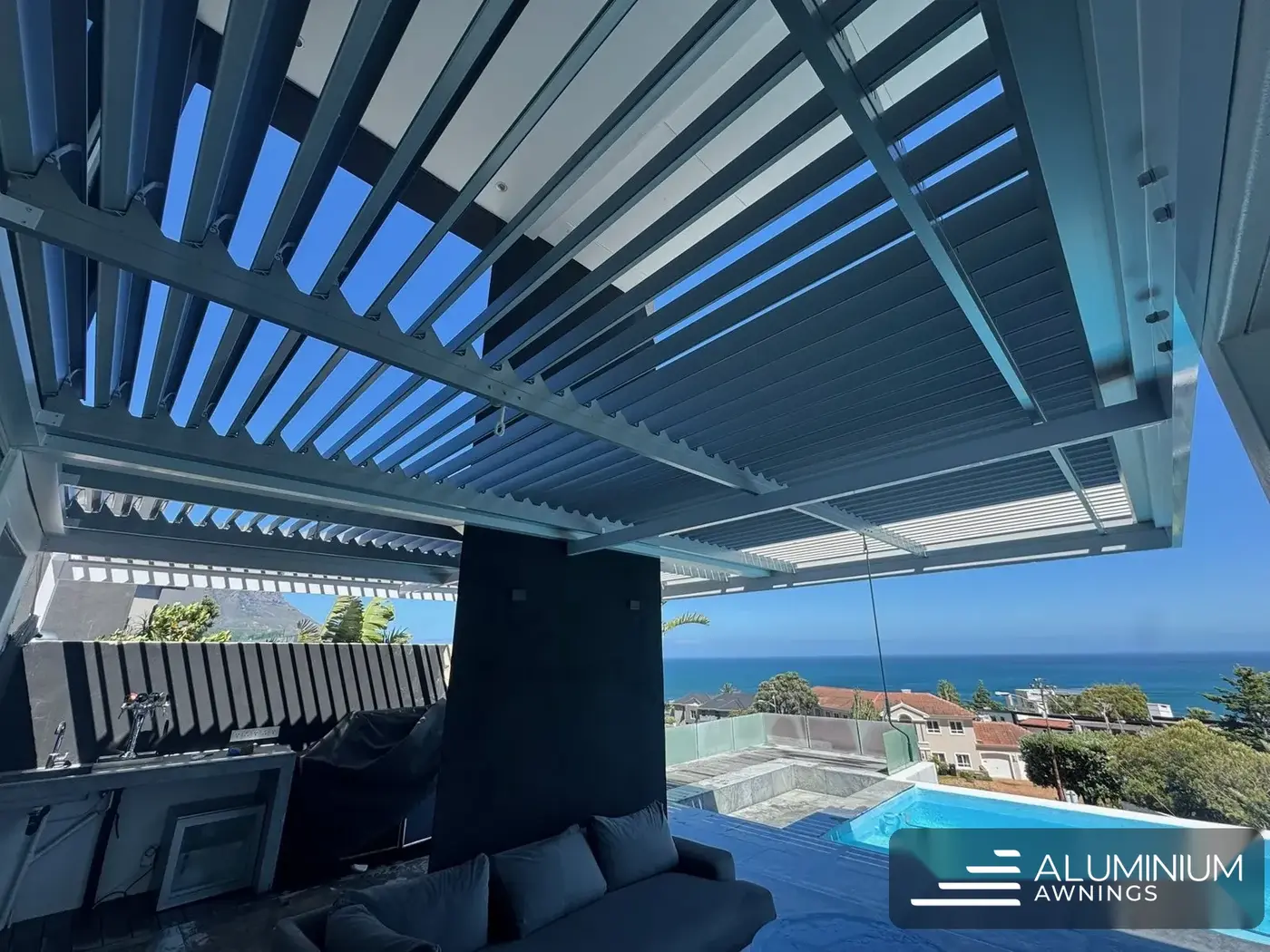
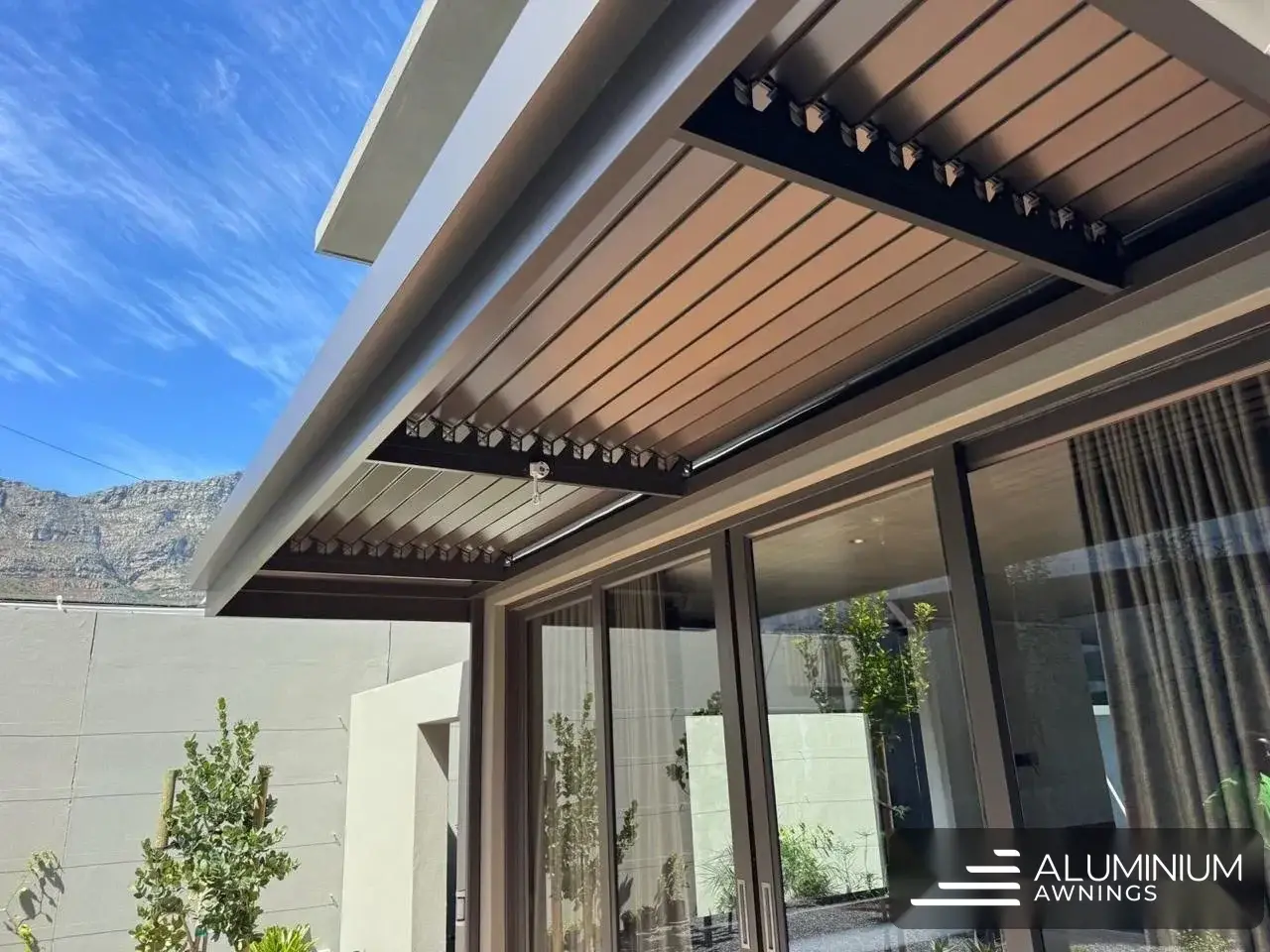
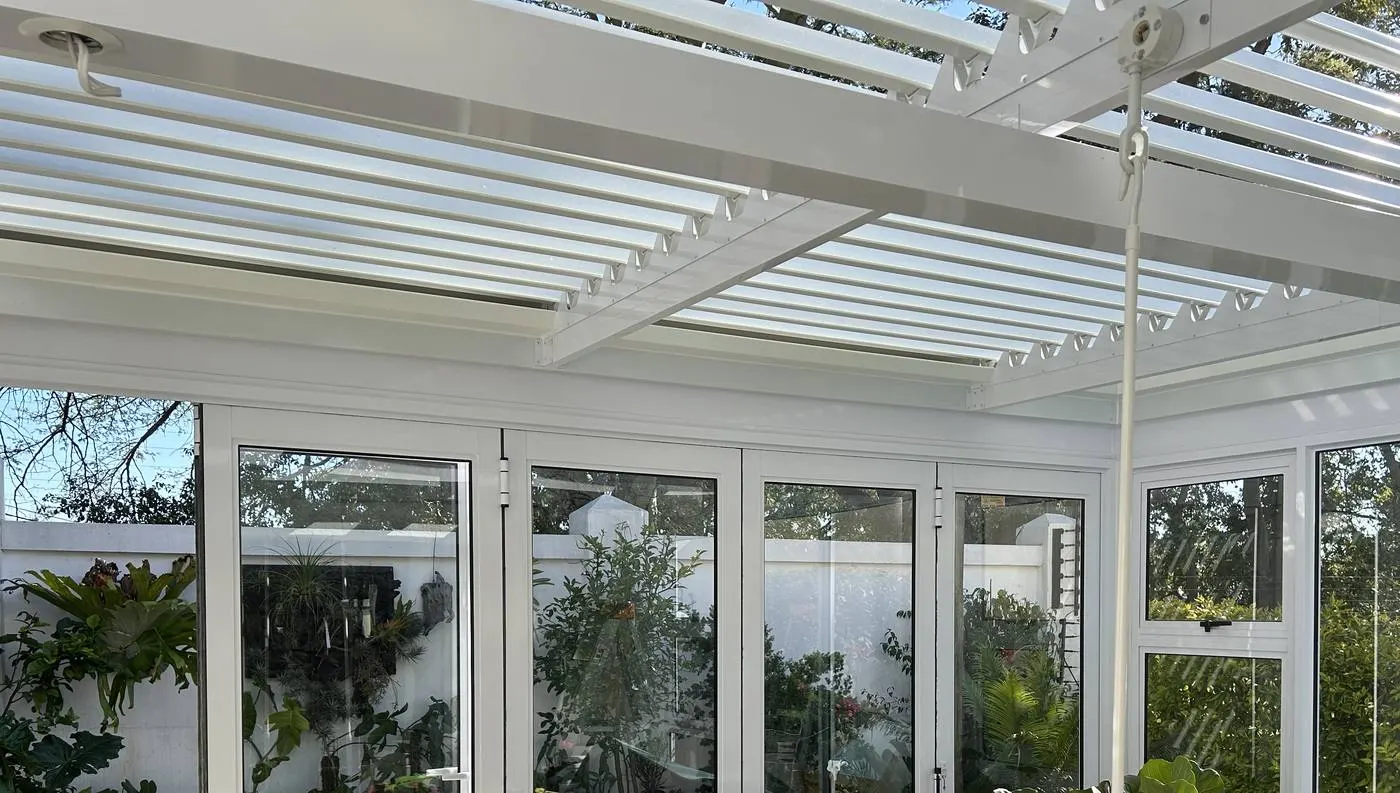
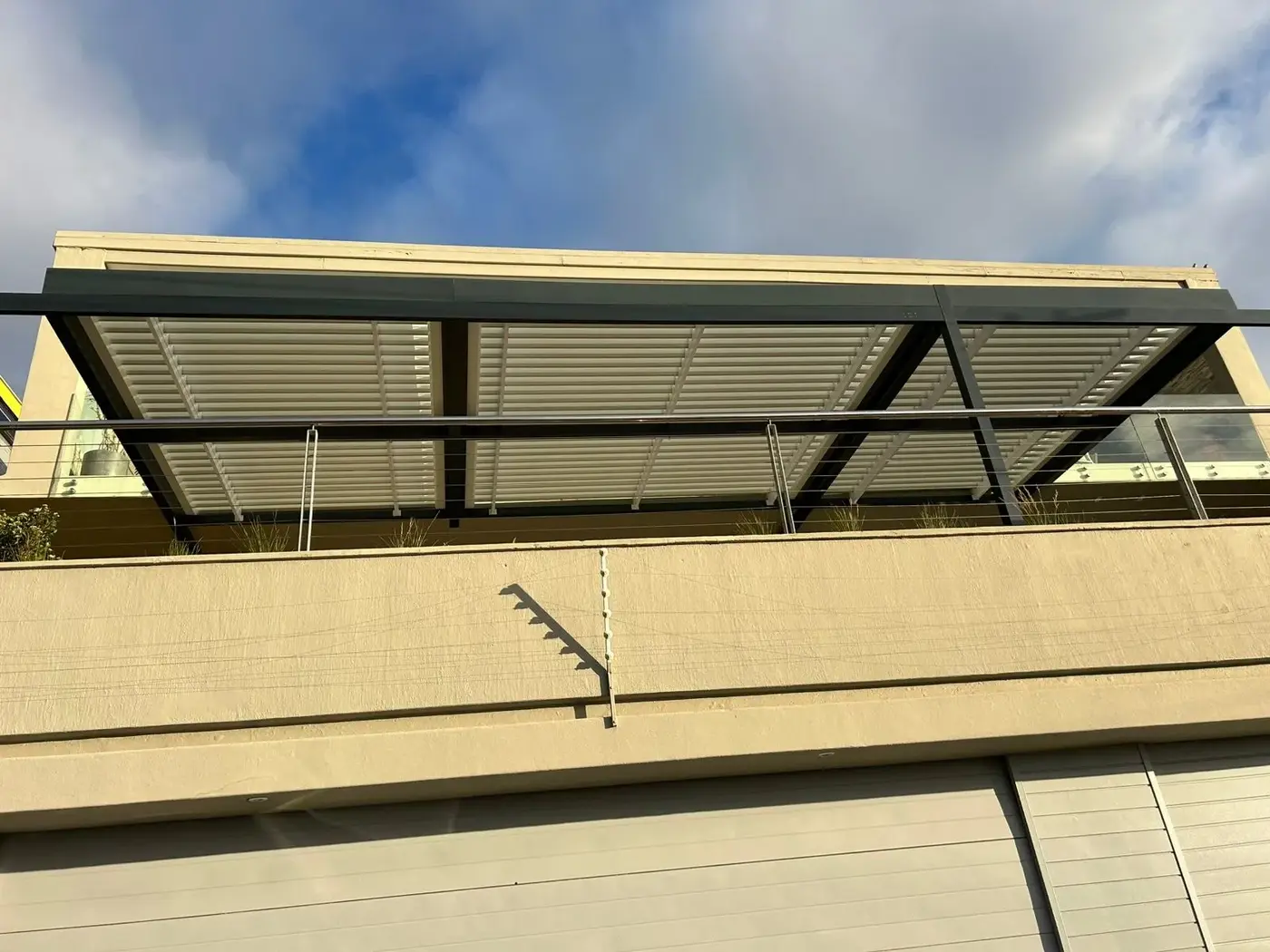
When the blades on a louvre roof close, they interlock. Rain lands on the flat aluminium surface, runs to the low side of each blade and sheds into the gutter that is built into the frame. In ordinary rain, even a heavy winter front, the patio underneath stays dry.
So why do we say about 95% weatherproof and never 100? Because in extreme wind-driven rain, the kind the Cape throws sideways a few times every winter, a small amount of water can track in at the blade edges. Any installer who claims a louvre roof is completely waterproof is selling, not explaining. It is a roof made of moving parts, and moving parts need working clearances. The honest number is 95, so that is the number we use.
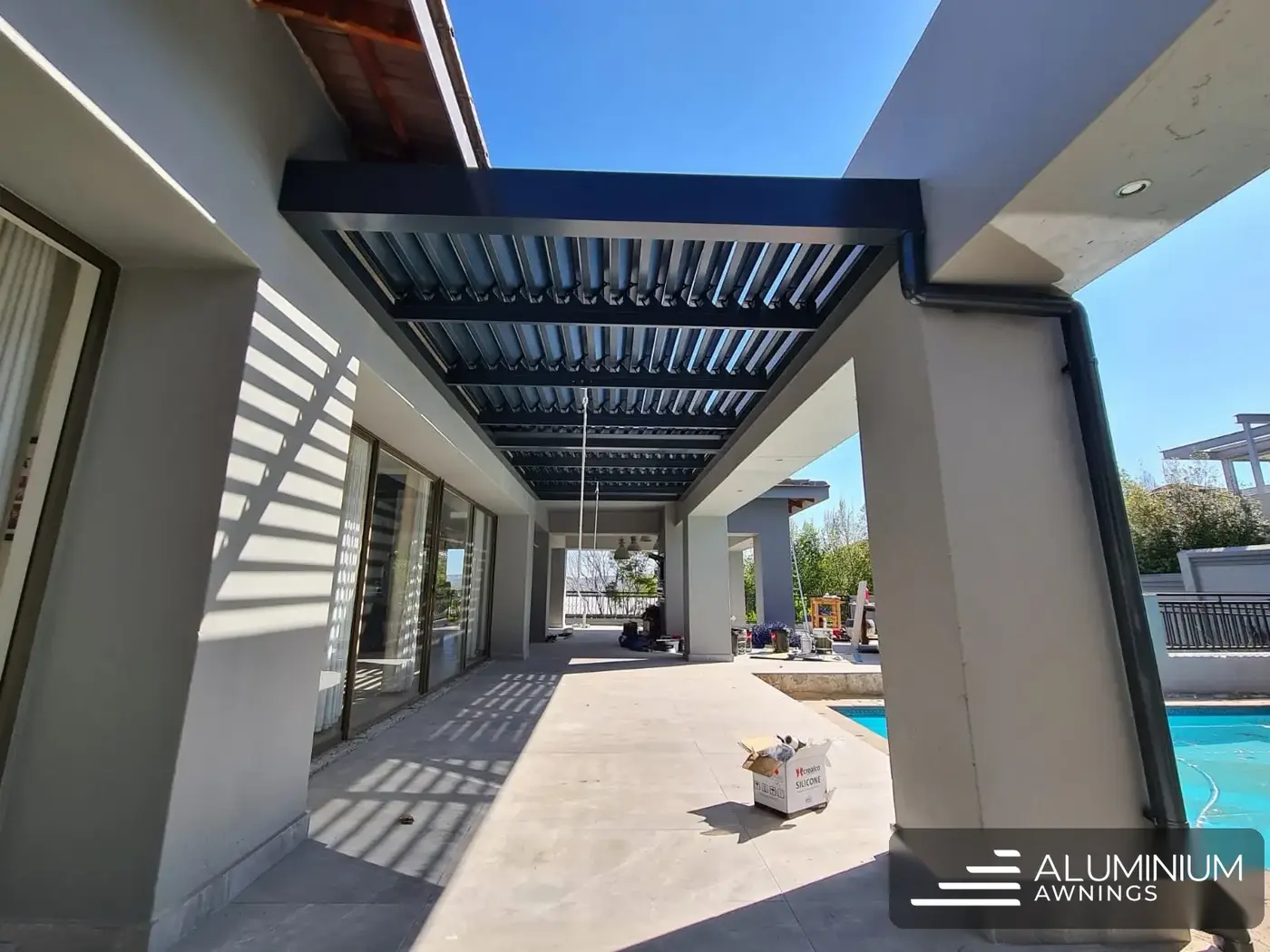
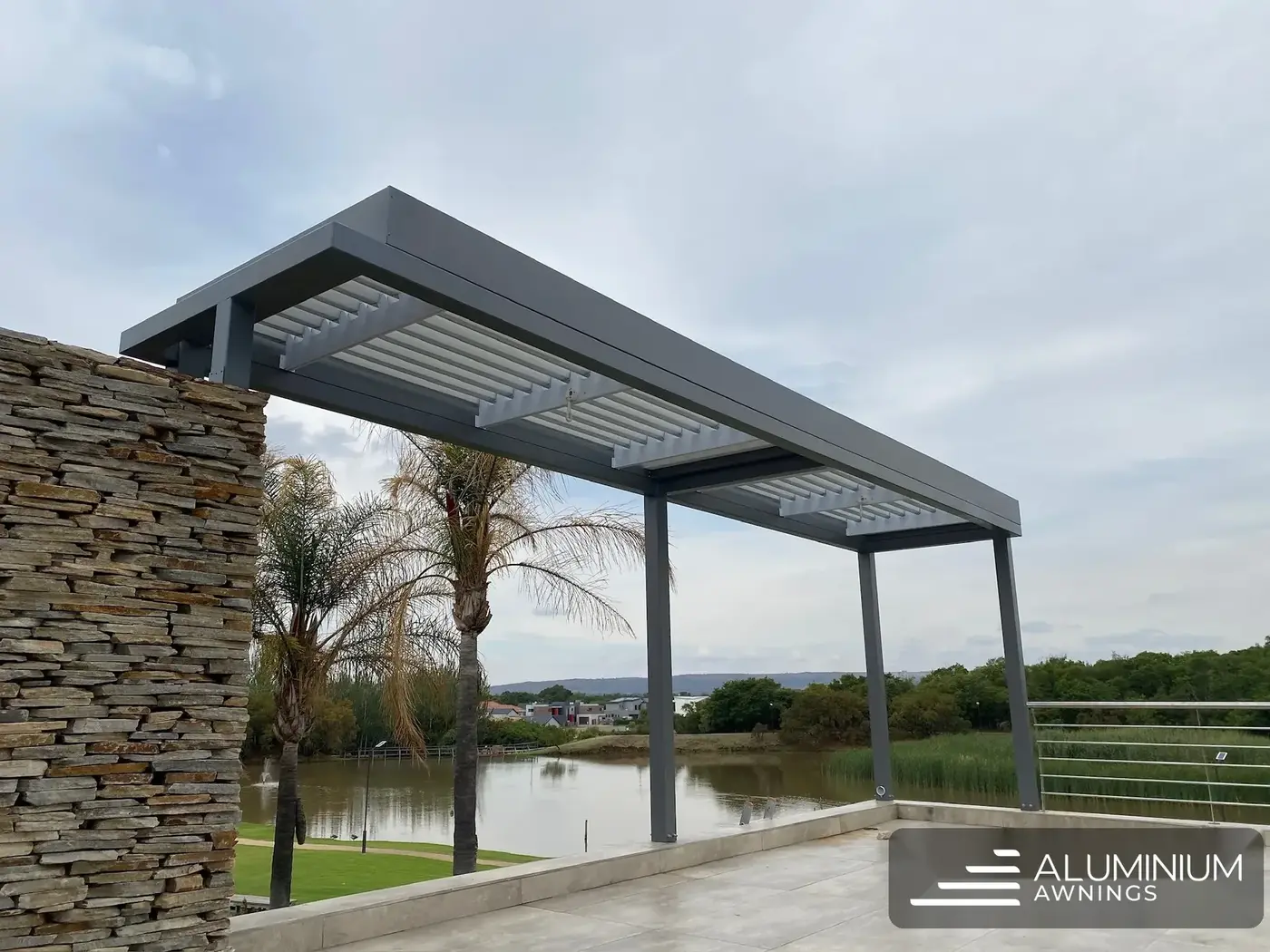
Drainage is the part nobody sees, and it does most of the work. The gutter sits inside the frame itself, so there is no bolt-on channel spoiling the line of the roof. Water shed by the closed blades runs along that gutter and down through the posts to the downpipes, the same way a conventional roof drains, just hidden inside the structure.
For that to work the roof needs the correct fall and a gutter sized for the area it drains. Get either wrong and a hard downpour will find the weakness. This is why we treat drainage as a design item, never an accessory bolted on at install.
On motorised systems you can add a rain sensor that closes the blades automatically at the first drops. Nobody has to be home, or awake. If a squall rolls in at two in the morning, the roof shuts itself and the cushions stay dry. Wind sensors do the same when the wind picks up, and both react faster than anyone standing there with a remote.
The motors themselves sit in sealed IP65 housings, rated against dust and water, so the electronics are built to live outside through a Cape winter without complaint. Sensors are an optional extra, but on an exposed site we rate them as the best money on the order.
Here is what owners experience in practice. Through normal winter rain the closed roof sheds everything and the space underneath carries on as usual. In a proper front, the sideways kind, expect a damp strip along the exposed edge of the patio. Furniture in the middle of the space is fine; a cushion left right at the outer edge might catch some spray.
The structure itself is a separate question, and an easier one. Everything we build is engineered for the Cape Doctor, which regularly pushes past 80 km/h, in marine-grade aluminium with stainless fasteners and no ferrous metal anywhere in the build. The roof will still be standing long after the front has moved through.
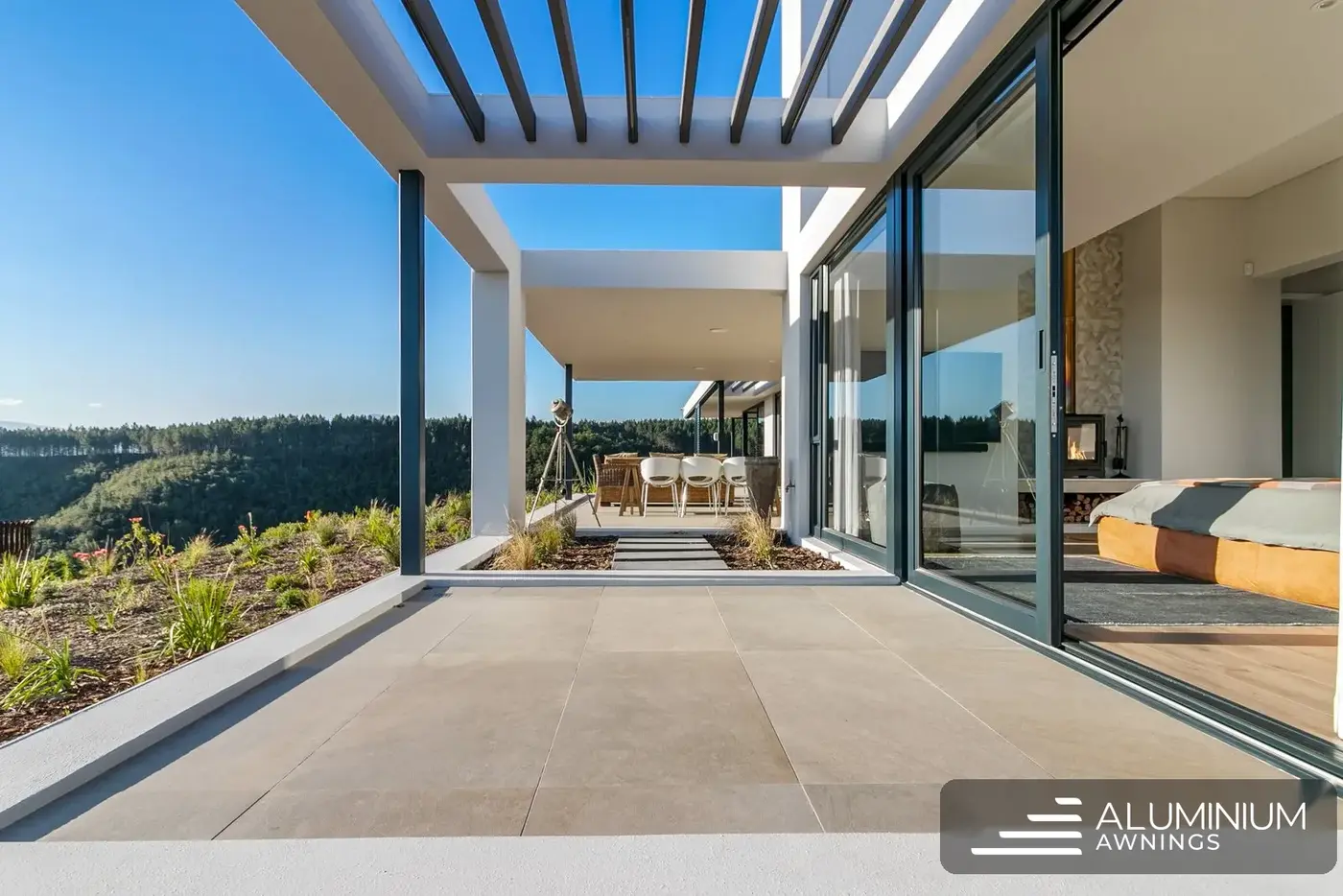
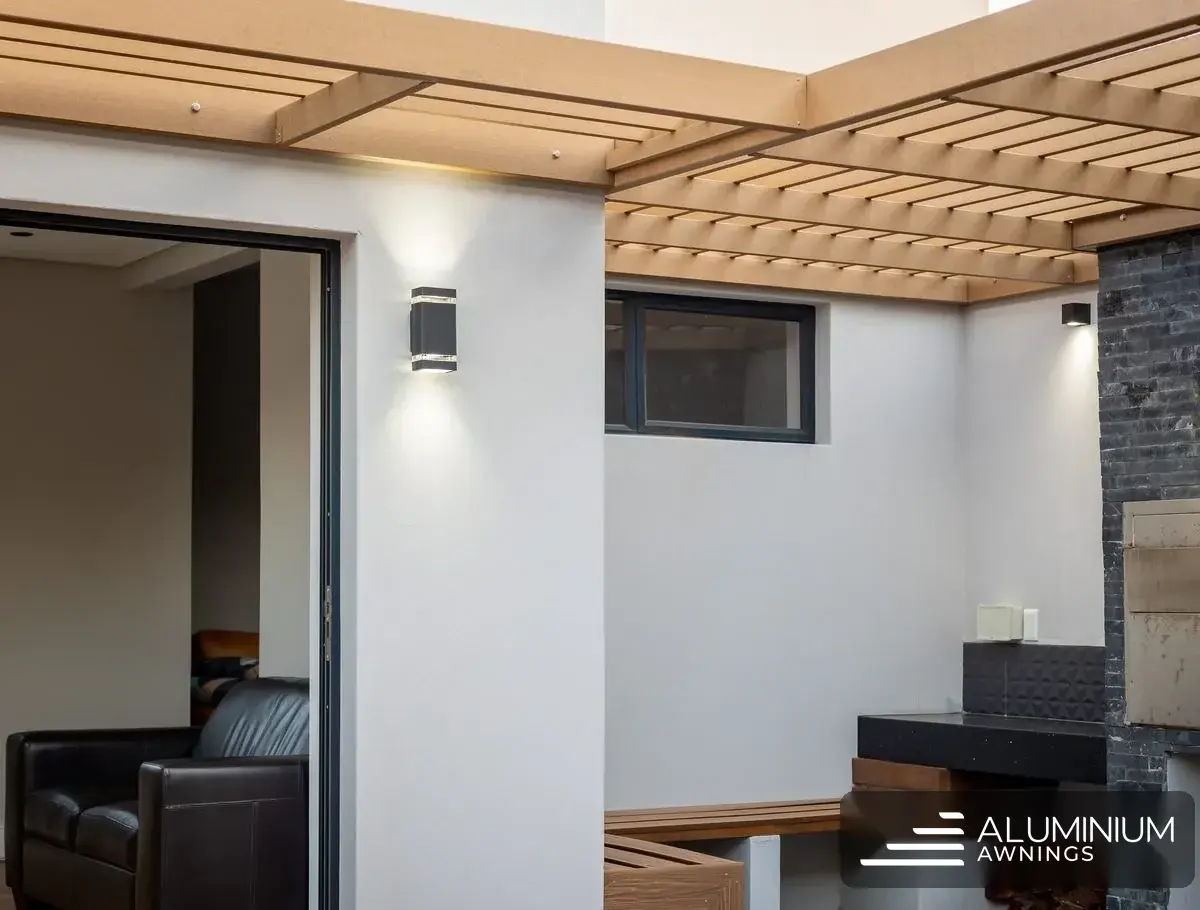
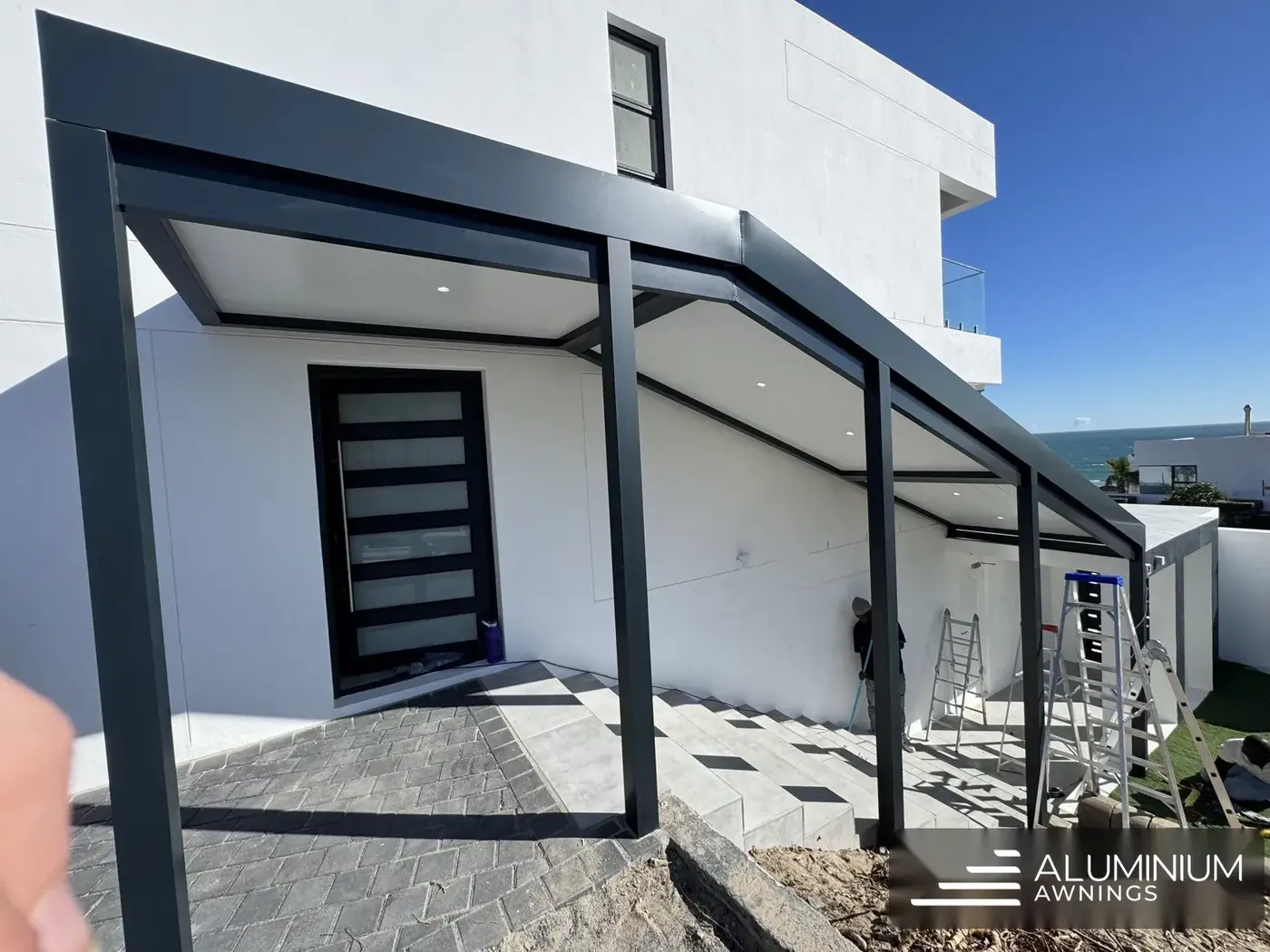
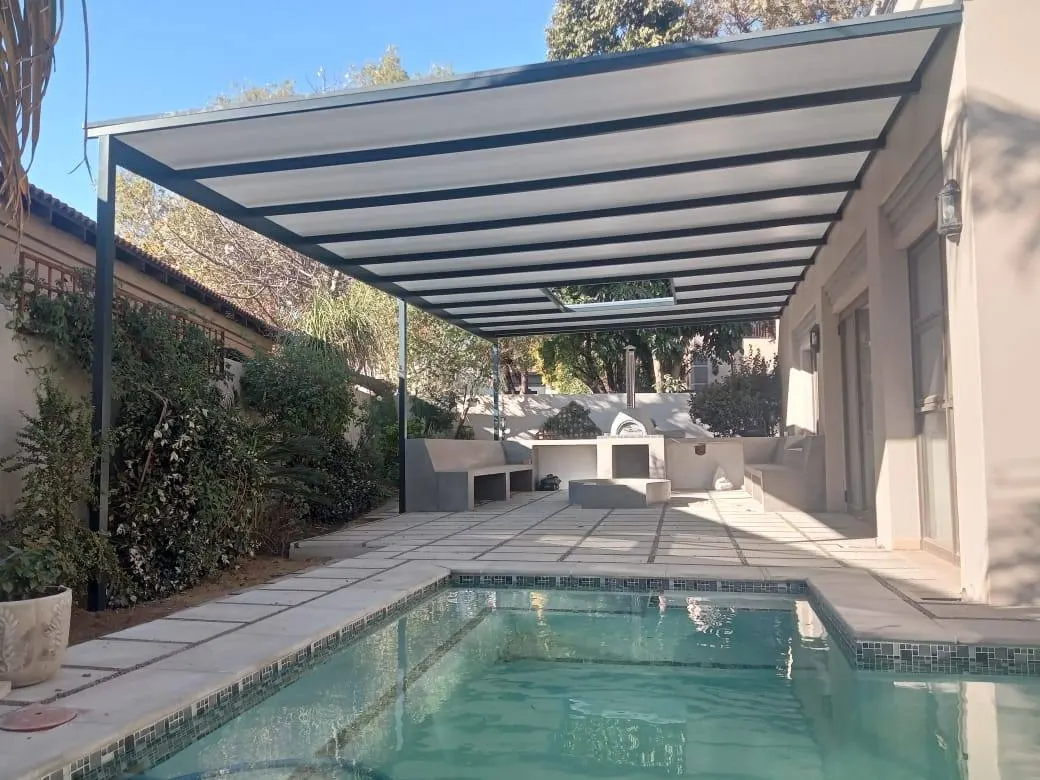
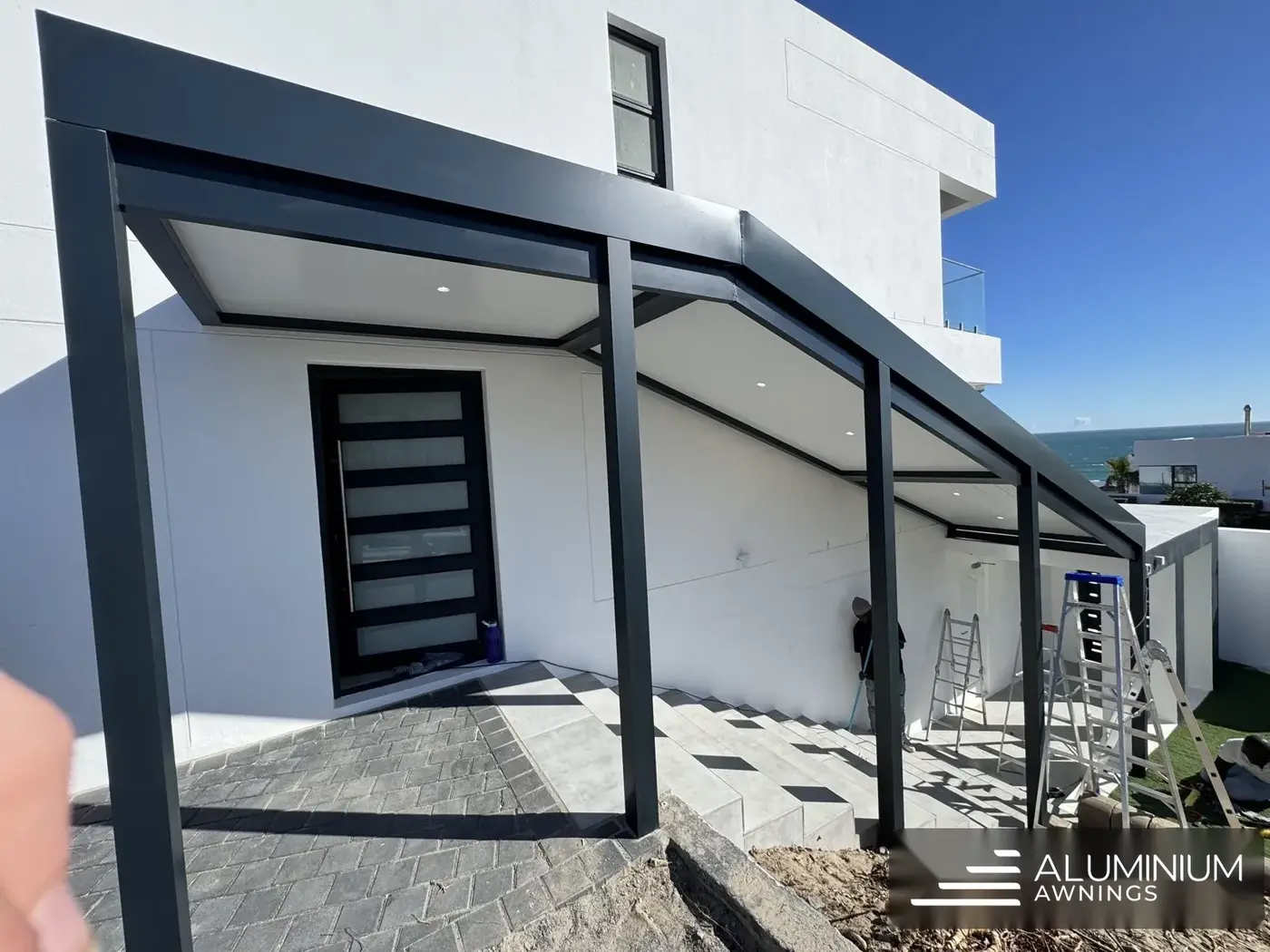
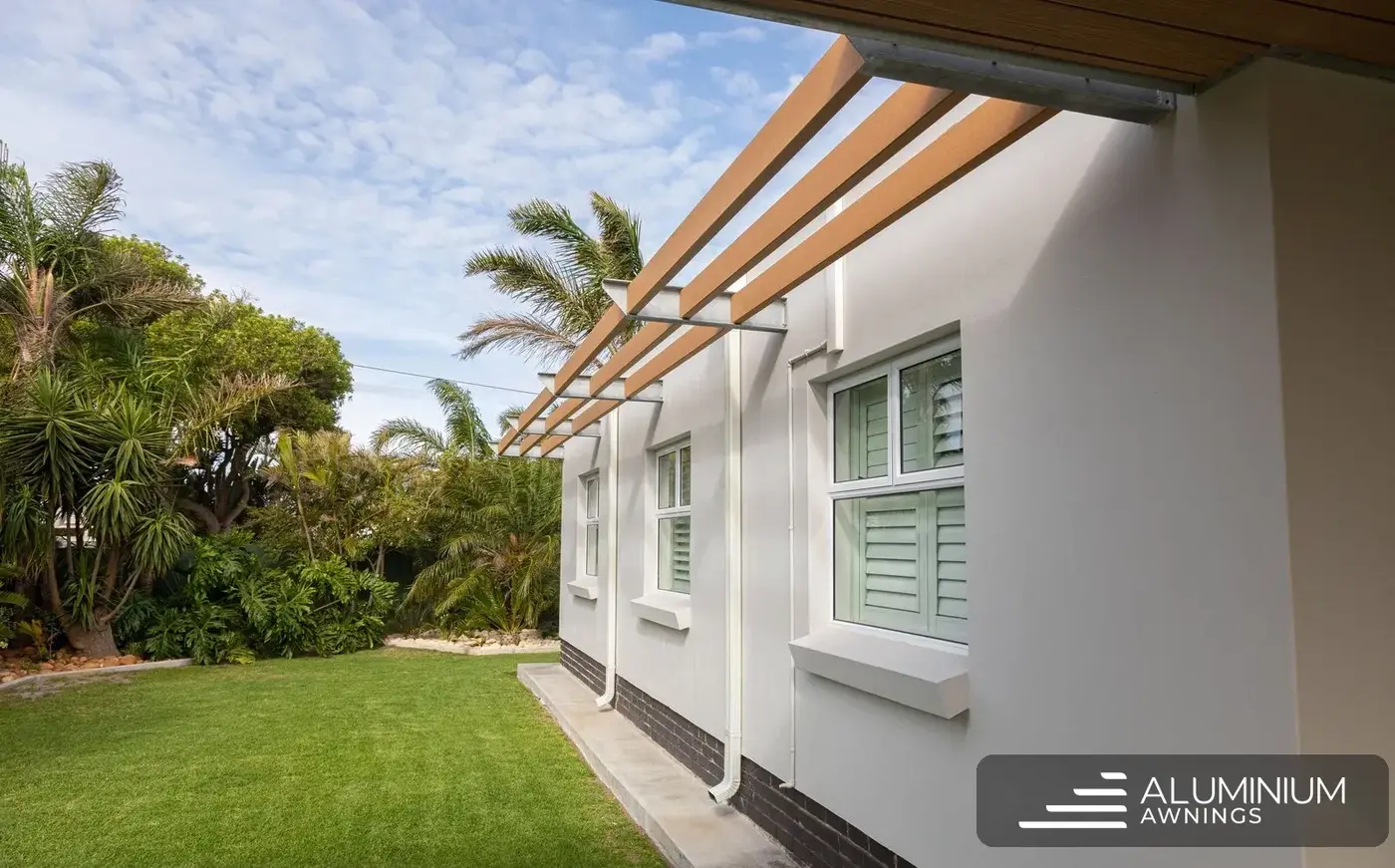
If the space has to be dry in every storm without exception, buy a fixed roof, and we will tell you the same thing at the site visit. A patio ceiling puts fixed aluminium panels overhead for the most enclosed, room-like result, from R2 800/m². An extruded pergola with a multiwall polycarbonate roof is fully watertight and still lets filtered light through, from R3 000/m². A fixed IBR-sheet awning is the straightforward workhorse of the three, from R2 100/m².
The trade-off is that fixed cover means fixed shade. A louvre roof, from R3 200/m², opens to full sun on a clear day; a solid roof never does. Our rule of thumb: for an entertainment area you want open all summer, go louvre. For a covered walkway, a braai corner or a patio on the weather side of the house, a fixed roof is usually the smarter money.
How dry you stay owes as much to the design as to the product. Where the roof sits relative to the weather side of the house, how much fall the water is given, and how the gutter and downpipes are sized for the roof area all get settled before we fabricate anything. That is what the free site visit is for: we measure, read the exposure of the site, and talk you through louvre against fixed for your specific spot. You get a fixed quote within 48 hours, and typical lead time is 3 to 5 weeks from go-ahead. We hold a 5.0 rating on Google across 15 reviews, and straight answers at the site visit have a lot to do with that.
Not if the system has a rain sensor, which closes the blades automatically at the first sign of rain. On manual or remote-only systems you close them yourself. Sensors are worth having if the patio holds furniture you care about.
Closed blades shed water into a gutter built into the frame. From there it runs down through the posts to the downpipes, so nothing sheets off the edge of the roof.
In extreme wind-driven rain a small amount can track in at the blade edges, which is why we quote about 95% weatherproof rather than 100%. In ordinary rain the space below stays dry.
A fixed roof. We build patio ceilings, extruded pergolas with polycarbonate roofs and fixed IBR-sheet awnings, all fully watertight. We will recommend the right one at a free site visit.
We design, fabricate and install across the Western Cape, from the Atlantic Seaboard and Southern Suburbs to the Winelands, Helderberg, West Coast, Overberg and the Garden Route. Explore your area below.